Choosing greenhouse film
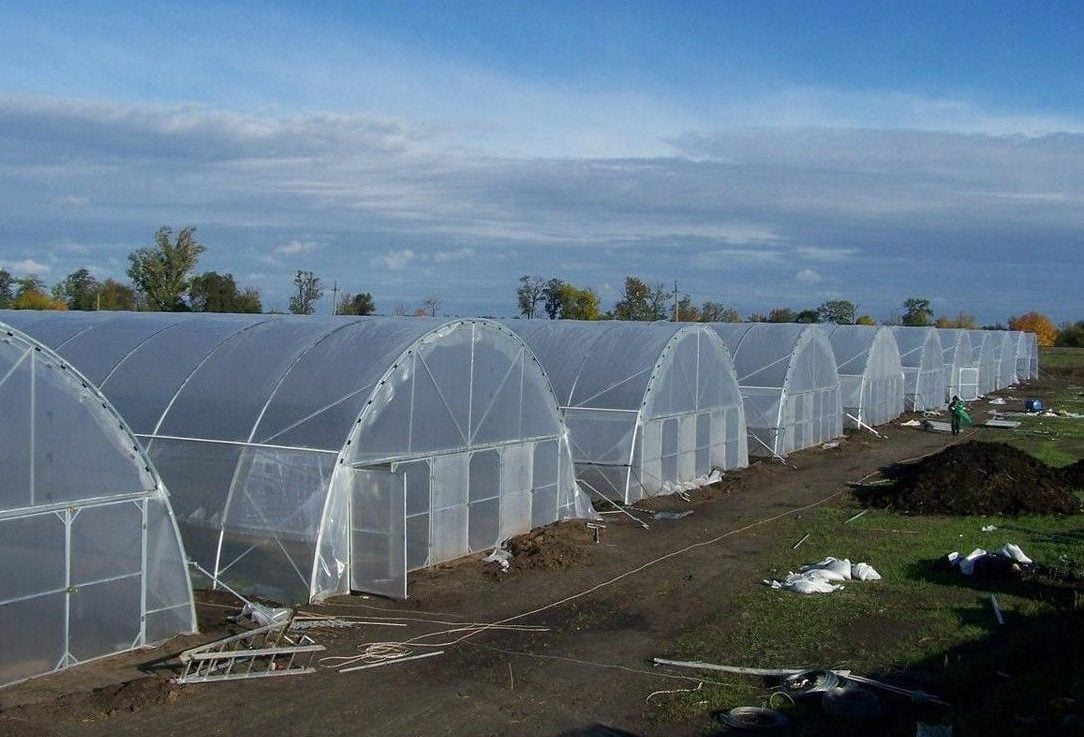
Transparent polyethylene film is the most widespread material for covering greenhouses due to its low cost, large sheet size, ease of attachment, and high degree of light transmission. However, the most important thing for the consumer is for the covering to be high-quality and long-lasting.
Quality Indicators
When determining which film is best for a greenhouse, it is worth understanding what exactly you are choosing, because in this case, construction film or technical construction film will not work—specifically greenhouse film is required. There are several key parameters of greenhouse film that characterize its quality. First and foremost is light transmission—the amount of sunlight that penetrates inside the structure. For high-quality transparent greenhouse films, this indicator must be at least 90%. For optimal growth, plants require balanced full-spectrum light. The quality of light is just as important as its quantity. A plant does not absorb all solar energy, but only its photosynthetically active radiation (PAR)—the wave spectrum from 400 to 700 nanometers (nm).
Naturally, any greenhouse film partially loses its light transmission capabilities over time. This is influenced by many factors:
- external damage (scratches),
- the effects of ultraviolet radiation,
- the film’s reaction to agrochemicals,
- poor-quality additives in polymers.
However, a high-quality greenhouse film loses only up to 2% of its light transmission capacity per year.
It is also worth paying attention to the degree of light scattering (light diffusion): this effect is achieved through special additives incorporated into the material during production, which promote uniform illumination of the plants. Light diffusion minimizes the impact of shading (from greenhouse structures) and self-shading of the plants.
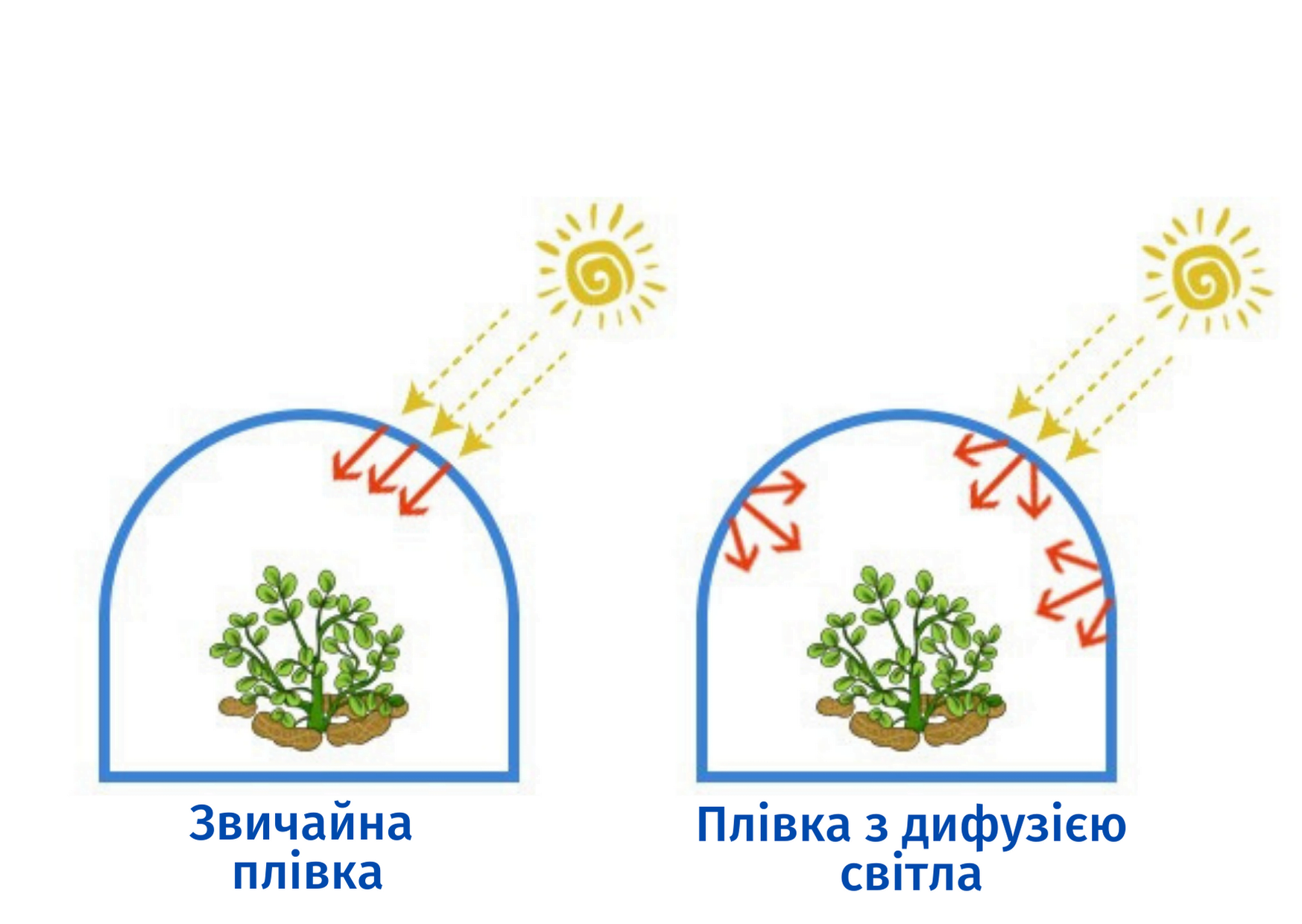
Furthermore, an indicator of a high-quality greenhouse film is strength: the film must be resistant to mechanical stresses, particularly strong against tearing, while remaining thin. This is achieved by adding EVA (ethylene-vinyl acetate) copolymer to the composition of the greenhouse film, which ensures high light transmission and increases the film’s strength and elasticity, even at low temperatures.
Modern manufacturing technologies allow for the production of films with enhanced properties, through which, for example, the ripening rate of the crop can be accelerated. The manufacturer adds an IR (infrared radiation absorbent) to the film formulation, which reduces heat loss by reflecting infrared radiation. This helps retain heat inside the greenhouse, compensates for the difference between daytime and nighttime temperatures, and enhances the greenhouse effect by +3-5°C, which accelerates crop ripening by up to 2 weeks.
An important characteristic of greenhouse films is hydrophilicity (anti-condensation effect), where condensed moisture does not accumulate on the film in the form of droplets that fall onto the plants, but instead forms a thin layer and flows down the sides of the structure. Avoiding droplet formation on the film surface is achieved thanks to modern additives that increase the wettability level of the film’s inner surface layer.
All of the aforementioned characteristics influence, one way or another, how much a greenhouse film costs.
How to Cover a Greenhouse with Film
The protective covering created with a frame and film is used primarily for growing seeds and vegetable crop seedlings—it absorbs the sun’s rays and converts them into thermal energy. It is always a few degrees warmer inside the greenhouse than outside, even without additional heating. The greenhouse helps shape a favorable microclimate for the growth of vegetable crops. On how you cover the greenhouse with film depends the reliability of protecting crops against weather precipitation, strong winds, as well as the penetration of insects capable of damaging seedlings or mature plants.
For a greenhouse to operate efficiently, you must not only understand how to secure the film to the greenhouse, but also correctly calculate the amount of covering material during its installation. For this purpose, calculations need to be performed and correct measurements taken. Solving these tasks is simpler when the length of the frame and the width of the covering material are known. To calculate the amount of greenhouse film for your greenhouse, utilize our online calculator “Greenhouse Films”.
Greenhouse Film Service Life
Under the influence of heat and sunlight, polyethylene loses its strength, becoming brittle and inelastic, and eventually fails. Replacing greenhouse film is a complex and costly operation for any farmer or greenhouse enterprise, which usually requires hiring assistants. Therefore, a film that does not require frequent replacement is an excellent solution for a farm.
To extend the service life of greenhouse film, manufacturers add an ultraviolet (UV) stabilizer to its composition, which protects the film from the effects of excessive solar radiation and minimizes its degradation. The more UV stabilizers included in the film formulation, the longer its service life; a film without UV stabilizers will fail within just a few months (4-6 months depending on the film thickness).
Types of Greenhouse Films: Single-Layer and Multi-Layer Greenhouse Films
Greenhouse film can be either single-layer or multi-layer. Multi-layer greenhouse films are typically utilized for large-scale professional greenhouses. Most modern polyethylene greenhouse films are manufactured using the co-extrusion method, combining several layers containing distinct polymers and additives. This means that during production, specific components are added into each individual layer of the film to impart targeted performance characteristics.
As a result, each layer provides unique characteristics to the film and increases its efficiency through successful synergy with the other layers. Multi-layer films are 25–30% stronger than single-layer films of identical thickness; it is impossible to visually distinguish these layers in the finished product with the naked eye.
LLC “Planet Plastic” is a Ukrainian manufacturer of high-quality greenhouse films with nearly 20 years of experience in the industry. The company has established itself as a responsible manufacturer and a reliable partner. For the production of greenhouse films at LLC “Planet Plastic”, only the most advanced materials supplied by leading global manufacturers of polymers and additives are used. They produce greenhouse film on modern extrusion machinery with fully computerized extruders, utilizing proprietary developments and technical know-how. Quality control of the finished product is conducted in accordance with international ISO and ASTM methodologies.
Cooperation with our company eliminates the need to search for where to buy greenhouse film: the product range allows us to satisfy the needs of both small-scale farmers and large greenhouse enterprises. The portfolio of LLC “Planet Plastic” includes single-layer and multi-layer greenhouse films. Single-layer greenhouse films have a service life of 12, 24, and 36 months and a width ranging from 2 to 6 meters; they are mostly used for covering small greenhouses and cold frames.
Additionally, the “Planet Plastic” plant manufactures multi-layer greenhouse films of the UV series utilizing specialized high-strength polymers. These films deliver enhanced security in regions subject to very strong winds, as well as significant savings, since they feature lower thickness and weight than conventional films while remaining 25-30% stronger.
These are the first and only multi-layer greenhouse films in Ukraine with a width of 12 m. In the current year, the “Planeta Plastik” plant expanded its range of multi-layer greenhouse films by adding wide-format XL greenhouse films with widths of 14 and 16 meters. These professional greenhouse films are used for covering large industrial greenhouse complexes. Conveniently, the film is produced in various flat-out widths: not only 12, 14, and 16 m, but also 8, 9, and 10 m, which allows covering a greenhouse of up to 800 sq. m. with a single sheet without unnecessary extra expenses. The thickness of these films is 100, 120, 150, and 180 µm. The service life spans 2, 4, 6, and 10 seasons.
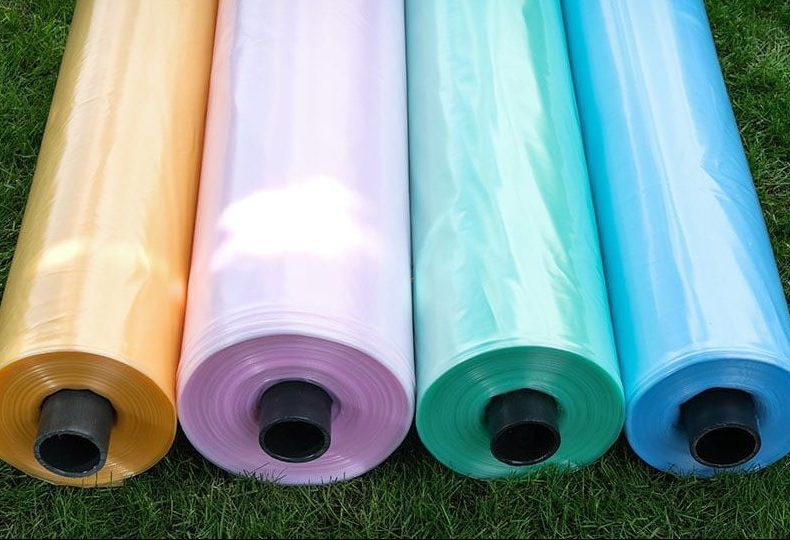
For consumer convenience, each film type is tinted a specific color during production—this serves as a method of material color-coding. Based on the greenhouse film’s color, you can quickly orient yourself on how many seasons the film is designed to last. Thus, a yellow UV film is guaranteed to last 2 seasons (12 months), green UV for 4 seasons, pink UV for 6 seasons, and blue UV for 10 seasons (5 years). Concurrently, the color of the film—or more precisely, the color pigment and film thickness—in no way affects the transparency of the film or its light transmission and diffusion properties.
“Planeta Plastik” greenhouse films offer you an ideal solution for maximum crop yield all year round. Films from “Planeta Plastik” feature:
- Higher resistance to tearing;
- Enhanced resistance to punctures;
- Improved light transmission rates;
- Long-term UV stabilization;
- Better temperature control;
- Optimized thicknesses.
Furthermore, greenhouse films manufactured by LLC “Planet Plastic” are completely safe for human health and the environment, which is validated by an international environmental certificate. Take advantage of the enhanced mechanical properties of greenhouse film manufactured by LLC “Planet Plastic” and its optimal light transmission. See the consistently higher quality for yourself and harvest multiple crops in a single year.
LLC “Planeta Plastik” greenhouse films provide reliable protection for plants and represent the best choice for growers.
Wishing everyone a rich harvest!