Covering silage pits: from straw to an oxygen barrier
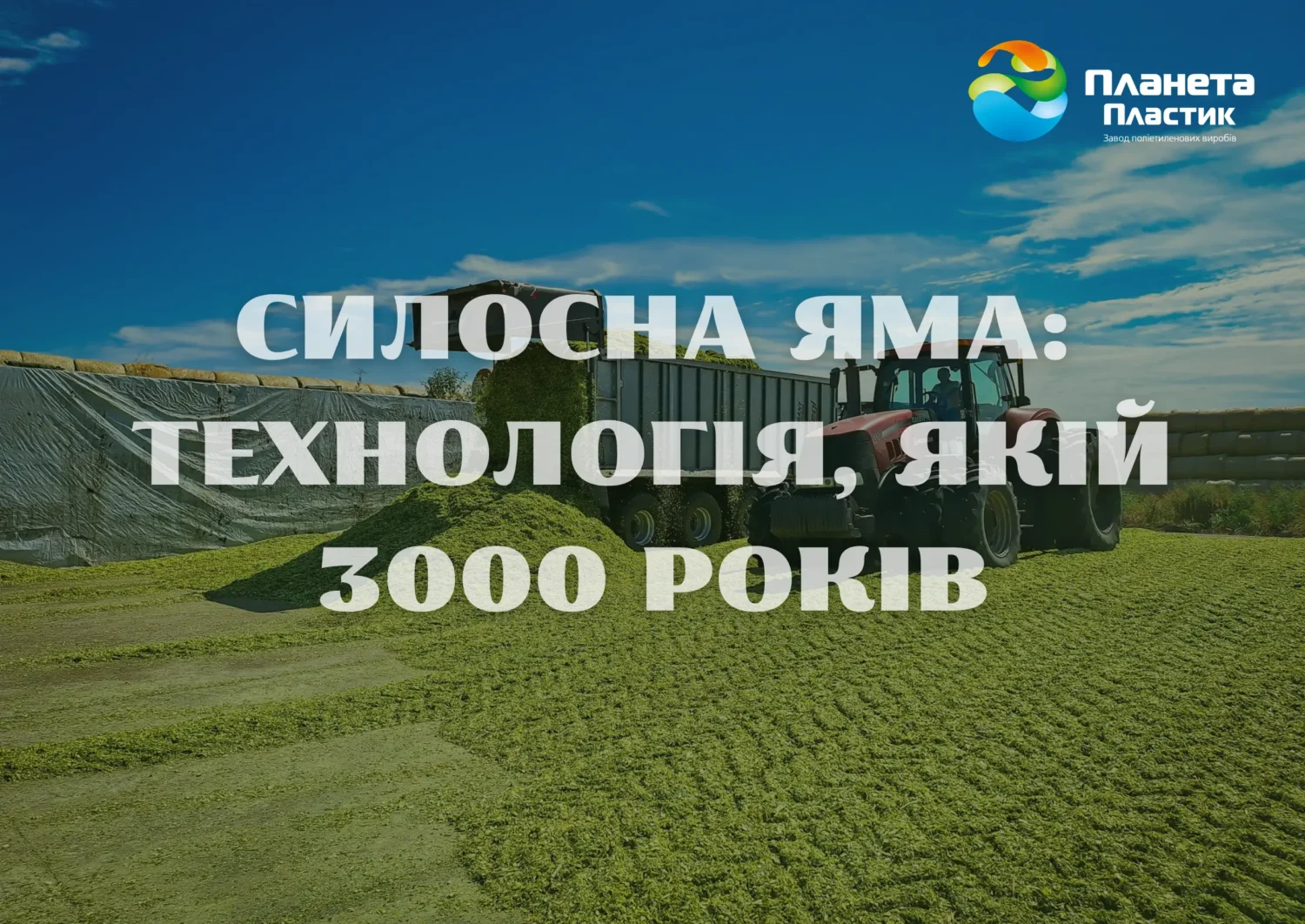
There are things that humanity discovered once — and never returned to the question. The wheel. Fire. The silage pit.
The latter is no joke. Underground storage of green mass was practiced in Egypt as early as 3000 BC. The exact same storage technology was independently replicated in Carthage. In the first century, Pliny the Elder described it in detail in Rome, and a French agronomist provided the scientific substantiation in 1877. Since then, the principle has not changed once. Bury it, compress the air out, seal it. That’s it.
Yet every year, farmers around the world open their trenches in spring and calculate losses in the top layer. Mold, overheating, uneven fermentation. Not due to mistakes during filling, but because of what the pit was covered with from above.
For three millennia, people solved the problem inside perfectly — and lost outside time and time again. Here is that story.
The History of Silage: A Discovery Made Three Times
On the walls of Egyptian tombs dating back to approximately 1000–1500 BC, archaeologists found images they could not correctly interpret for a long time. It was not the storage of finished grain, but the process of packing green mass into underground pits. A refined sequence of actions, clearly passed down from generation to generation.
Simultaneously — thousands of kilometers away, without any connection — written instructions appeared in Carthage for storing feed “in trenches.” The key detail: the trenches were covered with soil after filling to ensure airtightness. Not just a pit — a sealed pit. A principle applied without explanation, but with consistent results.
The first to attempt an explanation was Pliny the Elder. In “Naturalis Historia” — a 1st-century AD encyclopedia, Book 18 — he described the underground granaries of Cappadocia and Africa, calling them siros. His observation reads like a scientific paper: if air does not enter, the harvest remains safe for decades. He did not know about bacteria, but he described anaerobic preservation more accurately than some textbooks of the next eighteen centuries.
Three civilizations. No agronomic correspondence between them. One answer: bury it, seal it, leave it alone.
When different cultures independently arrive at the exact same solution — it is no longer a tradition. It is proof.
Why the Absence of Oxygen and Lactobacillus Are the Main Factors of Quality Silage
Until the mid-19th century, ensiling existed as a folk practice — without theory, without standards, and with unpredictable results. Identical pits, identical raw materials — yet entirely different outcomes. In one trench, the feed turned out succulent and nutritious. In another, it rotted or “burned.” No one could explain why.
French agronomist Auguste Goffart framed the question differently: not “why does it sometimes spoil,” but “what exactly happens when it turns out well.” The answer proved simple — and revolutionary. It wasn’t about the pit, the crop, or the weather. It was about oxygen. More precisely — its absence. If the mass is chopped, tightly compacted, and deprived of air, the process moves toward preservation rather than decay.
In 1877, Goffart published “Manuel de la culture et de l’ensilage des maïs et autres fourrages verts” — the first scientific work where ensiling was treated as a controlled technological process, not luck. He introduced the term “ensilage,” which is still used in agronomic literature. For this work, Goffart received the Legion of Honour — France’s highest state decoration. His methodology began to be copied in the US and Europe during his lifetime.
But the most fascinating discovery came after his death. It turned out that Goffart was absolutely right in practice — and wrong in his explanation. The preservation was not achieved simply by a vacuum. It was driven by bacteria — Lactobacillus, the very same that turn milk into yogurt and cabbage into sauerkraut. In an anaerobic environment, they convert plant sugars into lactic acid. When the pH level drops to 4.0–4.2, all biological processes stop. The feed “falls asleep” — preserved by its own acid, without any external chemicals.
The silage pit turned out to be an ideal bioreactor. The Egyptians, Pliny, Goffart — all used it without knowing how it worked.
Why Open Silage Trenches Won the Competition Against Silo Towers
Once science explained the mechanism of ensiling, engineers were tempted to improve it. Thus, the silo tower was born.
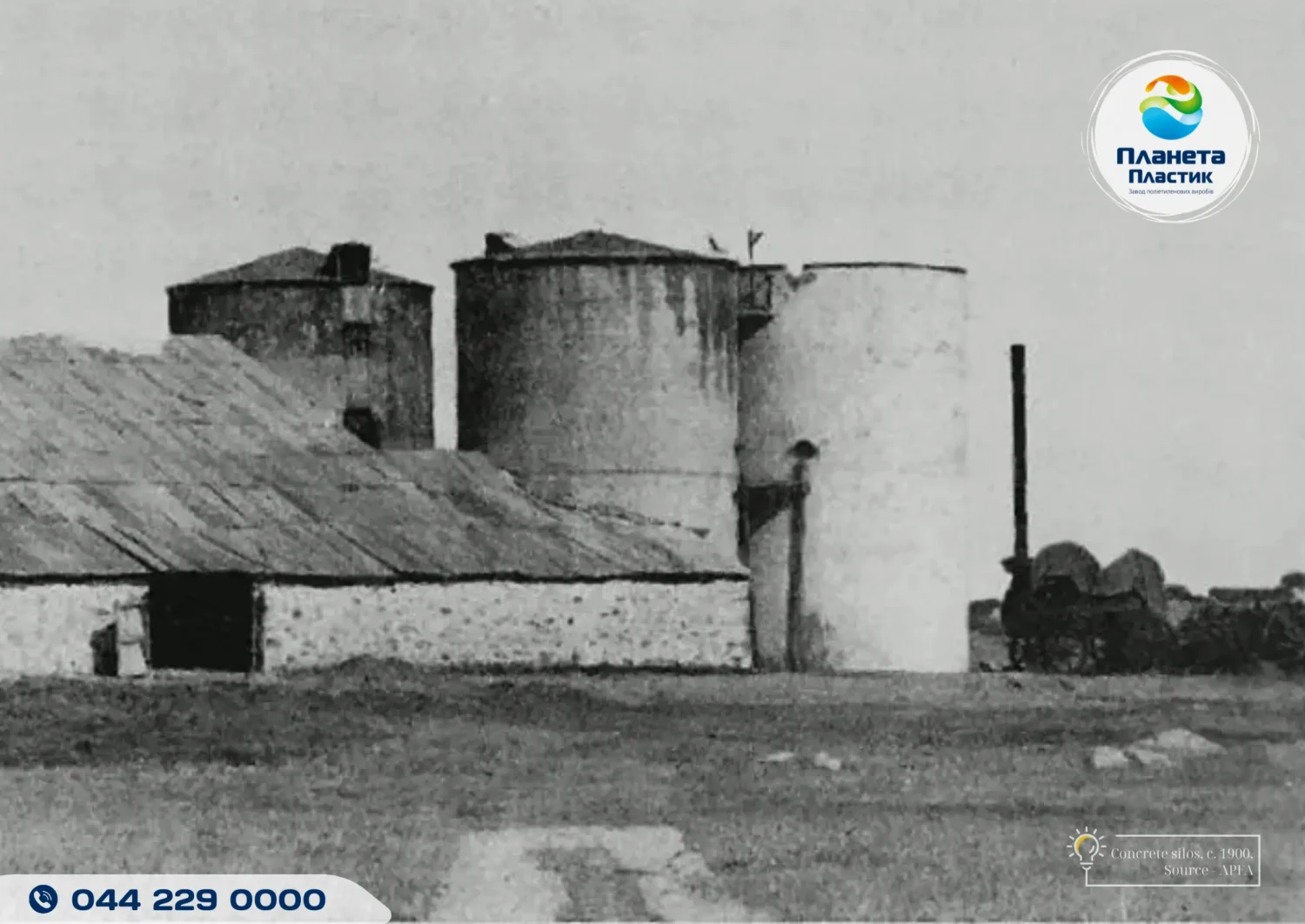
The logic was ironclad. The second half of the 19th and early 20th centuries: Europe was industrializing, farms were expanding, and land in densely populated regions was becoming expensive. A trench takes up space. A tower does not. A tall cylindrical structure made of concrete or metal: compact, airtight, manageable. The image of a modern farm. In the mid-20th century, it seemed that towers were about to displace trenches — just as the combine harvester displaced the scythe.
But the tower had an inherent flaw that wasn’t noticed immediately. In a closed space during the first days after packing the feed, nitrogen dioxide accumulates — known as silo gas. It is colorless with a barely perceptible odor. A few breaths in a poorly ventilated tower, and a person loses consciousness. Fatal cases of farmers entering to check the feed condition were documented. The tower, intended to be an improved pit, became a trap.
An open trench never had this issue — any gases disperse naturally. Added to this was simple logistics: dump trucks unload feed directly into a trench, whereas a tower requires an elevator to lift the mass from the bottom up. With industrial volumes, the difference in operating costs becomes substantial.
The pit won not because anyone defended it. It won because the alternative defeated itself — failing in safety and economics simultaneously.
Silage Film: The Evolution of Protection from Straw to Polymers
Let’s return to the main question: if the pit is so flawless, why do farmers still calculate losses?
The answer is simple and unpleasant: the pit is flawless inside. Outside, it’s a different story.
Early farmers covered silage pits with straw and peat. In 19th-century England, heavy stones and logs were placed on trenches to create continuous pressure, like a weight in a pickle barrel. The logic was sound, but the execution was crude: the top layer rotted almost guaranteed, losses reached 30–40%, and people simply accepted it.
Concrete in the 1920s solved the problem from below. Silage juice no longer seeped into the soil, mixed with groundwater, or contaminated the bottom layers. But at the top, nothing changed — the same soil, the same straw.
The first real breakthrough occurred in the early 1950s when polyethylene film was introduced to cover silage pits. By the mid-1970s, it became the industry standard: a 120–250 µm film with UV stabilizers — a material that could withstand the sun, rain, and mechanical stress. For the first time, covering a silage pit became a technology, not guesswork.
However, this standard had a hidden problem. Standard polyethylene allows oxygen to permeate — slowly, imperceptibly, but enough to trigger unwanted fermentation in the peripheral zones of the trench. This is exactly where the mold along the edges, inconsistent quality, and loss of nutritional value in the top layer come from. This issue remained unresolved for nearly 30 years.
In the late 1990s, co-extruded films with an oxygen barrier emerged. A polymer layer is fused between the polyethylene sheets, drastically reducing oxygen permeability. The result is measurable: less mold, more stable fermentation, and higher silage quality across the entire profile of the trench. Researchers evaluated this step as comparable in significance to the initial introduction of the film in the 1950s.
Simultaneously, the thermal problem was solved. A dark film on an open trench in summer acts like a solar collector — the mass overheats, Lactobacillus lose the competition to undesirable bacteria, and fermentation goes wrong. The answer was a black-and-white agricultural film for covering silage pits: the white outer layer reflects solar rays and limits heating, while the black inner layer blocks light and protects the feed from photodegradation. Today, this is the industry standard for covering silage trenches.
The Pit Remained. What Changed is How It’s Covered
The Egyptians, Goffart, the engineers with towers — all solved the same problem: how to preserve feed. The pit as a solution survived everything — skepticism, competition, industrialization. Because the principle is flawless.
But what happens in the final 50 centimeters at the top — between the surface of the feed and the outside world — determines whether that principle works in a specific trench of a specific farm. Stones and straw kept the mass from blowing away. Modern silage film manages temperature, blocks oxygen, and protects what took months to grow and harvest.
Silage covering film is not a consumable. It is the final link in the technological chain that either preserves everything done right or cancels out months of work.
A silage trench is a bioreactor where details matter. When the main work is done, protecting the final centimeters of the mass often determines the profitability of the entire season. Silage film is not a disposable item, but insurance for your investments. Planeta Plastik Factory manufactures this protection using advanced standards of co-extrusion and UV stabilization. Preserving the energy of every ton of feed with us.
Select a solution for your farm: