Grain storage: three mistakes you should be aware of before the season begins

In spring, farmers forget about elevators, focusing entirely on their fields. But now, when harvest is just days away, putting off the question of grain storage is becoming dangerous. It’s time to raise an important question: how and where to store the upcoming harvest, and whether everything is ready.
Storing grain in polymer bags is one of the most popular solutions among Ukrainian farmers. The technology is simple, proven, and requires no capital investment. But like any tool, it only works at full capacity when the rules of operation are followed.
At the Planeta Plastik plant in Irpin, we have been manufacturing Harwell™ polymer grain bags for decades. Over the years, we’ve seen all kinds of situations — and know for certain: even the strongest film won’t save grain if the technology is not followed.
To avoid unpleasant surprises during the harvest rush — let’s go through the top 3 most common mistakes.
Choosing and preparing the storage site.
The storage site is the foundation of the entire process. Choosing it correctly is no less important than the quality of the polymer bag itself.
Site surface.
The first thing to check is the terrain. The surface must be flat and firm. If there are pits or uneven areas, the bag will lie unevenly after loading. If the site has a natural slope — position the bag along it: this will ensure natural drainage of moisture during rain or snowmelt.
Sharp objects on the site.
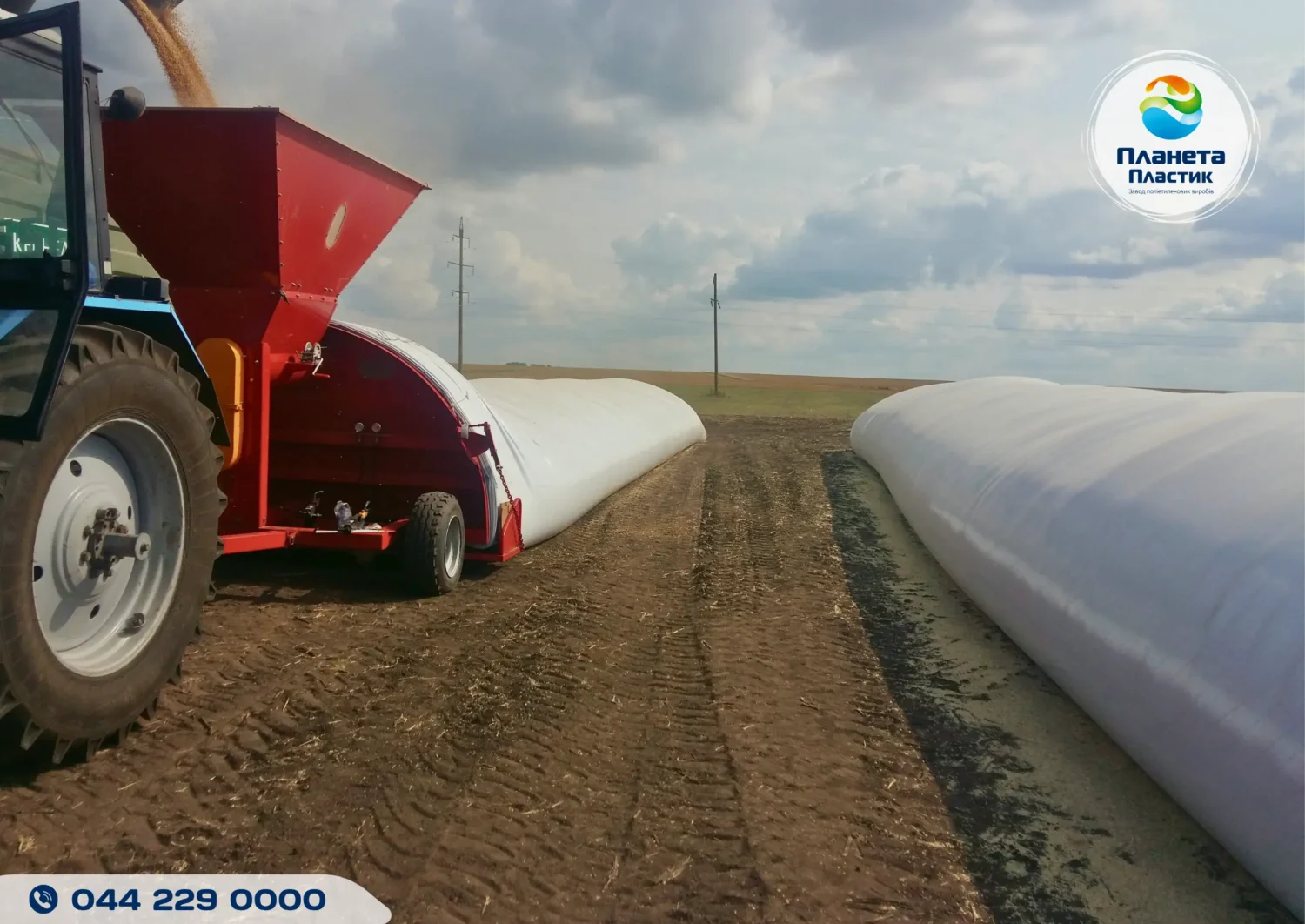
The second factor is surface cleanliness. Stubble, gravel, stones, any sharp-edged objects — all of these are a direct threat to the integrity of the storage bag. Damage can occur in the first minutes of loading, unnoticed — and only become apparent much later. Before laying the bag, the site must be thoroughly cleared and, if necessary, disced and rolled.
Site hygiene.
There is one more point that is often underestimated: spilled grain near the bag. Even a small amount attracts rodents and birds — and they will find their own way to get to the contents. Always keep the site clean.
✅ It’s also worth paying attention to the quality of the grain itself before storage.
Moisture standards for different crops is a separate topic that directly affects storage results.
Filling control.
The site is prepared, the bagger is in position — and the first tonnes of grain are going into the bag. This is where several critical nuances arise that determine storage quality for months ahead. Loading a bag is a straightforward process if you follow the manufacturer’s recommendations. But this is also where mistakes happen that aren’t immediately noticed.
Uniformity of loading.
The bagger (loading machine) moves forward and gradually fills the bag with grain. The speed of the loader is controlled by its braking system. If braking is uneven — the bag ends up with “waves.” On the outside this simply looks unattractive, but inside it creates zones with different storage conditions. One more point: an unevenly filled bag holds less grain than it could.
Film stretching.
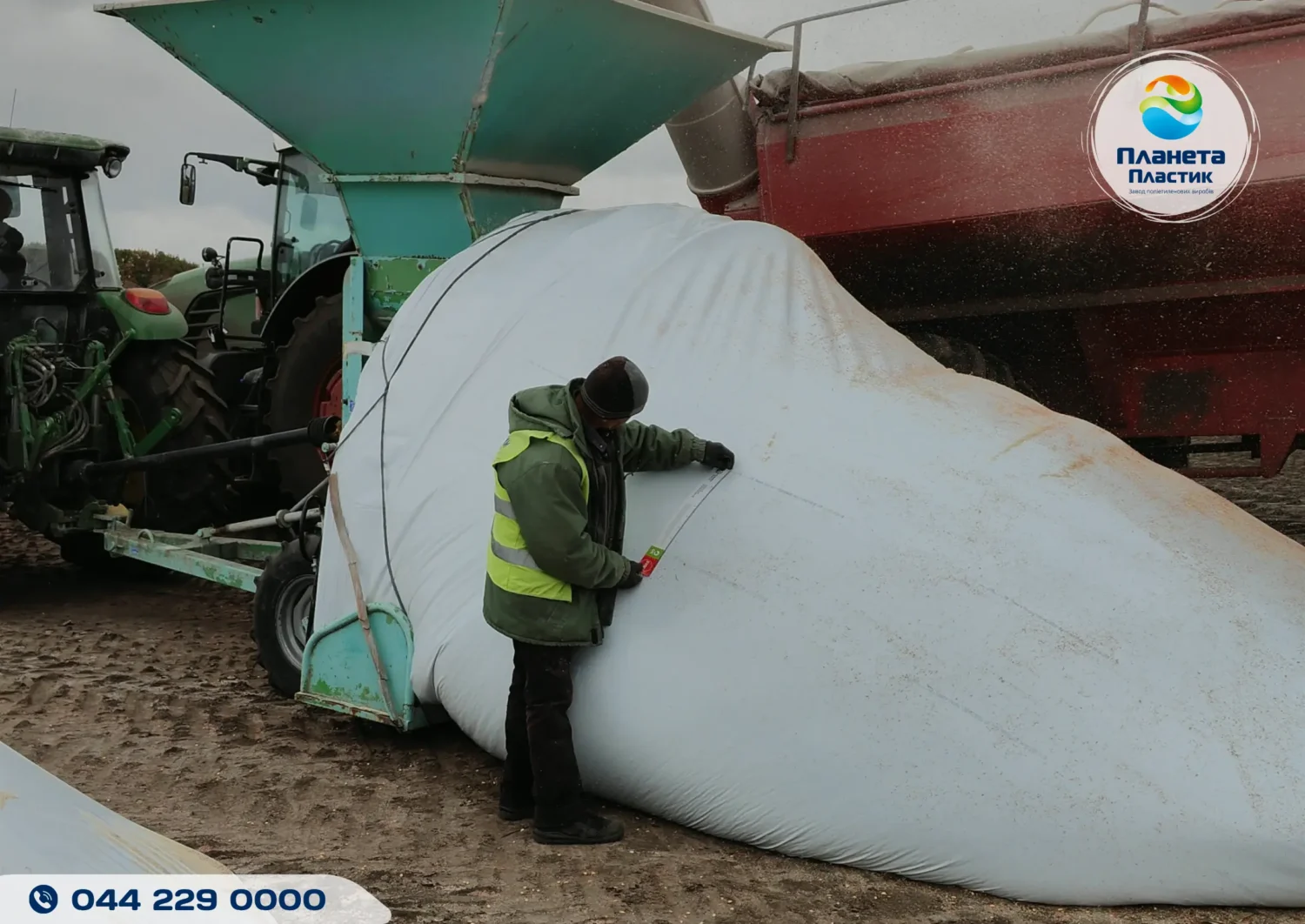
On the side surface of the bag there are two parallel marking lines 40 cm apart. Every bag kit includes a special ruler to measure them. The normal stretch is up to 10% (44 cm). As soon as the ruler shows the red zone — reduce the feed rate. An overfilled bag is harder to unload and less reliable for storage.
Closing the ends.
The final step of the loading process. The end of the bag is tied with special cords from the kit or sealed using wooden planks. The key is to do it tightly. Any free access of air is a risk to the grain inside.
Loaded, closed — the bag is ready to store. But for it to perform at full capacity, one more important recommendation should be followed.
Post-storage monitoring.
The bag is closed, the grain is inside — it seems like you can focus on other things until it’s time to sell. But regular monitoring throughout the entire storage period is what separates a successful season from unpleasant surprises.
A visual inspection once a week is the minimum. Walk the perimeter of the bag and check the integrity of the film. Pay special attention to the ends and the bottom. In winter, always clear away snow: it easily conceals even significant damage.

Birds and rodents are the most common cause of mechanical damage. Birds attack the film from above, rodents — mainly at the ends where there are folds. To protect against birds, electronic deterrents are used, but keep in mind: birds quickly get used to a single sound, so it’s worth alternating methods every 2–3 weeks. Against rodents, a clean perimeter around the bag helps — no spilled grain — along with rodenticides at the ends. In areas with high animal activity, a protective net is additionally stretched over the bag or an electric fence is installed around the perimeter.
If damage is discovered — act immediately. First, apply a strip of tape across the puncture, then lengthwise — the repair tape from the standard bag kit. The faster you respond, the fewer consequences for the grain inside.
For more details on all aspects of working with grain bags — see the complete storage technology guide.
Storing grain in polymer bags is an easy-to-use and straightforward technology. Most of the mistakes described above happen not from lack of knowledge, but from the human factor — rushing or the habit of doing things “the usual way.” One missed step — and the technology that stores millions of tonnes around the world fails right at your farm.
To prevent that — the manufacturer’s team is always there for you. We consult, provide training, and when needed, come directly to your field.
Harwell™ bags in all sizes are always in stock.
Contact us: