Polymer Grain Bags: From Experiments in Germany to a Global Standard and Ukraine’s Experience

When we hear the phrase ?Argentine grain storage technology,? it may sound like an innovation born on the pampas among pioneering farmers. In reality, the story is much broader. It begins in Germany, continues in Canada, and only then finds its true embodiment in Argentina. This is not the path of a single inventor but a series of trials, errors, and discoveries.
First Steps: ?Schlauchsilage? in Germany
In the 1970s, German engineers tried to solve the problem: how to store forage without building expensive silage pits? This led to the technology called ?Schlauchsilage? (literally ?tube silage?).
The idea was simple: compact chopped green mass into polymer bags. Instead of mobile machines, stationary presses were used, and the bags were stacked one on another. On paper, the idea looked progressive, but in practice it was too slow and costly. Farmers already had silos and pits, while the new method offered no significant advantage. As a result, the German experiment remained local and soon faded away. The bulky and expensive equipment forced farmers to abandon the idea, which was forgotten for decades.
The Canadian Spark: Clavell Brothers and ?Bag-O-Grain?
Decades later and thousands of kilometers away, in the Canadian province of Saskatchewan, brothers Jules and G?rard Clavell faced their own challenge: what to do with surplus barley?
In 1982, together with mechanic George Sullivan, they built a machine called ?Bag-O-Grain.? According to The Western Producer (2010), their first attempt was to modify a seeder, which failed. Then they designed a machine based on an auger to feed grain into a polyethylene bag through a tunnel. It looked bulky but it worked.
Canadian farmers were not impressed ? elevators were plentiful, and the new technology seemed unnecessary. However, a few machines were sold, and one of them made its way to Argentina. That?s where the real revolution began.
The Argentine Breakthrough: When the Idea Found Its Time
When ?Bag-O-Grain? was nearly forgotten, its idea gained a second life in Argentina. On the endless pampas, it not only took root but transformed into a complete system. In the early 1990s, Argentina faced a paradox: more grain than ever, but a catastrophic shortage of storage facilities. Elevators were full, and there was no money to build new ones. Farmers needed a fast, cheap, and flexible solution.
And they got it.
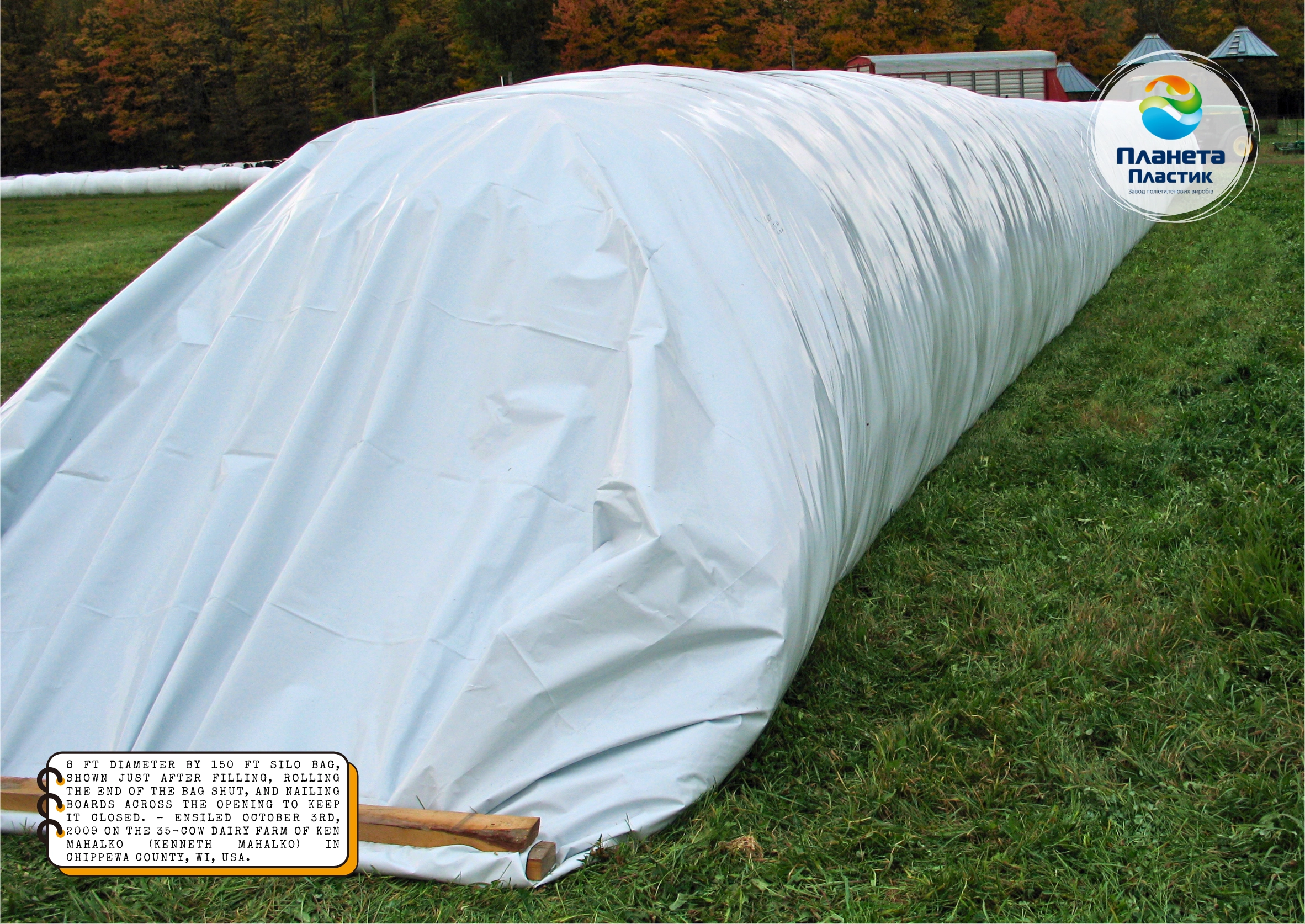
Engineer Rafael Canovas, observing farmers? struggles, developed a unique three-layer polymer bag with a white outer layer reflecting sunlight and a black inner layer protecting against UV radiation. This invention became the heart of the technology. Companies like Richiger, Mainero, and Akcel created the first commercially successful grain baggers. Unlike the Canadian prototypes, these machines were faster, more efficient, and mobile. They used hydraulic brakes to ensure airtight packing, displacing oxygen and creating an anaerobic environment.
At the beginning, the idea was not owned by a single corporation but rather grew from farmers? experiments. The Instituto Nacional de Tecnolog?a Agropecuaria (INTA) played a crucial role in studying and promoting the technology. They researched how the anaerobic environment affected grain and silage quality, provided recommendations, and spread knowledge about airtight storage. INTA confirmed that oxygen levels in sealed bags dropped to 1?2% while CO? rose to 15?20%. This natural atmosphere effectively killed pests and prevented mold without chemicals.
Thanks to these innovations, Argentina turned a simple bag into a sophisticated tool, known as ?silobolsa,? which became a phenomenon. Storing grain directly in the field became not only possible but profitable.
Global Expansion: How Grain Bags Conquered the World
The success of Argentine farmers quickly became known abroad.
✦ USA and Canada: In the late 1990s, the ?Argentine technology? returned to North America as an alternative to overloaded elevators. Research from Purdue University confirmed its effectiveness, showing that airtight bags protected grain from pests like weevils without insecticides. USDA studies also validated the technology as a reliable and cost-effective solution for short- and long-term storage. These findings convinced American farmers that this was not an exotic import but a practical tool for their operations.
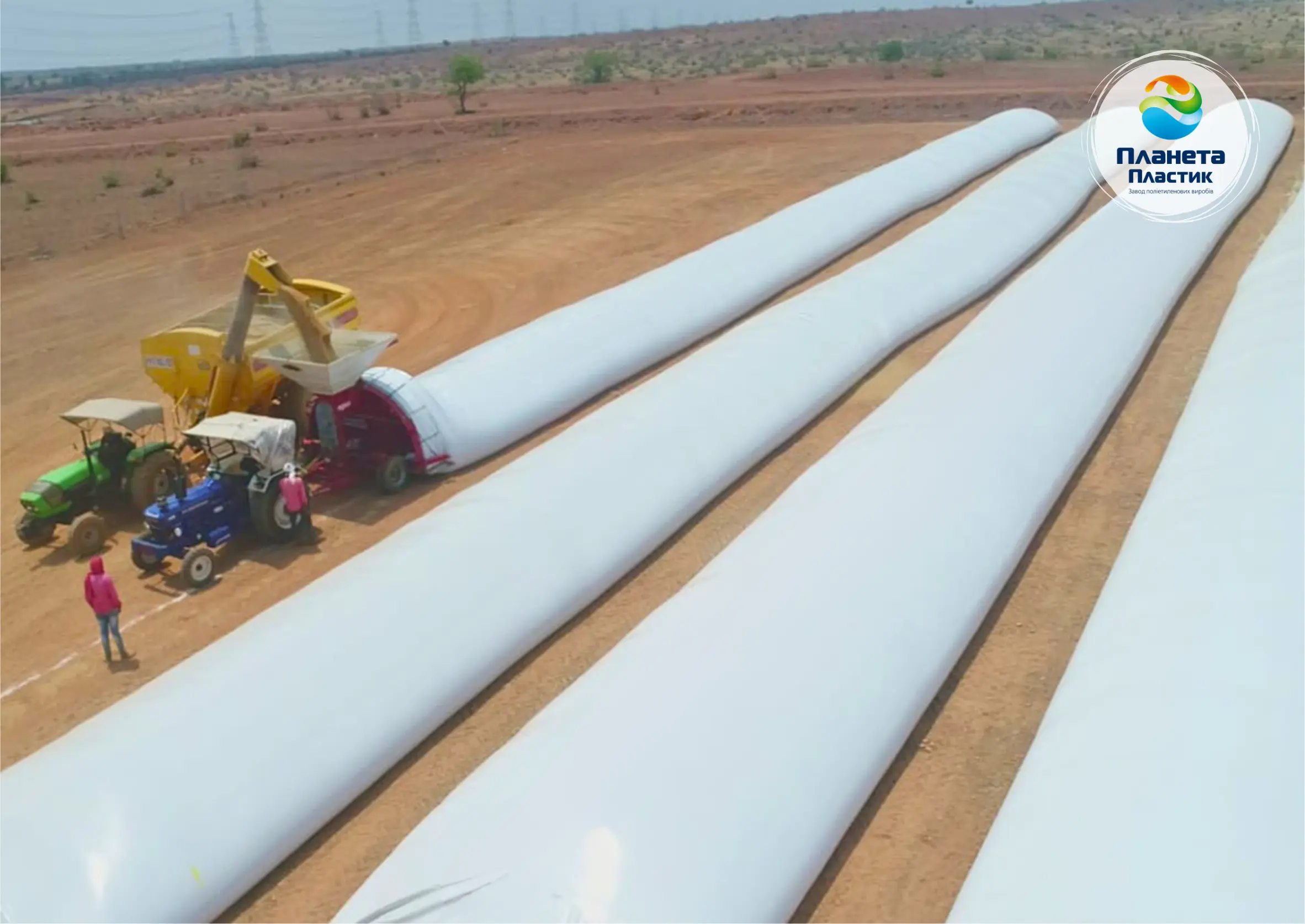
✦ Following Argentinas commercial success, grain bag technology spread worldwide. Next came Australia, Brazil, and South Africa, where vast distances and high logistics costs made bags a real lifesaver.
✦ Europe: Spain and Italy were the first to adopt it in the mid-2000s, driven by similar climate and logistics issues. While Argentina focused on corn and soybeans, Spain and Italy used bags for wheat, barley, and silage ? vital for livestock farms. Local studies confirmed their effectiveness against pests and mold. In Germany and France, the technology was adapted with stricter grain quality control, improved materials, and monitoring systems, making it reliable even under challenging climates. European manufacturers later developed their own equipment and bags, further refining the technology.
The Ukrainian Experience: From Innovation to Lifeline
The history of grain bags in Ukraine is a unique example of how a business tool became a pillar of national security.
Pilot Projects and Early Adaptation (mid-2000s)
✧ The first references appeared around 2005?2006. Knowledge of the ?Argentine method? came through international publications and experts visiting Argentina, Brazil, and the USA.
✧ Distributors introduced the first equipment and bags into Ukraine.
✧ Farmers were skeptical: storing grain outdoors, especially in winter, seemed risky. Concerns included rodents, mechanical damage, and weather. Early projects were small and experimental.
Commercialization and Popularity Growth (late 2000s?2010s)
✧ Early successes proved the technology reliable, attracting large agroholdings struggling with elevator shortages. Bags cut storage and logistics costs and provided sales flexibility.
✧ By 2012?2014, the method was widely known, with hundreds of thousands of tons stored in bags.
✧ At this stage, the Ukrainian company Planet Plastic launched domestic production of grain bags under the Harwell brand, making them cheaper and more accessible.
✧ Ukrainian-made baggers and extractors also appeared, completing the technology ecosystem.
Critical Role in Food Security (2022 ? today)
✧ After Russias full-scale invasion in 2022, bag storage became essential. With elevators destroyed or blocked, Ukraine faced a 15 million ton storage deficit.
✧ The government and international partners, including FAO and USAID, provided thousands of bags and machines. This enabled farmers to save the harvest and maintain exports despite the war.
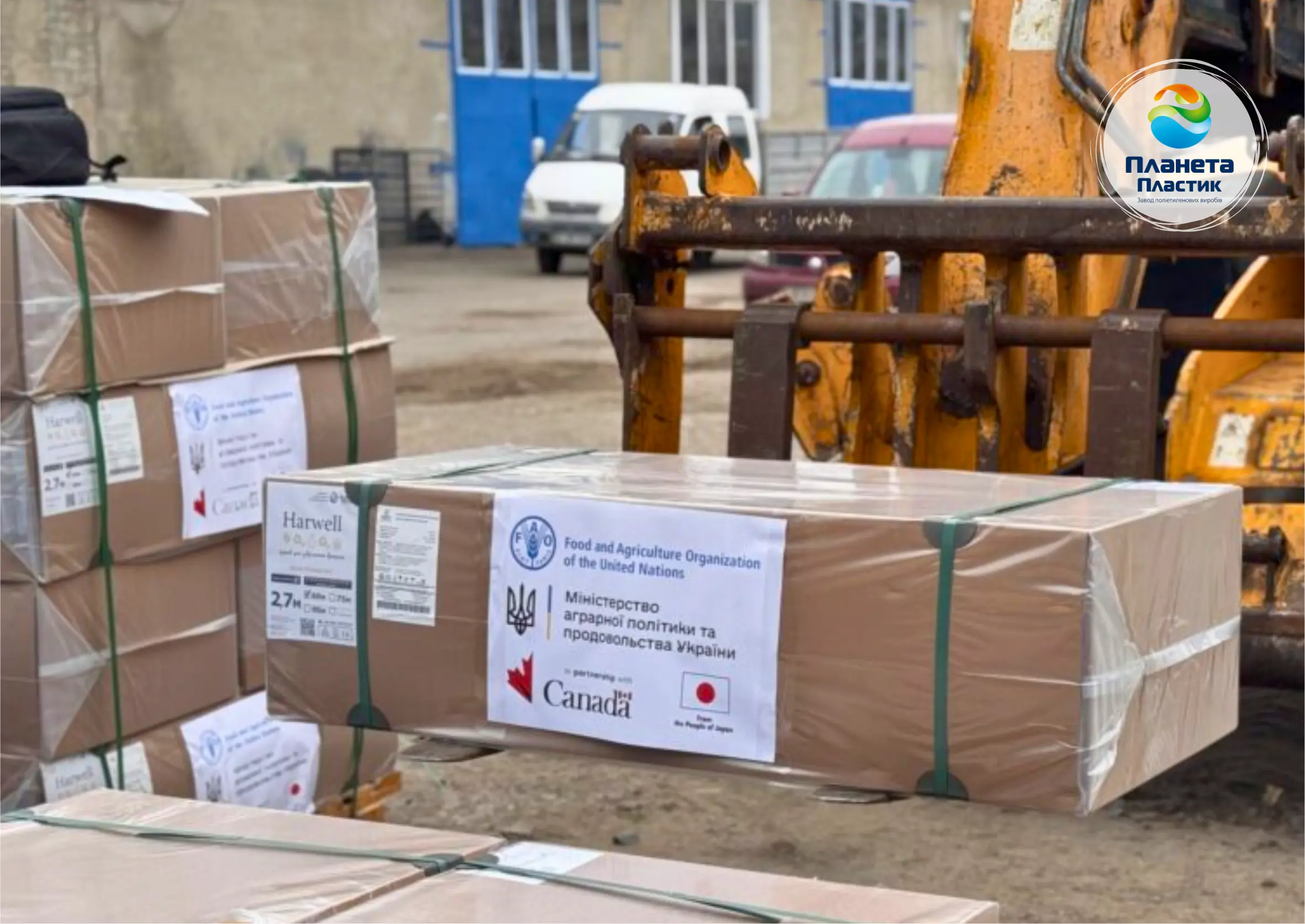
The Role of Harwell? in Ukraine
Planeta Plastik played a key role in commercialization by producing its own Harwell-branded bags. Ukrainian farmers quickly trusted them thanks to:
✦ Durable structure: multi-layer extruded film ensuring high strength.
✦ Effective protection: white outer layer reflects sunlight, black inner layer blocks UV.
✦ Local production: made in Ukraine, ensuring affordability and independence from imports ? vital during war.
✦ Critical role since 2022: with elevators destroyed or blocked, Harwell polymer bags became a lifeline. They saved millions of tons of harvest, securing food security and enabling exports. According to Ukraine?s Ministry of Agrarian Policy, up to 7?8 million tons were stored in bags during this period.
Today and the Future
Today, the technology is used in more than 40 countries, with over 300 million tons of grain and feed stored at any given time. Argentina, Brazil, the USA, Canada, and Australia are leaders, but Europe and Asia are joining actively.
The story of polymer grain bags is a prime example of how a failed idea in Germany and a forgotten invention in Canada became a revolution in Argentina. Today it is no longer exotic but a global standard ensuring food security worldwide.
Grain storage in polymer bags is no longer just a method ? it is a global strategy helping countries adapt to climate and geopolitical challenges, ensuring the stability of Ukrainian agribusiness and the world?s food system. To learn more about how Harwell? polymer bags from Planet Plastic LLC can support your business, visit our website or call our managers at +38 044 229 0000.