Harvesting campaign 2020. Cannot be stored or sold.
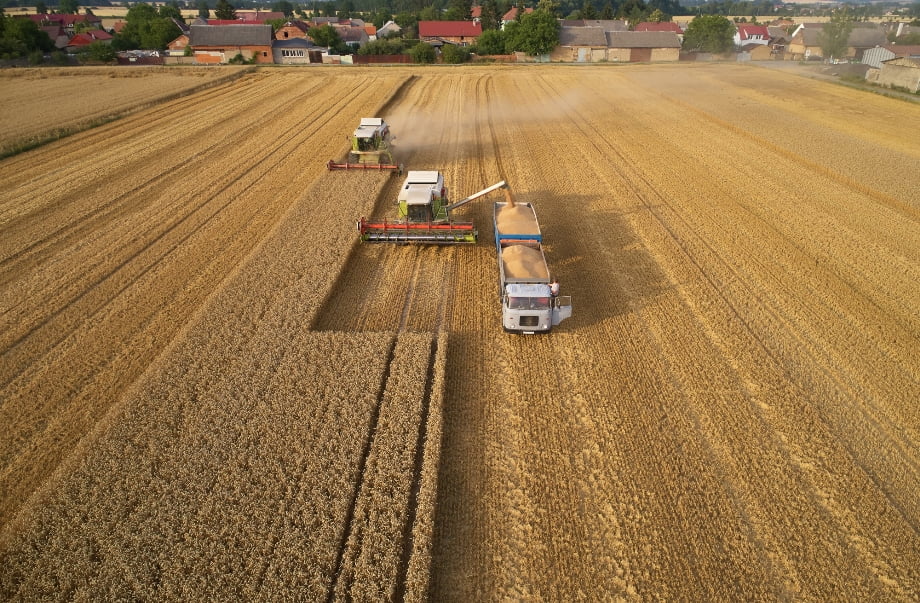
During the harvest period, the question of how and when to profitably sell it becomes highly relevant. Experts state that this is one of the most critical questions for farmers, as price volatility throughout the marketing year is immense. For instance, the average cost of wheat during the harvesting period in Ukraine in August–October 2019 was 4,106 UAH/t, whereas in October 2020 it reached 5,866 UAH/t. Similarly, the cost of soybeans was 5,858 UAH/t in October 2019 and 10,695 UAH/t in April 2020, respectively. Thus, the average price per ton of wheat increased by 31% over 6 months, while soybeans rose by 68%. Therefore, farmers should thoroughly analyze the best time to sell wheat or other grain crops.
Several factors simultaneously influence the choice of the grain sales period. The first of these is whether the farmer or enterprise possesses their own grain storage capacities. However, experts advise farmers against selling grain in the exact month it was harvested. As a rule, prices during that time are unfavorable. It is better to hold onto the grain, either by keeping it in one’s own warehouses or sending it for elevator storage, since practice shows it is often more profitable to sell in the spring of the following year. Nevertheless, if a farmer lacks independent storage capacities and faces a severe shortage of working capital, it might indeed be worth selling the grain immediately after the 2020 harvest is gathered.
An alternative grain storage technology is also available. How is grain stored? In what? The answer is simple – by using Harwell grain storage sleeves. The process is quite straightforward, though storing grain in sleeves does involve certain specific nuances.
Loading grain into polymer sleeves is performed using a grain packaging machine (bagger), and the bag is hermetically sealed. Such a sleeve is placed on a prepared outdoor site. When necessary (e.g., for grain sales), the polyethylene sleeve (bag) is cut open, and unloading grain from the polymer sleeves is carried out using another specialized machine (unloader).
The machinery for storing grain in sleeves is presented in more detail on the website.
Storing Grain in Polymer Sleeves – An Alternative Method of Grain Storage.

There are various modes for storing grain in sleeves; thus, provided all bagging rules are followed, both wet and high-moisture grain can be preserved in them without losing quality, and then dried two to three months later when the peak load on drying capacities has passed.
Are there doubts that storing wet grain in sleeves is more profitable, and which grain is better to pack into bags?
Bagging wheat with increased moisture content into sleeves is not critical – it can be stored in them for 6–8 months without any loss of quality. However, it is preferable to dry soybeans and corn before loading them into sleeves.
Grain in sleeves does not spoil due to a self-preservation process, as there is no air exchange inside the sleeve. Thanks to the grain’s natural ability to “breathe”, as well as the respiration of insects and microorganisms that enter the sleeve, the oxygen consumed during this process is replaced by carbon dioxide. This carbon dioxide acts as a natural preservative that prevents the vital activity of fungi and microorganisms. Consequently, the self-preservation of grain occurs, and it is stored in conditions close to a vacuum.
The efficiency of bag sleeves for grain storage can hardly be overstated, as they successfully solve the problem of enterprises limited in warehouse space and those with low-capacity dryers. It minimizes capital expenditures on warehouse and drying facilities, eliminating elevator costs.
Furthermore, this technology ensures high-quality grain preservation due to anaerobic storage conditions. Thanks to natural preservation, the grain requires no fumigation or other treatments aimed at maintaining quality during storage.
Sleeve technology allows harvesting to begin during the final phase of wax ripeness. This makes it possible to shift the start of harvesting operations forward by 5–7 days, thereby reducing losses from grain self-shattering and minimizing the risks of extending harvest work until continuous rains set in.
For more details on the technology and how to choose a sleeve for grain storage, read our article “Storage Technology in Grain Sleeves“.
To summarize, when is it most profitable to sell the harvest:
- Late winter, early spring. Based on the experience of recent years, the best months to sell grain are February and March. It is during this period that the highest demand and prices are recorded. Depending on the crop, its price can be 30% higher or more compared to the harvest period.
- It is unprofitable to sell grain in the month it was harvested.
- Selling immediately, so to speak, “straight from the field” — if the farmer or enterprise has nowhere to store the harvest and is simultaneously facing an acute shortage of working capital.
An effective decision can be made after analyzing all production components and marketing channels for the finished product. Therefore, each grain producer decides for himself: “store, cannot sell” or “store cannot, sell”.
If you have decided to wait with the sale until market prices for grain crops rise, purchase grain storage sleeves from Planet Plastic LLC.
Wishing everyone a rich harvest!