Grain Sleeve Storage Technology. Harwell Grain Sleeves
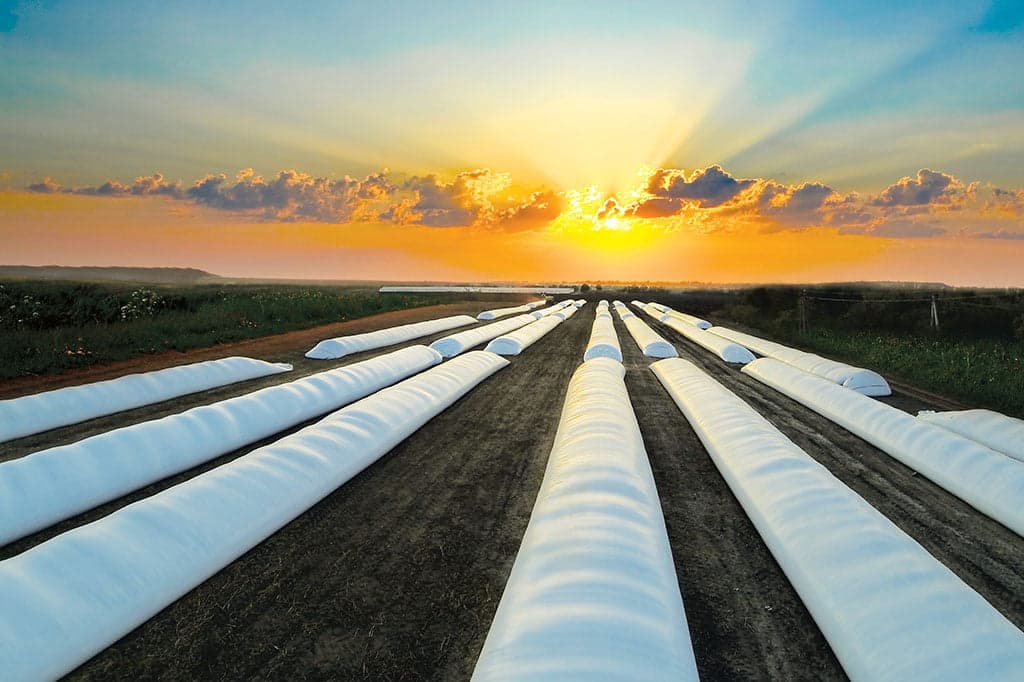
How to Store Grain. Grain Bag Storage Technology
The process of storing grain in bags is quite simple. Grain is loaded into a polyethylene bag using a grain bagging machine (loader) and hermetically sealed. This bag is placed on a prepared outdoor site. It is advisable that the soil under the bag is firm enough, especially if you plan to unload the bags in autumn (in wet weather). This way, the grain is stored in conditions close to a vacuum. If necessary (selling grain, etc.), the polyethylene bag is cut open, and the grain is unloaded using another specialized machine (unloader).
Get a free sample of Harwell TM grain bag
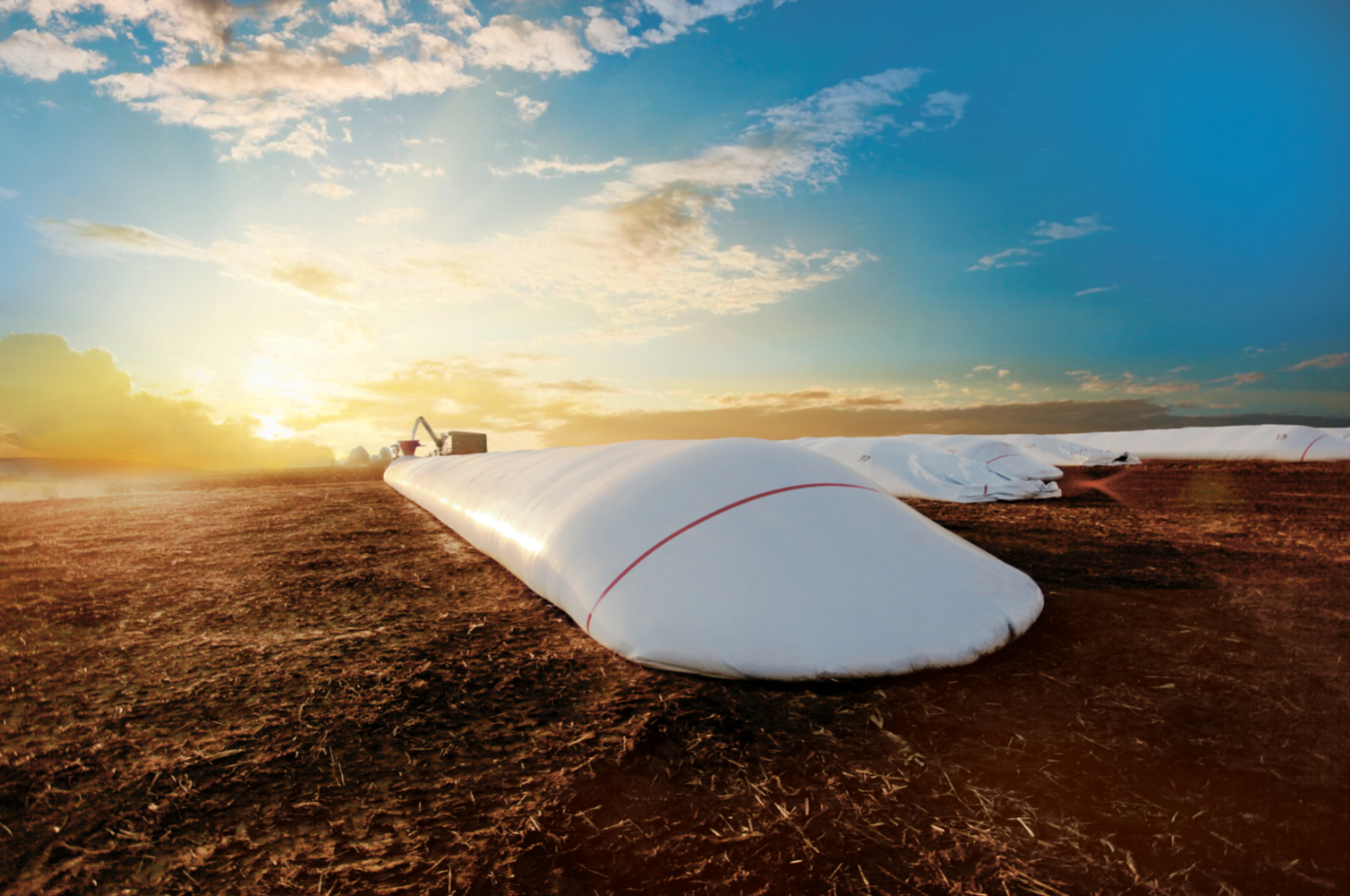
The core of the storage technology is the natural preservation of the bag’s contents by creating an anaerobic environment in a tightly loaded (more than 3 tons per 1 meter) and hermetically sealed polymer bag. During the “breathing” process of the grain, as well as the vital activity of insects and fungi that enter the bag along with the grain, oxygen is consumed and replaced by carbon dioxide, which acts as a natural preservative that prevents the activity of fungi and microorganisms.
What Is Stored in Bags
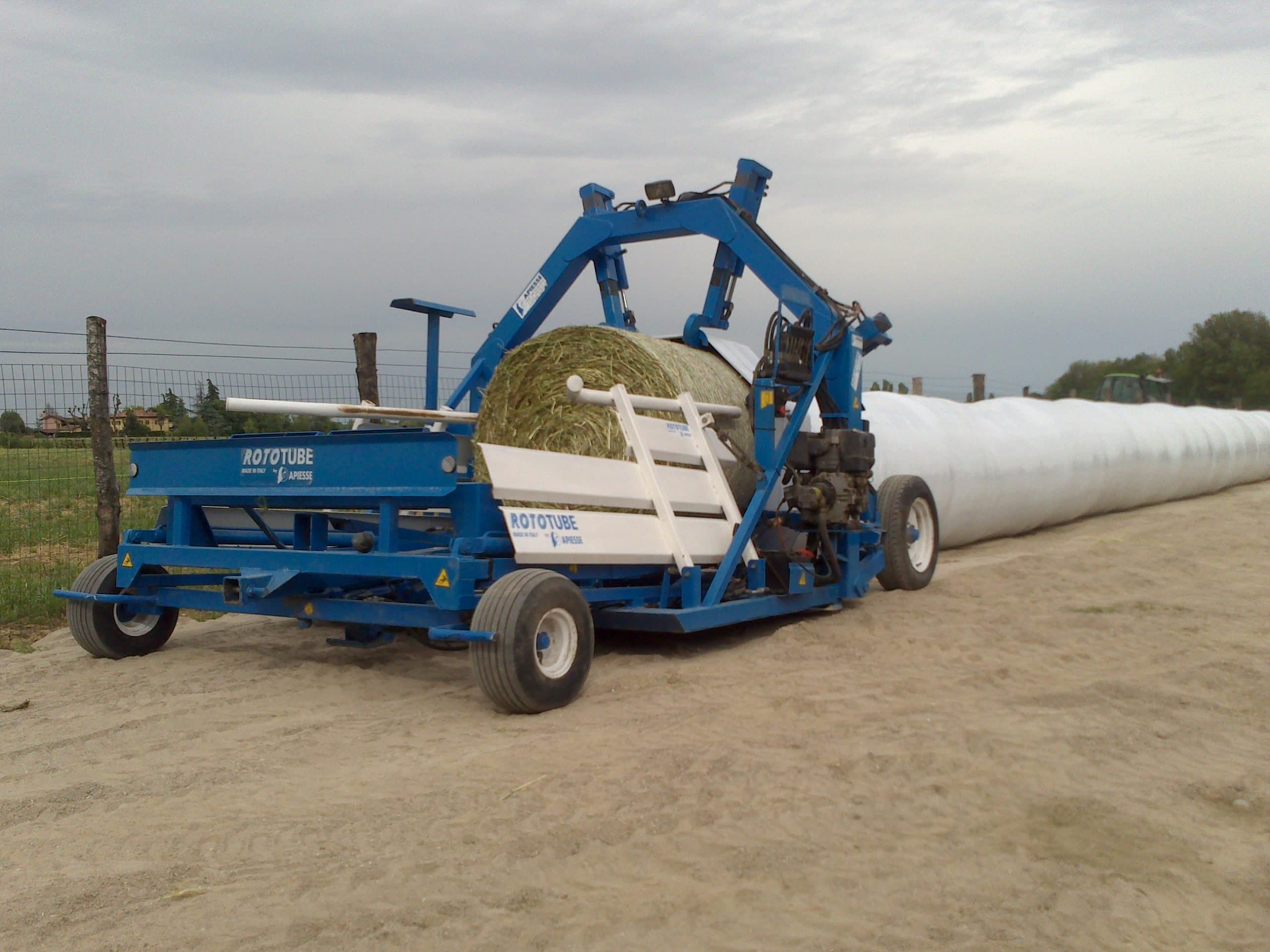
Grains: sunflower, wheat, corn, barley, rapeseed, soy, rice. Feed: beet pulp, crimped grain, silage, green mass, brewers’ spent grain, forage, haylage, tomato and olive pomace. Grain bags are also suitable for storing fertilizers and even for biogas production from household waste.
How Long
How long can grain be stored in grain bags? Ukrainian farmers store grain in polymer bags for an average of 6 months. However, grain can actually be stored in polymer bags for up to 18 months. For instance, the service life of Harwell™ grain bags is up to 24 months. Nevertheless, the duration of grain storage in bags depends on the moisture content and quality of the loaded grain. The higher the grain moisture and ambient temperature, the shorter the storage period.
Who Uses Grain Bags
Bag storage technology is utilized by both farmers and medium-sized agricultural enterprises facing a shortage of grain warehouses, as well as large agricultural holdings with their own network of grain elevators, poultry and livestock companies, grain elevators, feed mills, oil extraction plants, and agro-traders.
“At Agro-Region holding, we first tried partially storing grain in Harwell TM bags back in 2014, and then gradually switched completely to grain bags of this brand,” says Vasyl Viktorovych Melnyk, chief agronomist of the Agro-Region holding. “Storing grain in an open field in three-layer polymer bags is an excellent alternative to third-party elevators. Or in cases where there is a shortage of own storage facilities.
It’s like an ‘infinite elevator’ because you set up an open-air warehouse right in your field, in the exact size needed to store your grain.”
Characteristics of Harwell TM Grain Bags

Harwell TM grain bags protect against snow, rain, UV radiation, and temperature fluctuations. We manufacture Harwell TM polymer bags on an automated multi-layer line using a precisely dosed, unique formulation. It is this recipe blend, consisting of 10 different components and featuring the latest generation of polyethylene, that gives the Harwell grain bag a number of distinctive properties:
- High tensile strength and elasticity, high puncture and tear resistance, and impact strength that protect against potential damage by hail, animals, or humans.
- High creep resistance (the bag retains its shape after loading) — ensures the ability to maintain the bag and allows it to be used in the hottest regions of the world.
- Light reflection — prevents the grain bag from overheating in summer. At any time of the year, the grain temperature does not exceed 10 degrees and does not drop below zero.
- Light opacity — completely eliminates light penetration inside and prevents the formation of an environment for the development of microorganisms.
Film frost resistance down to minus 50 degrees. - Resistance to thermo-oxidative and UV degradation up to plus 50 degrees.
- Service life of Harwell grain bags is up to 24 months.
The Harwell™ grain storage bag has been tested in a European accredited laboratory for food safety, heavy metal content, migrating substances, monomers, and carbon black — and complies with all EU regulatory requirements. Our grain bags are also fully recyclable after use.

Advantages of Grain Bag Storage Technology
- First of all, it is reliable. Harwell™ grain bags from Planet Plastic LLC are durable yet elastic, withstanding grain mass pressure of more than 3 tons per 1 meter. Our polymer bags undergo laboratory testing for tensile strength and elasticity, puncture and tear resistance, and impact strength. Therefore, the perfect performance characteristics of Harwell TM bags minimize the risks of damage during grain storage.
- Secondly, storage in grain bags successfully solves the problem of farms limited in storage space and capacity. Likewise, it helps farms with low-capacity dryers, minimizing capital expenditures on storage and drying facilities. Plus, operational costs are low.
- Thirdly, it ensures high quality of grain preservation due to the nature of the technology — anaerobic storage. Thanks to natural preservation, grain does not require fumigation or other treatments aimed at maintaining quality during storage. Accordingly, a new level of environmental friendliness and food safety for grain can be claimed.
- Reduction of logistics costs and lower risk of harvesting campaign delays due to transport reasons or lack of storage capacity.
- Accurate grain sorting and clear identification of quality characteristics of grain varieties throughout the storage period allow products to be sold on the market at the maximum price. The grain is not damaged during the loading and unloading processes.
- No expenses for storage in elevators and related potential losses in quality, grain mixing, and loss of estimated value before grain sale.
- Possibility to provide grain packed in polymer bags as collateral to banks or insurance company appraisers to secure a loan.
Challenges of Grain Bag Storage
There are a number of challenges and tasks that experienced farmers successfully manage. For effective storage in grain bags, the following is required:
- Accurate assessment of grain quality and grain preparation before loading into the bag.
- Selection and preparation of the site for laying bags (good drainage, absence of weeds, debris, wire, stones, and stubble that can cause bag damage). Wheat stubble is highly flammable, so it is recommended to remove it around the bags to prevent the spread of fire.
- Adherence to bag loading technology and operational rules.
- Weekly quality control of the bag’s contents.
- Protection of bags from damage by birds, animals, or humans, and their timely repair (using special adhesive tape or polyurethane foam).
By the way, mice can only damage the bag in loading areas where the bag is not tightly packed and has folds. Therefore, loading areas can be treated with rodenticides. For birds, acoustic deterrents can be used. When loading the bag, avoid spilling grain on the ground — this is exactly what attracts animals.
A properly calculated storage technology combined with following simple operational rules for grain bags will allow you to get the maximum benefit from selling your harvest.