How to prepare a greenhouse for spring
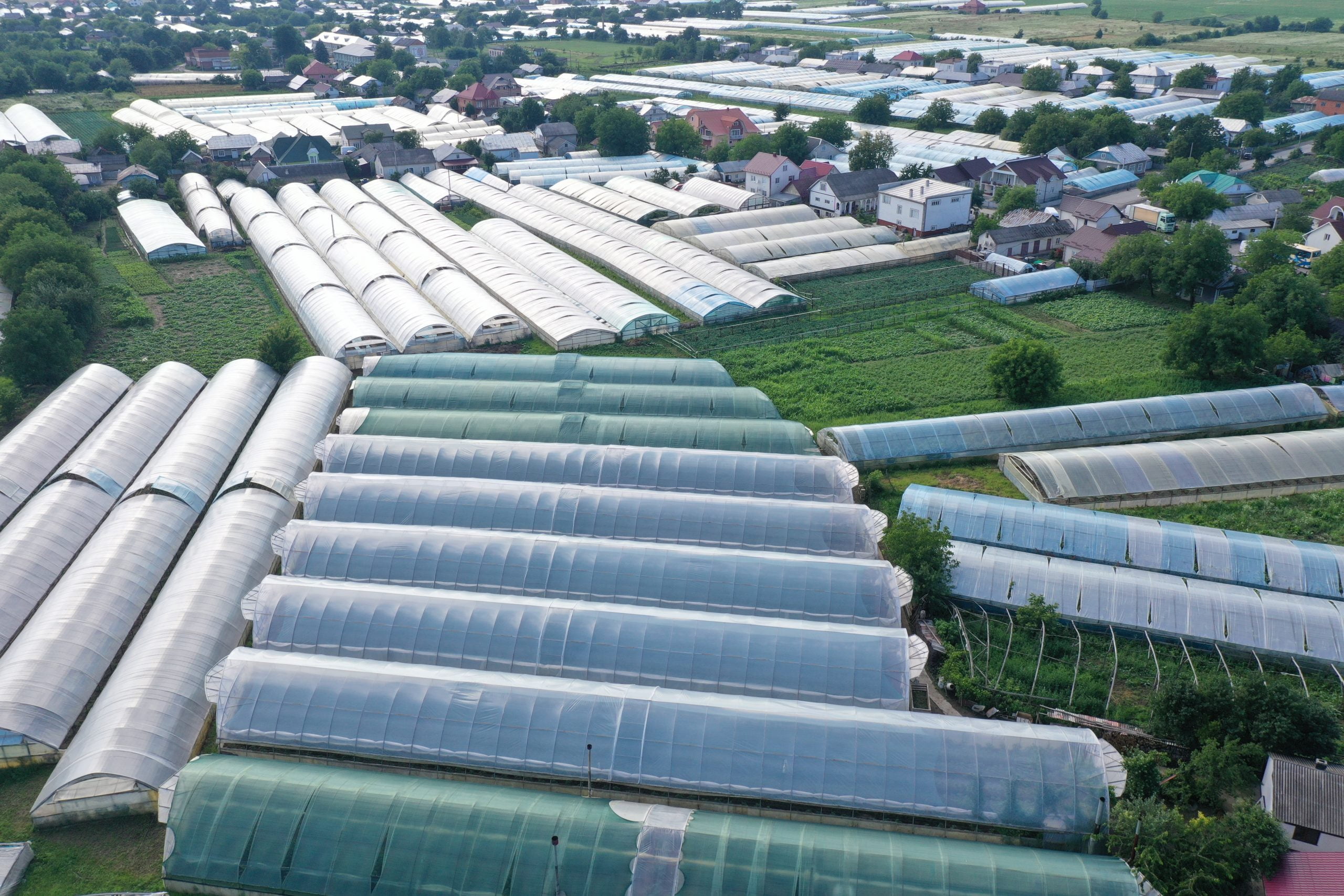
Cleaning the greenhouse is an important and essential task in the gardening calendar of any grower, as it helps destroy garden pests and prevent the accumulation of microbes that would be detrimental to efficient plant growth.
Most garden pests die off during the winter because it is cold and they cannot survive freezing temperatures, but within the relatively comfortable conditions of a greenhouse, any remaining pests will thrive. Slugs, aphids, red spider mites, and mealybugs love to overwinter in hidden nooks and crannies inside the greenhouse. If they are not eliminated before spring, young, freshly planted seedlings will become a tasty feast for them. Deep cleaning will help locate any sneaky slugs and other pests before they inflict noticeable damage on young plants.
When to Do Spring Cleaning in the Greenhouse
If the greenhouse is mostly empty, simply wait for a nice day and then get to work. Late February to early March is ideal. However, if some delicate plants are wintering inside the greenhouse, you will have to wait for warmer weather—above-freezing temperatures—so that you can safely move them outdoors for the duration of the cleaning. For extra warmth and your own peace of mind, the plants can be wrapped in fleece or agrofibre to keep them warm while they are outside.
Of course, you can choose not to move the plants and simply work around them during cleaning, but the result will be a less thorough job. Do not forget to switch off the electricity before you start splashing water inside the greenhouse.
Clean Everything
Usually, old crops are removed in the autumn, but if by any chance this was not done, now is the time. Old plants can be tossed onto the compost heap, and pots, tools, and other equipment can be washed. Any diseased plant material should be burned to prevent the spread of diseases to new seedlings. Clear away debris from the floor and the corners of the greenhouse. Keep a close eye out for any signs of garden pests, such as slugs and snails.
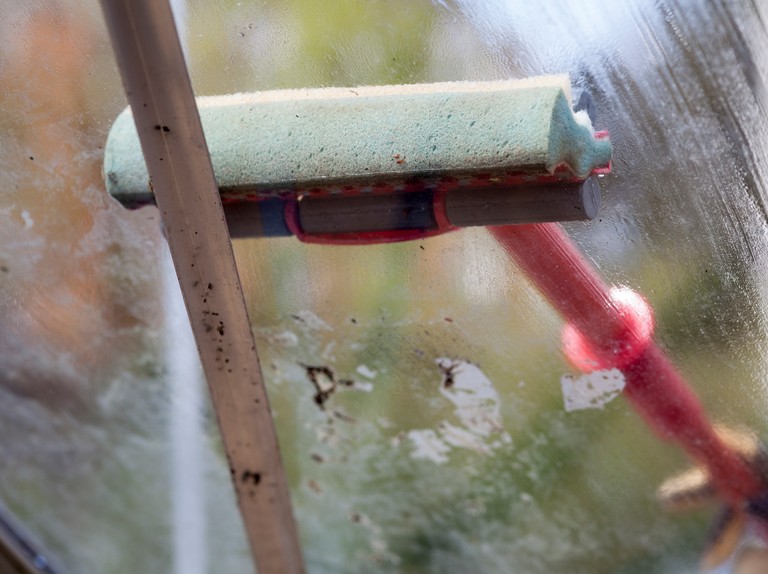
Now it is necessary to wash the greenhouse. It does not matter what material covers the greenhouse: whether it is glass, polycarbonate, or greenhouse film.
The more heavily soiled the greenhouse covering is, the less light it transmits, and in early spring, this can have a devastating effect on seedlings.
Wash the greenhouse covering inside and out using a soft sponge and a warm soapy solution. Afterward, rinse the soap off with running water: a garden hose can be used on the outside, and a sponge on the inside. This is because it is undesirable for soapy water to get into the fertile soil. Also, wash shelves, pots, and planters with warm soapy water. Clean PVC and metal frame elements using hot water with vinegar. After washing, open all vents and doors, and dry the greenhouse thoroughly.
If your greenhouse has been covered with greenhouse film for several seasons and you realize that the service life of the film has expired and it is time to replace it, in that case, spring is the perfect time to re-cover the greenhouse with new greenhouse film. Our plant, “Planet Plastic,” has been manufacturing high-quality polyethylene films for greenhouses for almost 20 years. We produce greenhouse films on modern European equipment from the best raw materials supplied by verified global providers. We carefully control the quality of our products and check their physical and mechanical properties for compliance with requirements. All our products are certified and hold quality and environmental certificates. You can buy high-quality greenhouse film in Ukraine on our website under the “Greenhouse Films” section or from our dealers, who are located in every region of Ukraine.
Disinfection of the Greenhouse Against Diseases and Pests
Greenhouse disinfection is a crucial step to protect plants from diseases and pests. There are many methods for disinfecting a greenhouse. You can use sulfur candle fumigation, treatment with slaked lime, copper sulfate, or Fitosporin. We have detailed how to disinfect a greenhouse using a sulfur candle or slaked lime in our article “Autumn Treatment of the Greenhouse After Harvesting.” In that article, we also share other greenhouse disinfection methods.
Greenhouse Treatment with Copper Sulfate
Copper sulfate protects against powdery mildew, late blight, various rots, and bacteriosis. To disinfect the greenhouse, it is necessary to prepare a 10% solution of copper sulfate and wipe down all internal surfaces of the greenhouse with it.
Soil Treatment with Fitosporin
Fitosporin protects plants from a complex of fungal and bacterial diseases (late blight, root rot, scab, powdery mildew, blackleg, rust, alternaria, fusarium, etc.). This product can be used to treat the greenhouse soil. To do this, prepare a solution: dissolve the contents of the packet (10g) in 200 ml (1 cup) of water. Afterward, add 1 tablespoon of the prepared solution to 10 liters of water and pour it over the ground during digging. Application rate: 10 liters of water per 2 sq.m. of soil.
In addition to its protective and preventive functions, Fitosporin possesses immunostimulatory and anti-stress properties, enhancing the defense functions of plants during unfavorable environmental conditions (sharp temperature drops, frosts, drought, etc.).
Spring Soil Preparation in the Greenhouse
It is advisable to replace the top 10–20 cm layer of soil to ensure that plants have sufficient nutrients and to eliminate diseases. Ultimately, your plants need a clean, nutrient-rich environment to thrive, so it is worth taking care of soil renewal.
What other actions should be performed with the greenhouse soil:
- loosen the soil in the beds;
- dig small trenches in the beds for better contact with warm air;
- pour warm water over the soil until it is saturated (using snow for moisture is not allowed, as it will only delay the warming process);
- apply organic matter (humus, compost, river silt, peat) and phosphorus-potassium fertilizers (if they were not applied in the autumn);
- neutralize soil acidity by adding dolomite flour, chalk, or lime (annual use of mineral fertilizers leads to soil acidification);
- sow green manure crops early, before transplanting seedlings;
- warm up the soil. For this purpose, black mulching film is suitable, which is used to cover the ground for better warming (if green manure crops have not been sown).
Such simple techniques for treating and disinfecting the greenhouse will help protect spring plantings from diseases and pests. And healthy plants are the key to a rich harvest.