Construction of irrigation systems. Experience of Ukrainian farmers
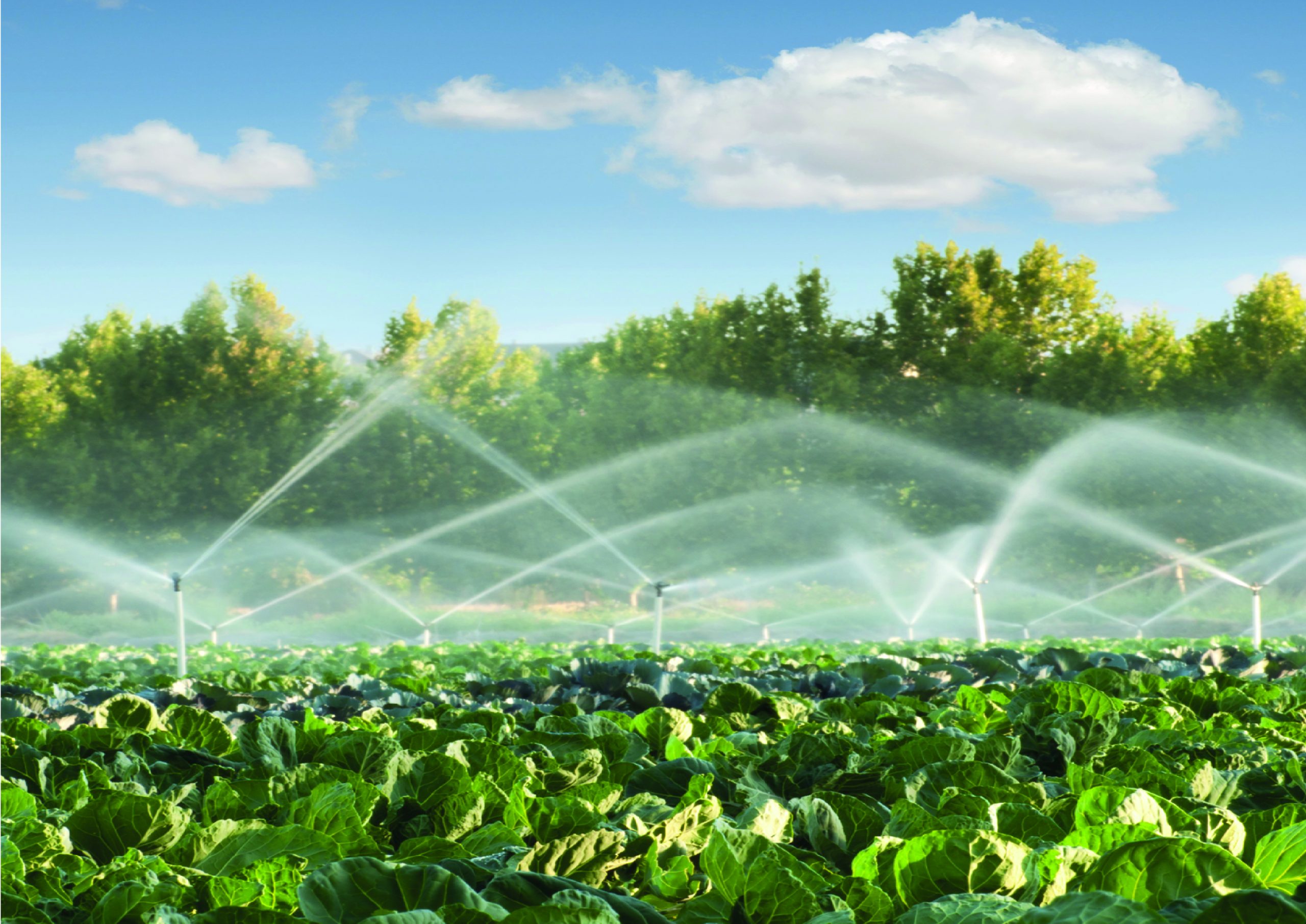
“Peremoga AVK” is a large private agricultural enterprise based in the Dnipropetrovsk region that farms 5,000 hectares, consistently adopting advanced technologies and mastering modern machinery.
Its primary crops include grains, industrial crops, and forage. The entire ration for the cattle managed at their “Katerynoslavskyi” dairy production complex is built exclusively on proprietary compound feeds produced from raw materials grown in-house. As a result, the well-tended cows deliver high milk yields. Thus, the main task of the crop production division is to secure a sufficient volume of forage crops, an objective achieved with the help of irrigation.
“After providing irrigation to our forage crop fields, the yields of winter rye for haylage, corn for grain and silage, alfalfa, winter wheat, and soybeans have increased manifold,” says Oleksandr Potomaka, Chief Hydrotechnician at PE “Peremoga AVK”.
“This is most clearly visible with alfalfa. While on rainfed land we obtained three cuttings—only two of which were substantial—under irrigation we began harvesting all five. As for soybeans, there is simply no point in sowing them in our region without irrigation, whereas with watering, we harvest 40–45 c/ha. The indicators for winter grains are equally pleasing: 90–100 c/ha compared to the previous 50–60 c/ha. The yield of corn for grain also doubled—up to 120 c/ha. We harvest 550 c/ha of corn for silage.”
Back in the 1980s, these fields near the city of Dnipro featured a reclamation system. It was filled from the Leninske reservoir via the Pavlohrad canal; however, following independence, it fell into disrepair, leading “Peremoga AVK” to gradually begin its restoration in the 2000s. Yet, it quickly became apparent that the conversation needed to focus not so much on restoration, but rather on constructing a modern system using new machinery, materials, and technologies.
First, they selected the method of watering. For cultivating grain crops, sprinkling proved to be more economically viable than drip irrigation, even though it required purchasing pivot machines. Currently, an area of 1,750 hectares is served by 31 machines: 9 linear and 22 center pivots. Next year, when the irrigated area reaches 2,770 hectares, the fleet of automated sprinkling machines will expand to 49. A single installation, ranging in length from 240 to 601 meters, serves an average of 60 hectares. Furthermore, the agronomist and hydrotechnician gained the ability to remotely monitor water discharge and fertilizer application, as well as manage the system from a distance via a computer, tablet, or smartphone. Over time, there are plans to install weather stations in the fields to record temperature, precipitation, and soil moisture.
Now, let us look at what typically remains “behind the scenes.” Naturally, for water to discharge from a machine, it must somehow reach it. In this aspect, a paramount role is allocated to the water supply pipeline network composed of pipes of various diameters. The most wear-resistant material was selected for the pipes—polyethylene, which boasts a service life of 100 years.
Additionally, polyethylene pipes possess excellent technical and economic indicators directly linked to low operating costs, low installation expenses, and the recyclability of the decommissioned pipeline.
Consequently, polyethylene pipes are precisely what is used today when installing irrigation systems for arable land. They compare favorably with other pipe types: they do not corrode, are resistant to all mineral acids and alkalis, are convenient to install, weld easily, and feature a service life of nearly 100 years. A polyethylene pipeline is characterized by enhanced elasticity and strength; it will not rupture if water freezes inside it.
At the “Planet Plastic” plant, we manufacture the polyethylene pipes used for constructing pipelines within irrigation systems. Our equipment, experience, and use of high-quality raw materials enable us to produce polyethylene pipes in diameters ranging from 16 mm to 630 mm. You can buy polyethylene pipes for water on our website under the “Products” section.
However, not all polyethylene pipes are identical, and “Peremoga AVK” could not risk the substantial capital invested in the project—nor their annual investments in field cultivation, sowing, and fertilizers. Therefore, they began searching for the highest-quality product available.
Among the largest pipe manufacturers, they shortlisted ten. Following a thorough evaluation and on-site factory visits, they selected polyethylene pipes of our manufacture. They even verified our products for compliance with one of the quality certificates at an independent laboratory, whose conclusion confirmed the reliability and safety of the goods.

“In the autumn of 2020, we received the first batch of polyethylene pipes from the ‘Planeta Plastik’ factory,” shares Oleksandr Potomaka. “Our installers had absolutely no complaints or criticisms during the welding process. All the seams turned out neat and uniform. In 2021, during the construction of the second phase of the irrigation system, we likewise utilized polyethylene pipes manufactured by ‘Planeta Plastik’.”
“Securing stable yields is essential for us, yet the climate is shifting, and in recent years the weather in the Dnipropetrovsk region increasingly resembles what we observed in the Kherson region 10 years ago—there is little rainfall,” Oleksandr points out. “For this reason, we began calculating water application rates as if for southern conditions: 1 liter per second. Consequently, we had to increase the diameter of the pipes. While in the first order the diameters ranged from 180 mm to 480 mm, they were subsequently adjusted to range from 200 mm to 630 mm. No matter what the expenditure on irrigation turns out to be, it has been calculated that the investment will pay off within 3–4 years. Most importantly, we are confident that our entire irrigation system will work like clockwork.”