Root rot of cucumbers: how to treat and how to properly treat cucumbers.

Cucumbers are one of the most widespread protected-ground vegetable crops in Ukraine in terms of cultivated areas and gross harvest. Protected-ground conditions are favorable not only for the development of cucumber plants but also for many phytopathogenic organisms, among which root rots have the greatest economic significance. Plant mortality in greenhouses from root rots annually reaches 10–30%.
The primary damage from root rots lies in the premature dying off of the plant, which occurs throughout the entire growing season. The largest number of plants die off during the second half of the vegetation period.
One of the characteristic external signs of root rots is plant wilting. Wilting (from the first signs of the disease to the complete death of the plant) typically lasts about two weeks, though in individual cases, it can reach three to four weeks or even longer.
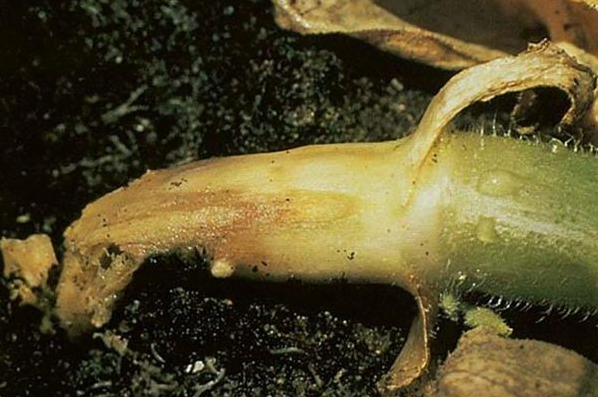
Symptoms: Affected plants exhibit wilting leaves, browning of the roots and root collar, and destruction of the root structure (which becomes decayed and brittle); in the vast majority of cases, a complete dying off of the taproot is characteristic. In such instances, the plant feeds via adventitious roots.
The occurrence of cucumber root rots in protected ground is caused by fungi of the genus Fusarium, specifically Fusarium oxysporum and Fusarium solani. These spread due to a lack of seed and soil disinfection. One of the main sources of infection accumulation is greenhouse substrates.
During studies of affected plants, it was found that fungi of the genus Fusarium were prevalent across all types of substrates (straw, sawdust, soil mixtures) used in winter greenhouses. In soil mixtures, the prevalence of Fusarium fungi was 71.0%, in straw — 17.5%, and in sawdust — 5.5%.
How to Protect Cucumbers in Protected Ground from Root Rots:
- Conduct annual thermal disinfection of the greenhouse soil (exposure for 15 hours, steam temperature +100–120°C). We have written previously about greenhouse soil disinfection and how to disinfect the greenhouse as a whole in our article Autumn Greenhouse Treatment;
- Among organic substrate types, give preference to straw or sawdust;
- Dress cucumber seeds with Vitavax 200 FF, 34% flowable concentrate for seed treatment (2.5 mL/kg) or perform pre-sowing seed treatment with the bacterial preparation Agat-25K or the plant growth regulator Epin (solution concentration 0.01%);
- Apply Trichodermin, based on the antagonist fungus Trichoderma lignorum (strain L-17), into seedling pots before sowing or into planting holes when transplanting seedlings into the greenhouse at an application rate of 3 g/plant.
For those of our readers who are just considering building a greenhouse and growing ecologically clean vegetables for their own needs, our articles How to Build a Budget-Friendly Arched Film Greenhouse and How to Choose a Film for a Greenhouse will come in handy.
Wishing everyone a rich harvest!