Rules for the use of greenhouse film
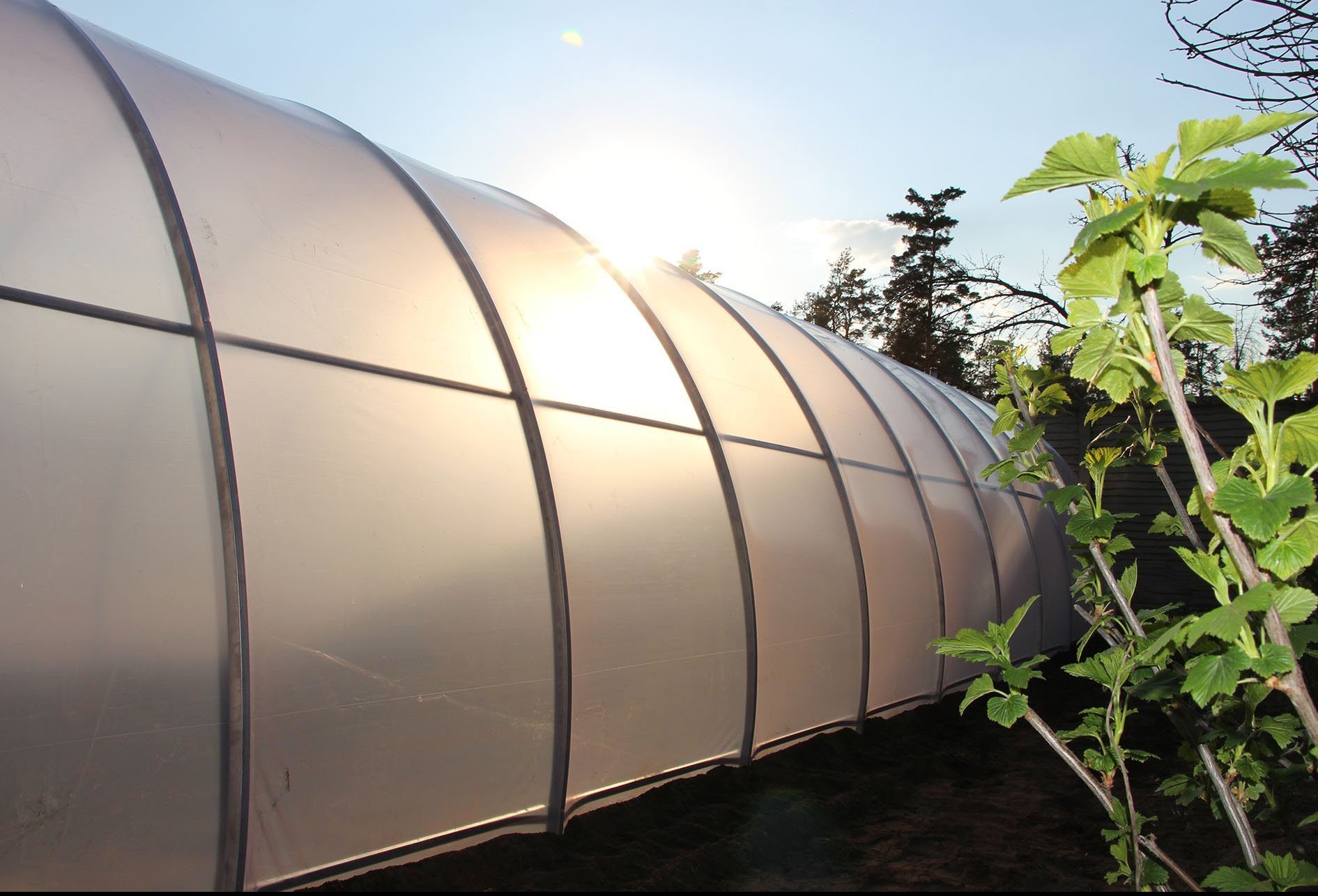
The service life of a greenhouse film depends on various factors, such as the condition of the greenhouse frame, the film installation process, and the operation of the greenhouse film. When using polyethylene greenhouse films, a set of rules must be followed to increase their durability and preserve their properties over an extended period.
Recommendations for Preparing the Greenhouse Frame
- The frame must be rigid, stable, smooth, and free of sharp corners or edges that could damage the film.
- A metal frame must be galvanized or painted, and completely free of corrosion, as metal oxidation products trigger an unacceptably high rate of film degradation.
- The zinc coating on the metal must not be flaky or scaly.
- The paint used must not be dark. The optimal option is white enamel.
- Do not use paints containing organic solvents.
- It is best to wrap the greenhouse frame components with used film.
- Wooden elements of the greenhouse must be sanded, smooth, painted, and free of sharp edges.
The Planet Plastic LLC plant manufactures stabilized greenhouse films:
- Single-layer greenhouse films of the ST series with a service life ranging from 12 to 36 months and a width of up to 6 meters;
- Multi-layer greenhouse films of the UV series with a service life ranging from 12 to 60 months and a width from 8 to 16 meters. Such films are typically used for covering large industrial greenhouse complexes.
Additionally, our product range includes unstabilized greenhouse film with a service life of up to 6 months, which is ideal for covering a small greenhouse or cold frame for a single season.
Recommendations for Covering a Greenhouse with Film
- Prepare the ground surface around the greenhouse for unfolding the film: clear the ground of items that could puncture or tear it, do not walk on the film, do not place tools on it, and do not drag it across the ground.
For those who are just planning to build a structure, our article on how to build a small, budget-friendly film greenhouse on your own will be highly useful.
- Cut the film evenly, without jagged edges, using a sharply honed tool. Nicks and tears along the edge of the roll can induce film splitting (especially at the fold) during greenhouse installation.
- Do not stretch the film tightly into its final working position immediately after unwinding the roll, especially during cold weather. Keep it spread out loosely for a few hours.
- When covering the greenhouse with film, consider that insufficient film tension intensifies friction against the frame, accelerating greenhouse film wear, and increases the likelihood of wind damage. Excessive tension of the polyethylene film can cause tearing or damage to the greenhouse frame itself, as the greenhouse film will contract and tighten even further when temperatures drop. Provide a mechanism for adjusting film tension.
- The optimal air temperature at the time of greenhouse film installation is approximately +15°C.
- It is undesirable to secure the film to the greenhouse frame by nailing it through wooden slats. Any perforation of the film causes a deterioration of its mechanical properties and reduces its resistance to wind gusts.

Key Indicators of a Correctly Installed Polyethylene Greenhouse Film:
- The greenhouse frame is clearly visible beneath the covering;
- The film exhibits a distinct, glass-like gloss;
- When tapped, the film emits a resonant, drum-like sound.
Rules for Operating Polyethylene Greenhouse Film
- Do not allow the film to come into direct contact with plants or any internal equipment.
- Soil fumigation inside the greenhouse must be carried out prior to covering the structure with film.
- Endeavor to prevent plant protection chemicals from accumulating between the film and the greenhouse frame; this requirement applies particularly to wooden greenhouses, as a wooden frame absorbs chemicals that continuously degrade the greenhouse film over an extended period. During hot weather, the rate of chemical reactions accelerates significantly, causing the greenhouse film to rapidly “burn out” at points of contact with the frame.
- The use of pesticides substantially impairs the properties of polyethylene film, so their application should be kept to a minimum. Sulfur, chlorine, and bromine, which are components of most plant protection products, deactivate light stabilizers and other additives within the greenhouse film, which in turn reduces its service life.
- Following chemical application, the inside of the greenhouse film must be washed with water, and the greenhouse thoroughly ventilated. The use of aggressive substances to remove contaminants from the film surface is strictly prohibited.
- It is categorically forbidden to burn any materials inside or in close proximity to the greenhouse.
By adhering to these recommendations, your greenhouse film will last for its specified service life and even longer. Our customers note that greenhouse film manufactured by “Planet Plastic” typically exceeds expectations; for instance, a film with a 24-month service life specification can serve effectively for 36 months or more.
Furthermore, all of our greenhouse films are completely safe for human health and the environment, as validated by an international environmental certificate. With our greenhouse films, your harvest is under reliable protection. Wishing everyone a rich harvest!