How to protect plants from the heat in a greenhouse

The summer of this year turned out to be sultry and hot. On hot days, the temperature inside the greenhouse can reach 45–50°C. As a result of high temperatures, plants fall into stress and can die. Moreover, the pollen necessary for the formation of fruits becomes sterile already at 30–35°C.
How Many Degrees Should It Be in the Greenhouse for Plants to Feel Comfortable
First and foremost, it depends on what exactly is planted in the greenhouse. Different crops require different levels of temperature and humidity for trouble-free development and a good harvest. For example:
- for cucumbers, the ideal air temperature will be 25–28°C during the day and 18–21°C at night, with a soil temperature of 22–24°C. Air humidity should be 75–85%;
- tomatoes grow and fruit better when the air temperature is 20–22°C during the day, 18°C at night, soil temperature is 20–22°C, and air humidity is 60–70%;
- peppers feel comfortable at an air temperature of 25–28°C during the day and 20–23°C at night, and an air humidity of 66–75%.
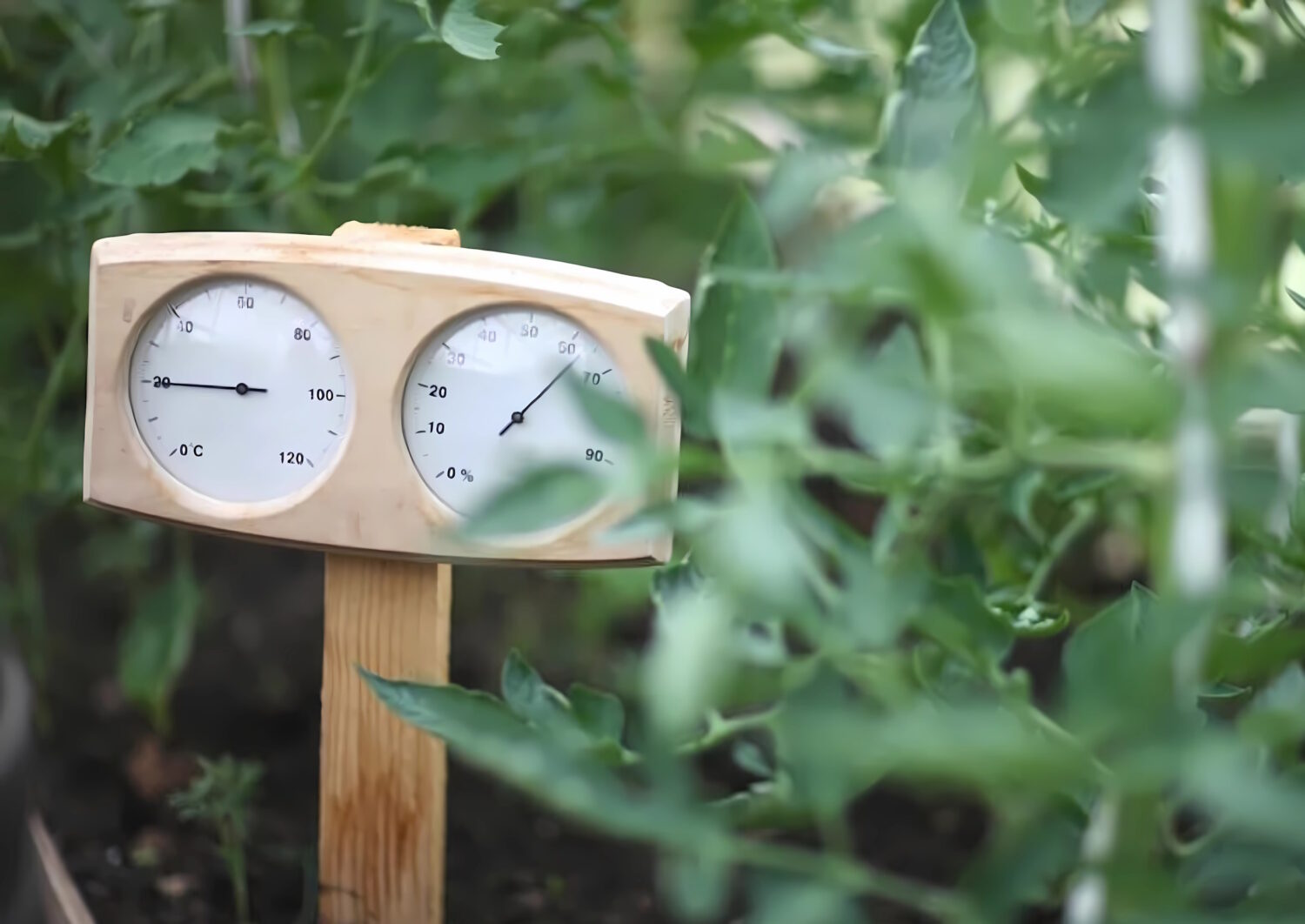
To monitor the air temperature in the greenhouse, thermometers are installed at a height of at least 1 meter from the soil level. If hot, sunny days have set in and the thermometer indicators are steadily rising, measures should be taken to lower the temperature in the greenhouse.
How to Protect Plants in the Greenhouse from Overheating
Ventilation
The fastest and most accessible way to lower the temperature in the greenhouse is to open all windows and doors. Thanks to the draft, the indicators will return to normal in just a matter of minutes. However, hot weather is often windless, and opening windows does not help. In this case, attention should be paid to other methods of lowering the temperature.
Painting
Reducing the heating of plants in the greenhouse can be achieved by painting the polycarbonate or glass. However, this method is not suitable for film greenhouses.
Artificial Coverings for the Greenhouse
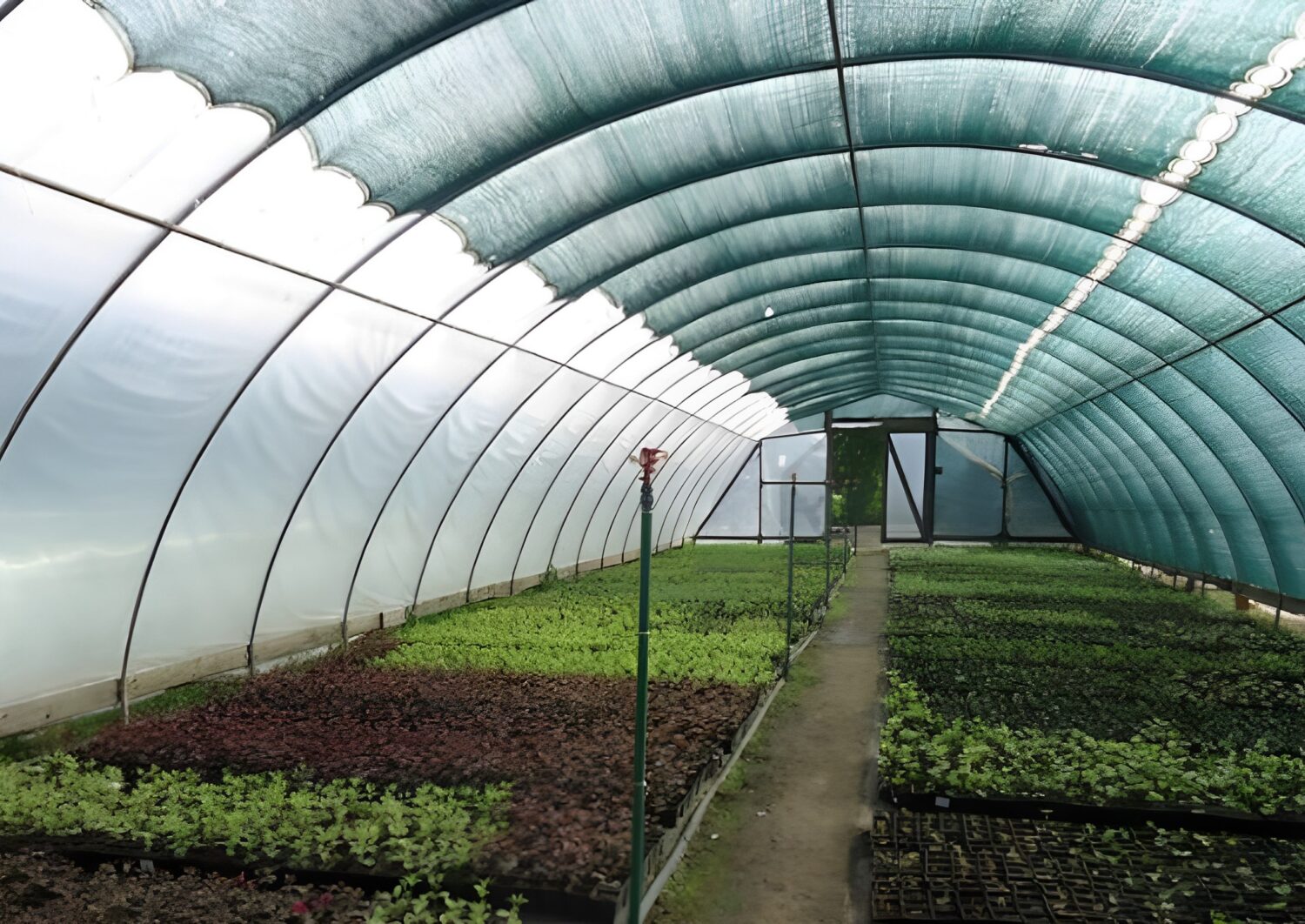
Another option for protection against the sun is creating covers. For example, you can use ordinary dense spunbond, agrofibre, or burlap as a covering material, as well as special protective nets with a partial reflective effect. A shade net can reflect up to 80–90% of solar rays, creating a life-saving shadow over the plants.
Screening Plants for Greenhouse Shading
Another unusual but effective method can be considered planting crops with lush green foliage next to the walls of the greenhouse. Any vines or shrubs used for creating hedges will fit perfectly. True, there is a nuance to this method—such a wall will absorb light even during a cold and rainy summer, so it can become a serious competitor for greenhouse crops.
Installation of Fans in the Greenhouse
If there is only one window in the greenhouse and creating a draft naturally does not work, a regular fan will come to the rescue. It can be installed both at ground level and at the top of the back wall of the greenhouse.
Water Containers
Containers of water of various sizes allow not so much for cooling the greenhouse in the heat, but rather for softening the daily temperature fluctuations. Most often, large-volume plastic or metal barrels are used for this. Plastic bottles placed in between rows and directly on the beds are also suitable. During the day, the water in the containers will heat up, and at night it will gradually release heat, warming the plants.
How to Increase Humidity in the Greenhouse
In the greenhouse, besides temperature, the level of humidity is also important.
Why is it necessary to adhere to the recommended humidity level? Because if it drops, the plants will start to dry out, and if it is exceeded, they can rot or fall victim to fungal diseases. In addition, under excessively high humidity, pollen will stick together on the flowers, and fruit sets simply will not appear. While lowering the humidity level in the greenhouse can be done quite easily—by regular ventilation and mulching—increasing it will require some effort.
Watering the Paths in the Greenhouse
The easiest way to increase humidity in the greenhouse is regular watering. However, this has its own subtleties. If you water the plants too often, nutrients will be washed out of the soil, and soon this will be noticeable by a change in the color and shape of the leaves. That is why it is better to water the paths in the greenhouse rather than the beds themselves, and also to mulch the plantings to reduce the rate of moisture evaporation.
It is desirable to water the paths in the first half of the day, so as not to breed cold night dampness in the greenhouse, which promotes the development of pathogenic microorganisms.
Steam Generators or Water Sprayers
Another way to solve the problem is installing water sprayers or cold steam generators. True, it is worth remembering that this approach will please only crops that like high air humidity. For example, this method is ideal for cucumbers, but for tomatoes, it will be unacceptable.
It is better to foresee the possibility of using the above-described measures at the stage of constructing the greenhouse or before planting. However, it is never too late to apply some of them.
If you notice that the plants are clearly overheating, hurry to lower the temperature in the greenhouse.
Wishing everyone a rich harvest!