How to prepare a summer cottage pond for winter
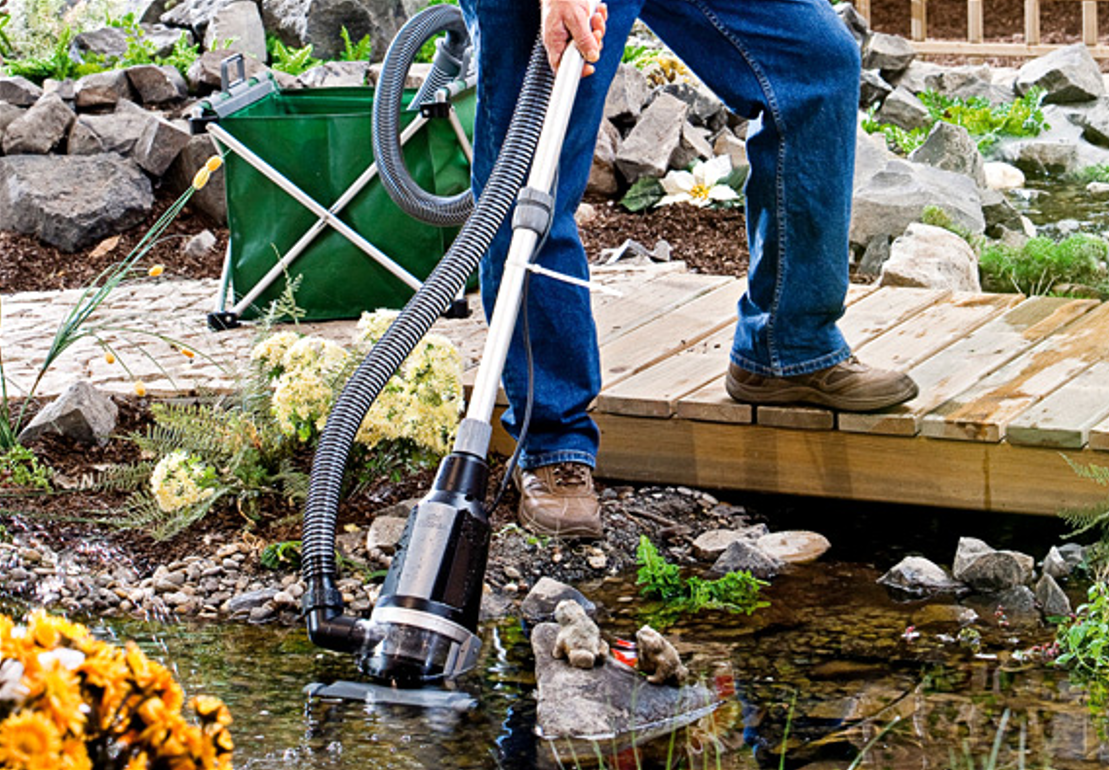
Whether you should drain your pond in the autumn primarily depends on its size. A small body of water up to 20 sq.m. in size and up to 0.8 m deep, which might freeze solid in winter, should be drained. Large, non-freezing ponds are left to winter fully filled with water; they only require cleaning (with equipment removal) and preparation of the plants and fish for the winter season.
If the pond shell is made of concrete, ice pressure is capable of destroying it.
When the walls are built with a slope, this risk is lower. Still, integrity can only be fully guaranteed by completely draining the water. Alternatively, you can submerge several 5-liter plastic bottles partially filled with sand into the pond, at a rate of approximately one bottle per 1 sq.m. of the water body surface area. In winter, they will absorb the ice pressure. The same rule applies to plastic or fiberglass ponds, as they are also sensitive to increased pressure.
As for film-lined ponds, they DO NOT fear frost. If a film pond is correctly designed and constructed, and its waterproofing is reliable, such a water feature can be left to winter completely filled with water. This is especially true if the pond is built using high-quality geomembrane—such a liner can easily withstand frosts down to -35°C. In Ukraine, high-quality geomembrane can be purchased in the “Laguna DIY Pond” installation kit—a package that contains everything needed to design and create a pond on your country plot over a weekend.
How to Properly Prepare a Small Pond for Wintering When It Requires Draining
- If your pond is equipped with a pump, filters, and other machinery, monitor nighttime autumn temperatures. When the thermometer drops to +5°C, disconnect all devices (unless they feature special frost protection), remove them from the water, rinse, dry, and store them until spring in a warm, dry place. The only exception is the pump, which should be stored submerged in water.
- Aquatic plants must be removed from the pond, placed in containers with water, and sent for storage to a room with diffused light and a temperature of +10°C to +12°C, but not exceeding 15°C. To avoid changing the water every 2–3 weeks, charcoal is added to it. In this case, water replacement can be done once every month and a half.
- Fish are also caught and transferred to temporary aquariums. The capacity of aquariums or barrels for holding fish is calculated as follows: for each fish up to ten centimeters long, 10 liters of water are required. For every centimeter beyond that, add 2–3 liters. The temperature should be maintained between +10 and +15 degrees. Aeration and filtration of the water are mandatory, along with diffused, dimmed light.
- After removing all inhabitants from the pond and moving them to their wintering location, the water must be completely drained from the pond. Now it must be thoroughly cleaned and washed. Use stiff brushes to carefully clean the walls and bottom. Then rinse the pond with water and pump that out as well.
- A small pond can be covered for the winter with temporary shields made from available materials (wooden boards, etc.) to prevent the accumulation of snow and water in the pond, which would freeze and take too long to thaw in the spring.
Well, that is essentially everything—your pond is ready for winter. Proper preparation of a pond for winter guarantees that it will continue to decorate your plot for a long time, delighting you with its clarity and beauty.