The best quality of silage storage using oxygen barrier film for silage from Planet Plastic LLC

Silage is a succulent feed prepared by preserving green forage with restricted oxygen access; the preservation process is known as ensiling.
Ensiling is a biological method of preserving green plants rooted in lactic acid fermentation. Under anaerobic conditions, lactic acid bacteria ferment sugars into lactic and acetic acids. The ensiling process is accompanied by heat generation and an increase in the core temperature of the mass, which dictates the direction of the biochemical processes. The heating of the mass continues until all the oxygen trapped between the particles is consumed, the voids are filled with carbon dioxide, and the plant cells die.
This is why ensuring airtightness and oxygen impermeability during the ensiling process is so vital. In a well-compacted mass isolated from air, cellular respiration ceases within 6–8 hours after loading the material into the silage storage facility. Silage is an indispensable component of the winter ration for cattle, horses, and other agricultural animals because it contains an abundance of nutrients required during the cold season.
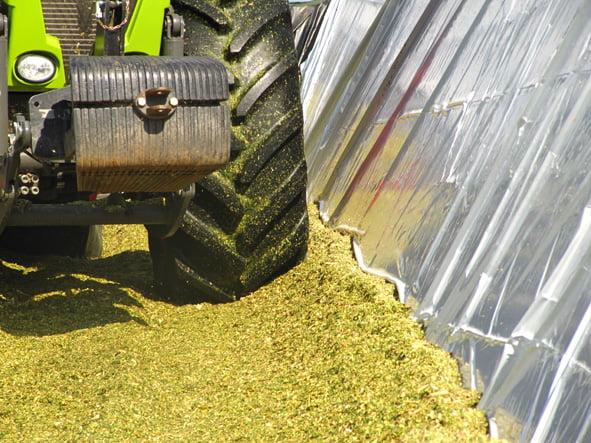
The plant mass harvested from the field is compacted into pits or trenches. Over a certain period, the fermentation process begins, and organic lactic acids accumulate in the forage (up to 2%), which preserve the feed and protect it from decomposition. Air access plays a crucial role. If there is too much air, the plants will begin to heat up, lose nutrients, and mold will develop. Therefore, air access must be minimized! The moisture content of the silage is maintained within 65–75%. If it is higher, lactic acid will accumulate slowly; if the moisture content is lower, the feed cannot be tightly compacted, leaving too much trapped air inside. To achieve the required moisture level, the forage is watered with plain water or mixed with straw as needed. Lactic acid must serve as the primary preservative in silage. It possesses beneficial dietary qualities and is a stronger acid than acetic acid. Good silage contains 2–3 times more lactic acid than acetic acid, which prevents it from having a pungent odor. When the correct ensiling technology is followed, alcohol fermentation occurs alongside lactic acid fermentation. High-quality silage features a characteristic pleasant aroma, similar to that of pickled apples, salted tomatoes, or dried fruits, and has a yellow-green color while preserving the plant structure.
Covering the Silage Mass
Special pits, trenches, and bunkers are used for making silage. Pits and trenches are always dug in clay soil and lined with cement to prevent moisture from leaching through the earth. After filling the storage facility, the green mass is immediately covered to isolate it from air and atmospheric precipitation. Delaying the covering by 2–3 days increases feed losses by 7–10% due to rotting and molding of the upper layers and heating of the entire mass.
Furthermore, nutrient losses in silage with 60–70% moisture stored in permanent trenches without a cover amount to 34.9%; when covered with straw, losses are 23.5%; with earth, 19.0%; and with film and earth, 12.0%.

Today, specialized polyethylene silage film is the best material for covering silage. An earth cover is also highly effective, but frozen ground is difficult to remove in winter and requires additional labor costs. Covering with chopped wet straw followed by compaction and sowing cereals does not always yield a positive effect. If moisture is lacking, the green carpet dies, and the roots dry out, forming channels through which air penetrates, causing the silage under the straw to spoil in the same quantity as without a cover. The oxygen permeability of our silage films is 100 times lower than that of traditional films. This ensures better feed protection and a higher quality end result. Additionally, our silage film is slightly softer than traditional film to facilitate easy leveling over the silage feed.
Key Advantages:
- Guaranteed UV protection for 24 months;
- Maximum width: 12 meters;
- Lower roll weight for easier installation;
- More flexible, fits better over the silage, and reduces the number of air pockets;
- Fully recyclable;
- Long-term feed storage due to the high degree of material impermeability and sealing;
- Preservation of the nutritional value of the feed raw material over a long period.
Better feed quality and less spoilage mean higher value for the farmer. Get a higher milk yield from every cow with properly preserved forage.