Polyethylene pipes for water supply. Advantages of polyethylene pipes

Polyethylene pipes are suitable for organizing cold water supply and constructing high-pressure water pipelines. They are frequently used to transport water from a well to a private house, as they are frost-resistant and do not burst when the water freezes.
Properties of Polyethylene Water Supply Pipes. How to Distinguish a Quality Pipe from a Counterfeit.
In fact, the range of application for polyethylene pipes is much wider. They are used:
- For the construction of gas supply networks;
- For pipelines transporting water, air, acids, alkalis, and various aggressive substances to which polyethylene is resistant;
- As a protective sheath for laying power grids, insulation of open and closed electrical wiring, cable conduits, ventilation, etc.;
- For the mechanical protection of fiber-optic communication cables;
- For pressure sewerage and industrial water pipelines;
- As a protective casing pipe when drilling wells for drinking and industrial water supply.
- But today, we will focus specifically on drinking-grade polyethylene pipes, which are used for organizing water supply systems.
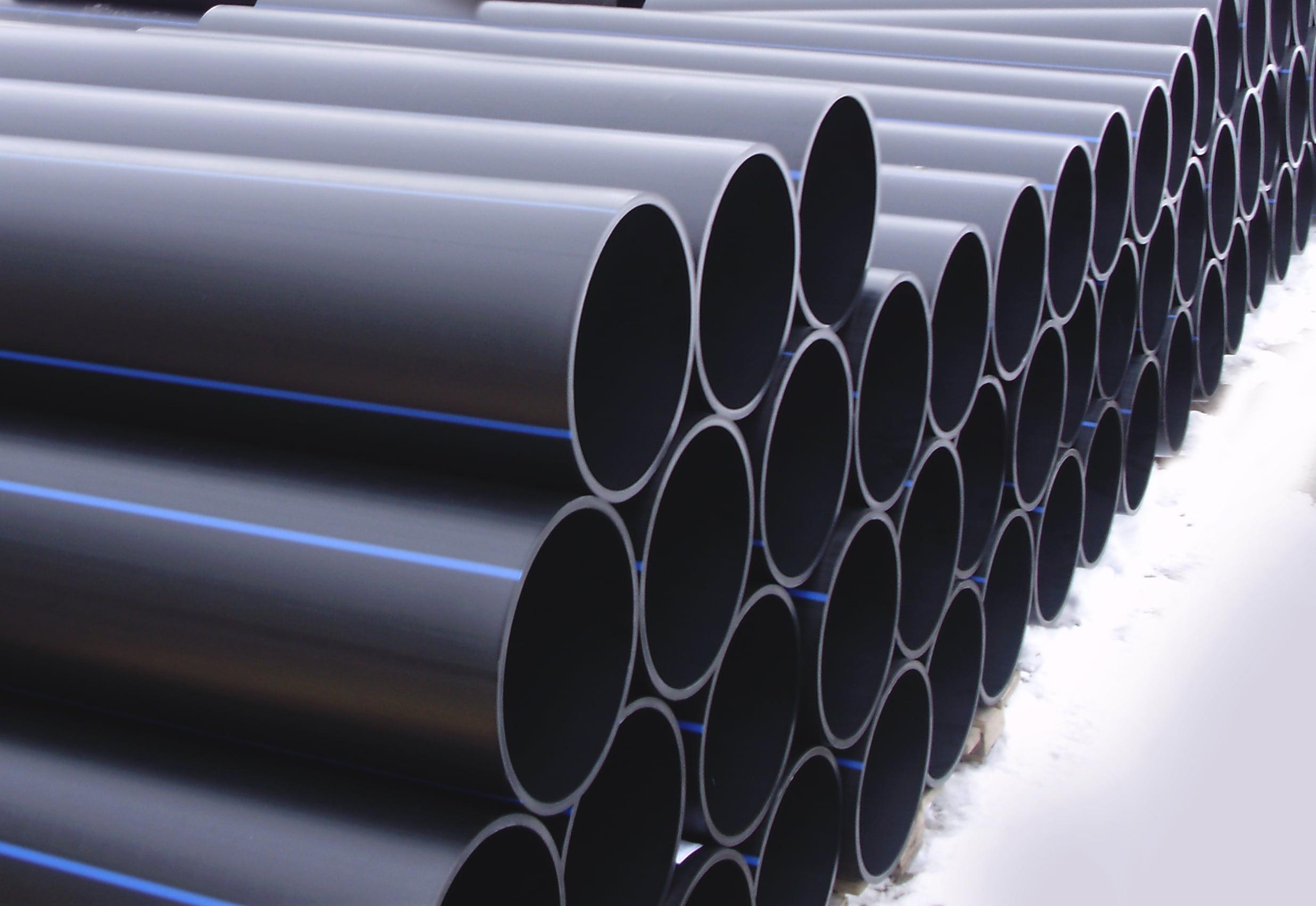
Advantages of Polyethylene Pipes:
- Low price (compared to pipes made of other materials);
- During the construction of water pipelines from polyethylene pipes, costs are reduced by approximately 40% compared to the construction of pipelines from other materials;
- High wear resistance (service life up to 100 years);
- Not subject to corrosion;
- PE pipe is resistant to water hammer and mechanical overloads;
- Virtually maintenance-free;
- Made of chemically stable material. The inner surface of the pipe does not release any harmful impurities into the water;
- Joints at the pipe connections are highly reliable;
- Plasticity, so the pipe will not burst if water freezes inside it;
- Frost resistance (the pipe can withstand temperatures down to -40°C);
- Lightweight, requiring fewer specialized transport vehicles for shipping;
- Environmentally friendly and non-toxic, introducing no harmful substances or impurities into the environment;
- No cathodic protection required.
Types of Pipe Connections:
|
Connection Type
|
Pipe Diameter Used For
|
Additional Equipment (Required / Not Required)
|
|
Compression fittings (couplings)
|
Up to 110 d
|
Not required
|
|
Electrofusion connection
|
Any
|
An electrofusion welding machine is required
|
|
Butt welding
|
From 90 d
|
A butt fusion welding machine is required
|
Today, butt welding is the most reliable method of connection.
Polyethylene pressure pipes for water are manufactured in accordance with DSTU requirements from a primary compound of high-density polyethylene (PE-80, PE-100). PE-100 is a pure eco-friendly material that is fully recyclable. It features the highest food safety performance, making it a definitive mark of quality for drinking water pipes.
Planet Plastic LLC utilizes PE-100 exclusively for the production of water supply pipes. A pipe made of PE-100 has a lower specific weight per linear meter compared to PE-80 and other grades of polyethylene for pressure pipes. Consequently, at identical pressure ratings, the cost of a main line made of PE-100 pipes will be lower.

Why Black?
Typically, drinking water pipes are manufactured in black with longitudinal blue stripes, or entirely in blue. Black pipes are made from polyethylene to which carbon black is added during the raw material production stage, serving as the ultimate UV stabilizer. Carbon black is a high-quality substance that holds a food safety certificate. It is precisely what accounts for the black color of the finished pipe.
A blue water supply pipe generally costs 25-30% more than a black one because its production requires blue polymer granules, which are more expensive. All water supply pipes, regardless of color, must comply with DBN and DSTU standards.
How Can an Average Consumer Visually Assess Pipe Quality and Distinguish a Premium Product from a Counterfeit?
First, pay attention to the color. A high-quality pipe must have a uniform, homogeneous color, without streaks or gray shades.
Second, the presence of damage, roughness, or non-uniform inclusions indicates a low-quality pipe and an inferior production technology. Most likely, the manufacturer partially or completely utilized recycled materials. Such a pipe is unsuitable for drinking water supply. A quality pipe must be absolutely smooth both outside and inside.
Third, wall thickness variation. The wall thickness of a premium pipe must be uniform around the entire perimeter.
Fourth, outer and inner diameters. The pipe diameter must strictly match the specifications indicated on the tag.
Fifth, notice the smell. A high-quality pipe does not emit any sharp or unpleasant odor.
Finally, the roundness of the pipe. A premium pipe must be perfectly round, not oval.
Be careful! Pipes of substandard quality made partially or entirely of recycled materials can be found on the market. This involves the following risks:
- Toxic substances leaching into the water;
- An unpredictable pipe service life;
- Pipe failure due to water hammer (pressure spikes);
Always check the markings and the grade of polyethylene from which the drinking water pipe is manufactured.

And remember, pipes do not leak on their own! This only happens in cases of:
- A defective pipe;
- Improper installation (poor assembly);
- Mechanical damage (punctures).
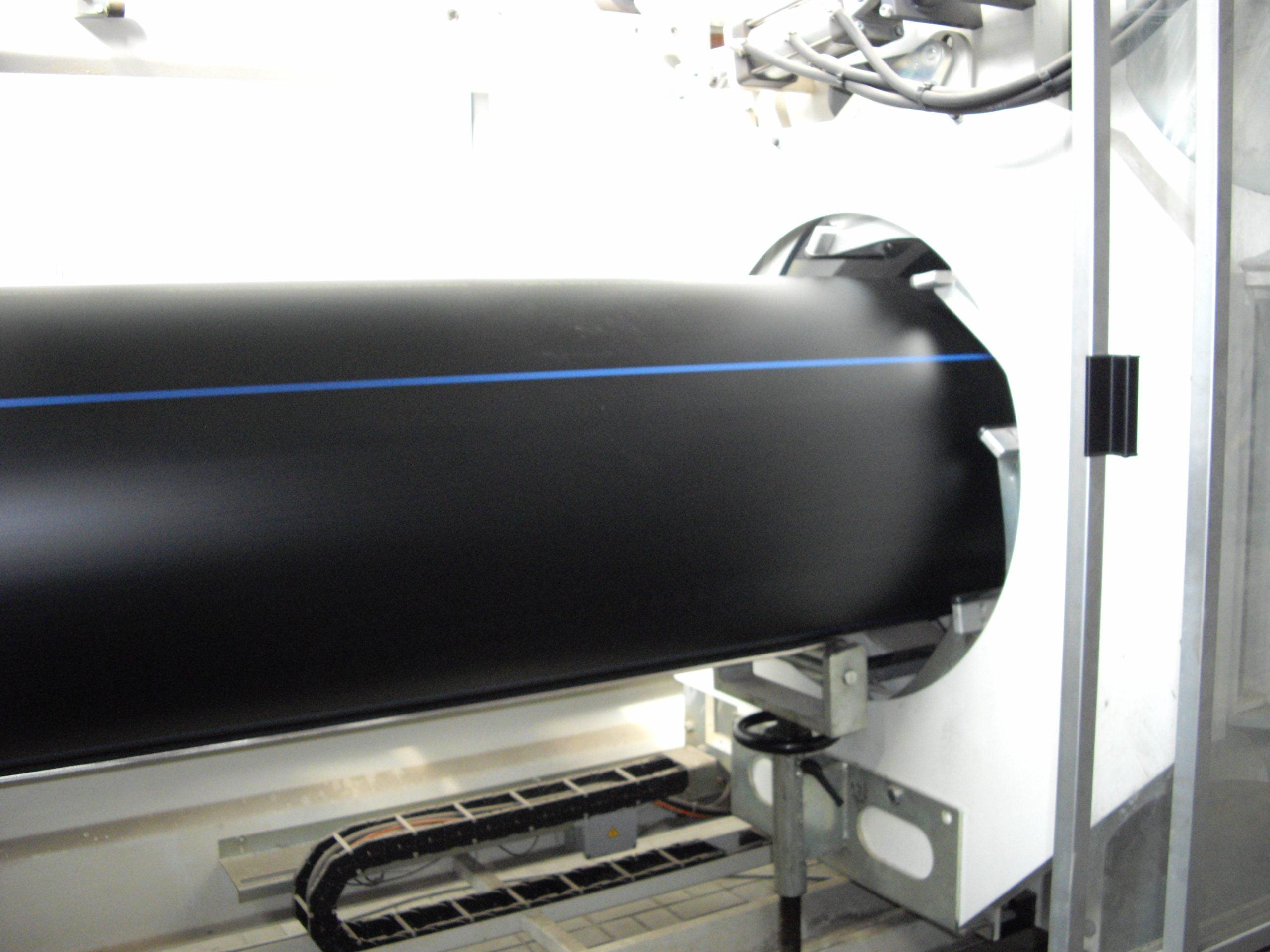
Planet Plastic LLC has been a manufacturer of polyethylene pipes for 16 years. We produce polyethylene pipes from European raw materials on a modern German extrusion line. All our pipes undergo laboratory control and testing of physical and mechanical properties.
Our polyethylene pipe production process complies with international quality demands. Quality control of finished products is conducted according to international ISO and ASTM methodologies.