Replacing Greenhouse Film in the Summer
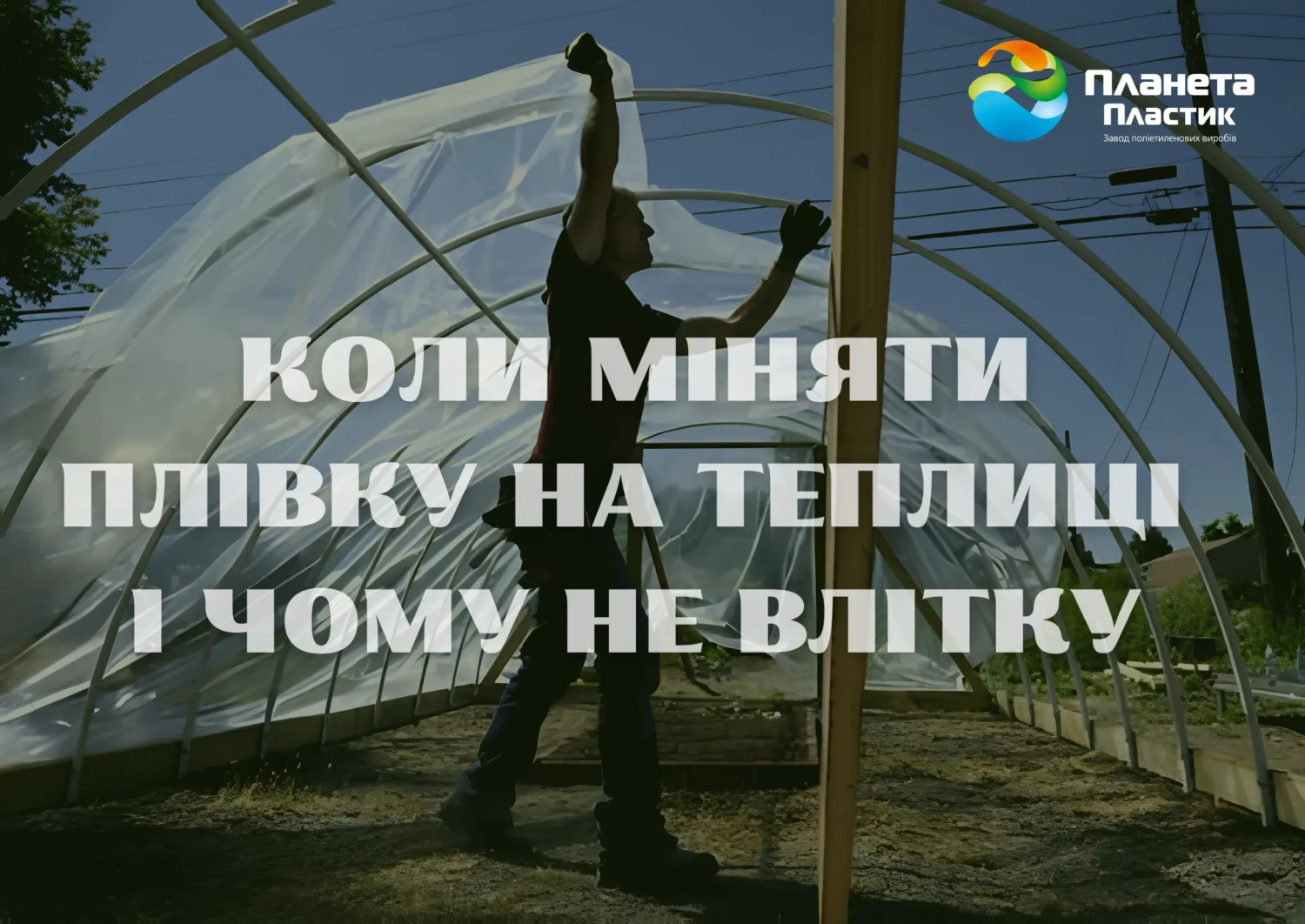
An experienced grower knows: replacing greenhouse film in August is a bad idea, as polyethylene behaves least predictably in high temperatures. The temptation to do it now still arises — the old film is clearly worn out, field work allows for a brief breathing room, and the weather is dry and convenient for installation. However, convenience for the grower and the physical properties of polyethylene film are two different things, and August is precisely the case where the former runs counter to the latter.
The reason lies not in omens or tradition, but in the basic physics of the polymer used to manufacture greenhouse covering films. Polyethylene is a thermoplastic material, and how well and durably the film settles on the greenhouse frame depends far more on the air temperature at the moment of installation than it might seem at first glance. This is what separates experience from intuition: while it seems intuitively logical to install when it is convenient for the farmer, experience dictates focusing on when the process requirements of the greenhouse covering demand it. Let us examine in detail why August creates the worst conditions for this work and when you should plan to replace your greenhouse film instead.
Why August Is a Bad Time for Installation
At first glance, August offers everything needed for greenhouse film installation: dry weather, a lull in field operations, and plenty of daylight hours. However, two problems overlap during this period — the physical behavior of the polyethylene material in heat and the human factor, which is often associated with haste. Let us consider both reasons in turn.
How Heat Changes Film Behavior During Tensioning
On a hot day, when the air warms up to +30°C and above, and the surface of the metal greenhouse frame heats up even more in the sun, polyethylene greenhouse film becomes overly soft and plastic. It stretches easily — which is why it seems convenient for installation: the sheet settles obediently onto the greenhouse structure and tightens without extra effort. But this sense of comfort is deceptive.
The issue is that the installer stretches an already softened sheet, relying on the feeling of “tight and smooth” at the moment of covering. When the temperature drops — in the evening of the same day, and especially in autumn or winter — the polymer in the film naturally contracts, and it does so unevenly. Localized areas of elevated stress remain where the film was stretched the most. It is precisely in these spots that tears can appear a few months later under the load of wind or wet snow. This happens not because the film is “low quality,” but because it was installed under conditions that created an improper internal stress distribution.
The situation is aggravated by sharp daily temperature fluctuations typical of Ukrainian Augusts: +30°C and higher during the day, and significantly cooler at night. A sheet stretched during the hottest hours of the day undergoes an expansion-and-contraction cycle literally within the first hours after installation — before it even begins to fully perform its intended functions. Multilayer greenhouse films are designed to withstand seasonal temperature swings during operation — manufacturers add stabilizers and modifying additives tailored specifically for such loads. Unfortunately, they cannot compensate for errors made during the tensioning stage itself.
In practice, such defects do not show up immediately, but rather several months later — precisely when correcting them is most difficult. The main challenge is that distinguishing this from normal film wear is nearly impossible: the grower notices sagging or tears in winter and most often attributes it to a “flawed batch,” whereas the real cause stems from the conditions under which the film was mounted back in summer.
Why Haste During Peak Field Operations Compromises Installation Quality
Human factors add to the physics. August is a period when farmers are simultaneously harvesting, fertilizing soil for autumn plantings, and preparing seeds and fertilizers for the next season. Replacing film in this schedule rarely becomes a priority that gets a full workday — it is more often treated as a “gap between tasks.” Yet replacing a greenhouse cover is a process that does not forgive rush: the film sheet must be aligned across the entire plane, tension distributed evenly, and every fastener checked along the perimeter. Doing this properly in a hurry is always difficult.
The risk is compounded by the fact that the flaws of a rushed installation are not immediately visible. Unevenly distributed tension does not prevent the film from looking fine in the first weeks following installation. The defect manifests later — under wind loads or heavy snow — when fixing it is impossible without a complete removal and reinstall during cold weather, under much worse conditions than those in which everything could have been done right the first time.
This creates a paradox: the moment that seems most convenient for replacing the film — a free window in peak summer — actually combines two unfavorable factors. Even with the most careful execution, heat at the moment of installation embeds internal stress into the greenhouse film, while haste only increases the likelihood that these hidden defects will manifest sooner and more severely.
When to Install the Film Correctly
Given that the source of potential problems is greenhouse polyethylene film over-softened by heat and the resulting uncontrolled tensioning, the solution is self-evident. Greenhouse film should be installed when the polyethylene maintains predictable behavior rather than heat-deformed properties. The optimal window for work is when air temperatures are around +15°C, without strong winds or direct scorching sun during tensioning.
Within the Ukrainian climate, this combination of conditions occurs most often in September through early October, when daytime heat subsides and sufficient time remains before the first persistent frosts for calm installation and adjustments if needed. The second suitable period is early spring: the soil is already warming up, while daytime air is not yet hot enough for the film to lose its elasticity. During the workday itself, preference should be given to morning or evening hours when the greenhouse frame is not overheated by direct sunlight. This allows the film sheet to be stretched with uniform rather than excessive tension, which polyethylene withstands much longer, preserving its integrity in both freezing temperatures and under snow cover.
Special attention should also be paid to wind: even within a comfortable temperature window, strong gusty winds make handling a large sheet of greenhouse film hazardous and almost always lead to skewing. Therefore, selecting a specific day should depend not only on the calendar, but also on the weather forecast — calm weather or a light breeze simplifies the work significantly and allows for even tension distribution on the first try. Since suitable days within the seasonal window are limited and the work requires several hands plus reserved time for perimeter fastening, greenhouse covering should be planned in advance — not when favorable weather arrives, but prior to it, with the greenhouse film already on hand.
Which Film to Choose for a Specific Greenhouse
Choosing the right installation time yields results only when paired with the proper greenhouse film — matched to the structure size, crop grown, and intended service life.
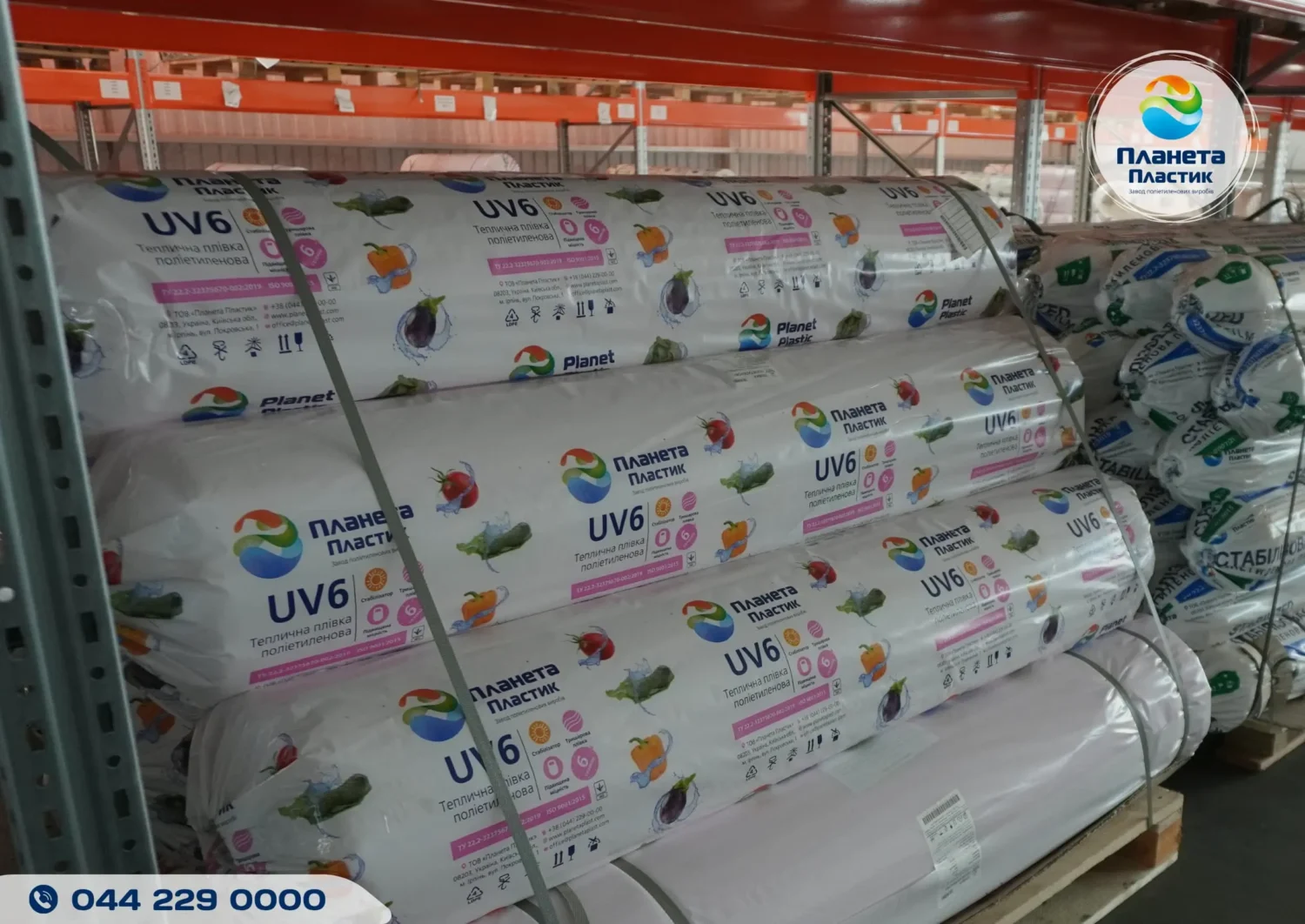
For large commercial greenhouses up to 12 meters wide, multilayer greenhouse film with UV stabilization is suitable — it withstands the same wind and snow loads mentioned above. If crops are sensitive to temperature drops, condensation, or require uniform light diffusion, consider XL greenhouse film, which is designed specifically for wide greenhouse frames and large spans, complete with performance additives such as anti-fog, light diffusion, and thermal insulation layers.
For smallholder and small farm greenhouses, light-stabilized films with a service life of 24 months and 36 months — available in widths up to 6 meters — offer a good balance of cost and durability. The choice between them depends on how many seasons you plan to cover the structure for. If the structure is temporary, auxiliary, or used for a single growing season, paying extra for multi-year durability is unnecessary — a transparent non-stabilized film is more appropriate.
For soil mulching, a distinct type of polyethylene film is used — mulching film, which serves different agricultural tasks.
Regional growing conditions should also guide your selection. In areas with snowy winters and high winds, it makes sense to build in a safety margin using a thicker greenhouse film with enhanced UV stabilization designed for longer service life — such as UV10. In milder climates or for seasonal structures, choosing a thinner, cost-effective option rated for two to four growing seasons is economically justified. This approach avoids overpaying where extra strength is unnecessary while preventing underspecifying where structural integrity through winter depends directly on it.
Why You Should Decide on Your Choice in Advance
The optimal installation window arrives quickly, bringing with it an annual peak in demand: this is the time when agricultural producers purchase greenhouse films in volume to prepare for the upcoming growing season. Production capacities and warehouse inventory for specific product runs are limited, while manufacturing and logistics for stabilized greenhouse films take time — there is always a lag between order placement and physical delivery.
A grower who selects the type, thickness, and dimensions early — rather than amidst the autumn rush — gains access to broader stock availability and completes installation precisely within the temperature window that maximizes product lifespan. Conversely, a grower who delays decisions until the last warm week risks facing the exact scenario outlined at the start of this article: installing under unfavorable conditions or waiting and hoping that required stock remains available when needed.
An experienced grower does not wait until the last minute because they recognize that the right time to purchase film arrives well before the right time to install it.
If you need assistance calculating dimensions or selecting the proper greenhouse film for your structure, crop, and region, contact our specialists for a consultation. They will help determine the optimal solution and secure the necessary film before seasonal demand peaks.
+38 050 384 5135, Kateryna
+38 050 444 0268, Oleksandr