7 “myths” about storing in grain sleeves, also called silo bags
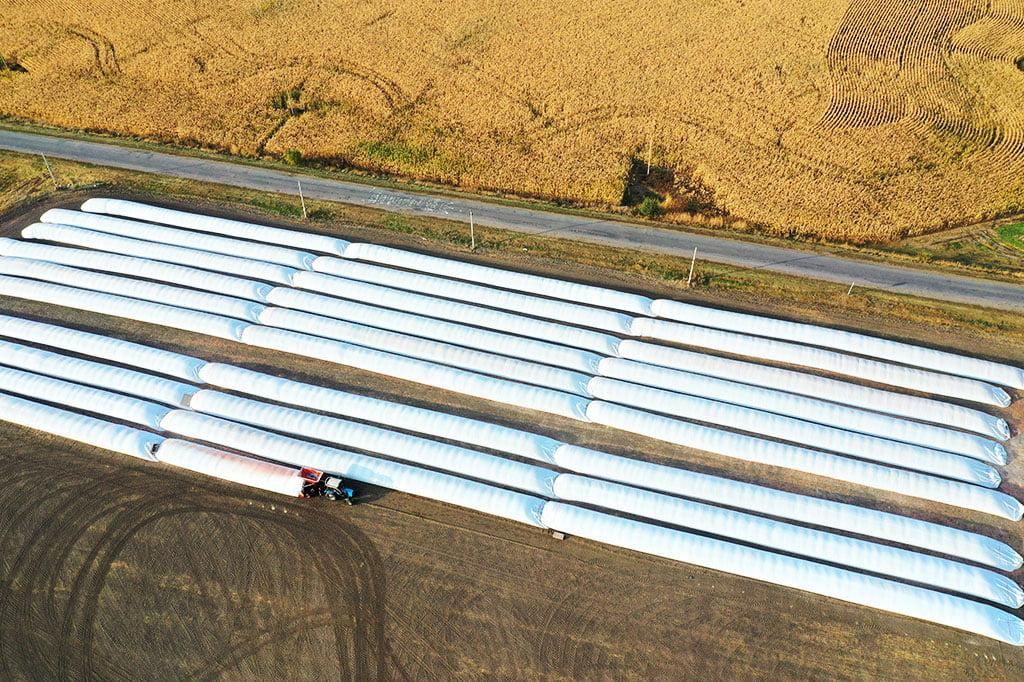
Sleeve technology involves storing grain, silage, and haylage in polymer sleeves by leveraging the natural preservation of the sleeve’s contents. During the natural respiration process of the grain, silage, or haylage—as well as the biological activity of insects and fungi that enter the sleeve along with the crop—oxygen is consumed and replaced by carbon dioxide. Carbon dioxide acts as a natural preservative, inhibiting the vital functions of fungi and microorganisms. Consequently, an anaerobic environment is established inside the sleeve, leading to the natural preservation of its contents.
Recently, this technology has been gaining popularity in Ukraine, drawing interest from anyone requiring storage for grain, silage, or haylage. Despite the fact that some Ukrainian farmers have successfully stored grains (typically corn or wheat) in polymer sleeves for over 10 years, this method remains relatively new and unconventional for Ukraine. This can cause some to question whether the Harwell™ grain storage sleeve truly combines low costs, excellent results, and efficiency in preserving grain, silage, and haylage simultaneously.
Throughout the time we have been manufacturing Harwell grain sleeves and actively promoting sleeve technology, we have encountered certain doubts and myths surrounding this method. In this article, we have gathered the most common ones and will attempt to debunk them. By the way, you can purchase grain sleeves in Kyiv directly on our website here or discover their technical specifications and the unique features of grain, silage, and haylage storage technology in polymer sleeves.
1. Condensation can form inside the silage bag during grain storage
In most cases, storing grain in sleeves is carried out under the open sky. In fact, this is one of the key benefits of this technology—you do not need a warehouse or a grain elevator; you store the grain directly on your field, out in the open. Storing in grain sleeves essentially creates your outdoor warehouse. Therefore, it is obvious that grain sleeves are exposed to atmospheric phenomena both in summer and during freezing winter conditions.
We are frequently asked how they handle sharp temperature fluctuations, out of fear that harmful condensation will form inside. Our answer is: “No, it will not form!”. A product stored at the correct moisture content is capable of preserving itself perfectly. The grain storage sleeve isolates and protects the packed product from various external weather events; the temperature inside the bag changes gradually over several hours, preventing the formation of condensation. Throughout any season of the year, the temperature of the grain loaded into a grain sleeve does not exceed 10 degrees and does not drop below zero.
2. Will the product go moldy?
Absolutely not! A high-quality product with the correct moisture content guarantees ideal preservation. The necessary condition for this is maintaining the integrity of the grain bag, inspecting it periodically, and conducting timely repairs if any damage occurs.

3. Is a vacuum created inside?
It is very common to assume that product preservation in a grain sleeve is achieved via a vacuum, but this is completely impossible. The end of the grain sleeve where loading begins is tied off, and the other end is typically sealed using wooden slats. Therefore, it can by no means be considered vacuum-packed: rather, it is the carbon dioxide generated during the respiration of the grain, silage, or haylage that guarantees its preservation. Although when analyzing the specific features of sleeve grain storage we also use the phrasing that conditions close to a vacuum are created inside the sleeve, it is not an actual vacuum—it is an anaerobic environment.
4. Are they reusable?
No, for two reasons. First of all, due to hygienic and sanitary considerations. Secondly, during the unloading of grain from polymer sleeves, they are cut open and wound onto the extractor shaft—this is the operational mechanism of the unloading machinery. Our Harwell™ grain sleeves are 100% recyclable. Our manufacturing facility operates two state-of-the-art polyethylene recycling lines; we reprocess the polyethylene and re-introduce it into the production cycle. Certain types of our products are manufactured fully or partially from recycled raw materials.
5. Is it truly safe to store crops in sleeves under the open sky in any weather conditions?
Polymer sleeves for storing grain, silage, or haylage are engineered specifically for outdoor use. Despite their flexible plastic nature, they are exceptionally strong. The Harwell™ grain sleeve features high tensile strength and elasticity, high resistance to puncture and tearing, and high impact strength, protecting it against potential damage from hail, animals, or humans. It withstands temperatures ranging from -50°C to +50°C and possesses high resistance to slumping, retaining its shape after loading, which allows it to be operated in the hottest regions of the world. You can purchase a grain sleeve in Ukraine by calling our managers at +38 (044) 229-00-00. In addition to bags, we also offer specialized machinery for storing grain in sleeves for sale.
6. Can pests easily damage a grain sleeve?
The efficiency of bag sleeves for grain storage is remarkably high. Grain sleeves are highly durable, and rodents cannot damage a sleeve that is tightly loaded without wrinkles. They can only damage the sleeve at sealing points where it might not be tightly packed enough and folds are present. Additionally, sealing locations can be treated with rodenticides. To deter birds, specialized acoustic repellers are used, or a protective net can be installed over the storage site. When loading the bag, avoid spilling grain on the ground, as this is precisely what attracts animals. Ensure timely repair of the sleeve in the event of any damage.

7. Is corn the only crop stored in grain sleeves?
Indeed, corn is the most widespread crop stored in polymer sleeves in Ukraine. However, based on global experience, polymer bags—or silobags, as they are also called—are used to store grains such as sunflower, wheat, barley, rapeseed, soybeans, rice, and, of course, corn. They are also used to store forage: beet pulp, crimped grain, silage mass, green forage, brewer’s grain, feedstuff, haylage, and even tomato and olive pomace. In terms of Ukrainian experience, our partners include farms that successfully store wheat, soybeans, sunflower, silage, and haylage. Although corn remains the leader among the crops stored in grain sleeves.
If you have any remaining questions, please call Oleksandr Chernenko at +38 (050) 388-83-05; he knows everything there is to know about storage technology in grain sleeves. If you would like to buy a grain sleeve, you can also call Oleksandr Chernenko.
Wishing everyone a rich harvest!