Polyethylene mulch vs organic mulch
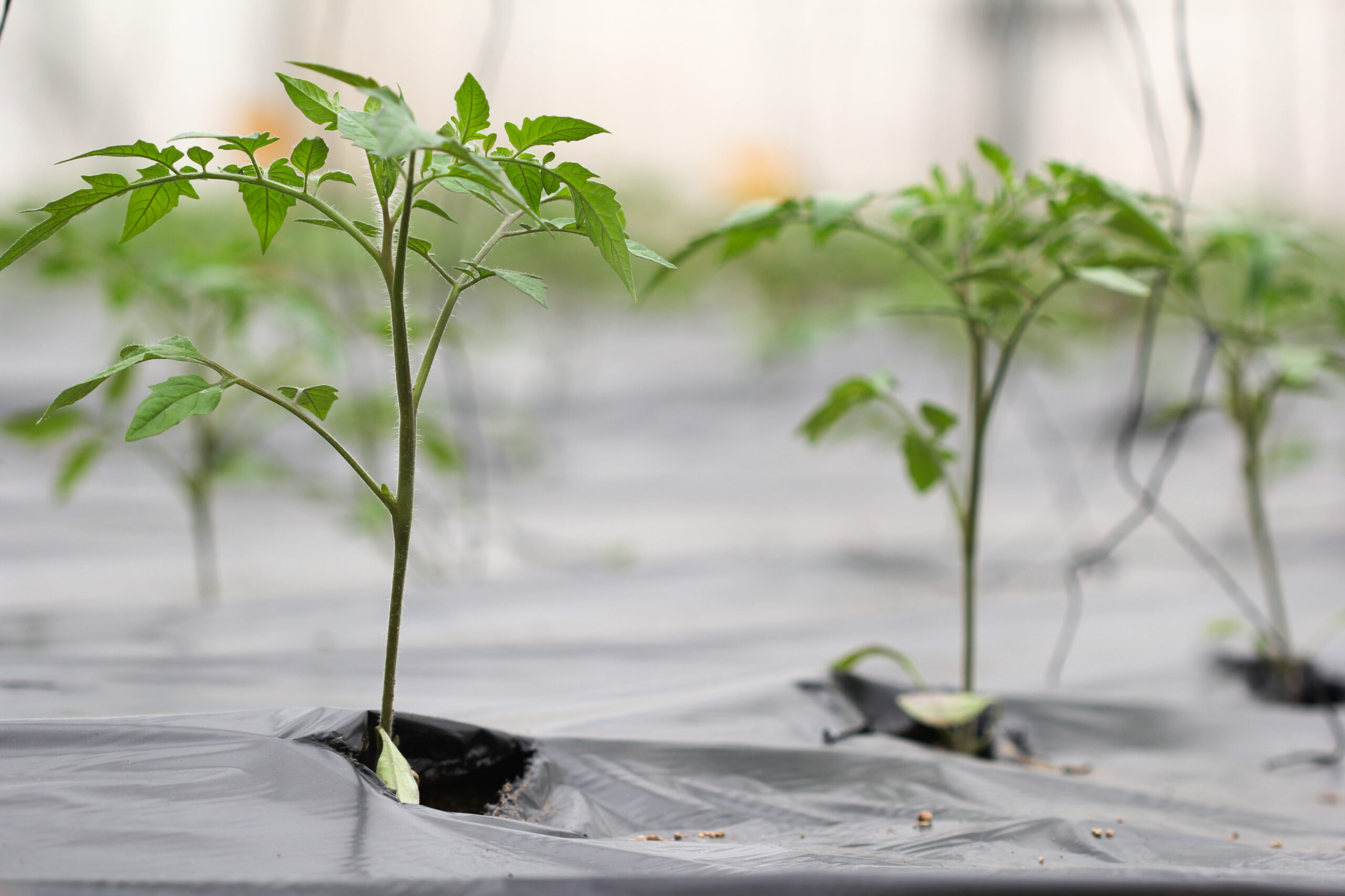
Vegetable growers have utilized polyethylene film mulch for at least 40 years to prevent weed growth near crops, as well as to increase yields and accelerate crop ripening by modifying soil temperature and conserving soil moisture. Unlike organic mulches, both translucent and dark opaque films accelerate soil warming, early crop growth, and maturation. Black polyethylene and other opaque films effectively suppress a broader spectrum of agricultural weeds than most organic mulch varieties.
Ease of application, effective weed control, and increased yields have led to the widespread adoption of black polyethylene mulching film by both small-scale and large-scale farming enterprises.
Mulching films not only stimulate growth and reduce soil evaporation but are also beneficial to the environment, as they help reduce the use of harmful chemicals for weed control. The downsides of polyethylene mulch include the labor and costs associated with its removal at the end of the season.
While new generations of polyethylene mulch can withstand multiple seasons—for instance, our new polyethylene mulching film, Mulch EVO 5, will serve for 36 months—they are specifically designed for mulching perennial crops, typically berries such as strawberries, wild strawberries, or blueberries.
Mulch EVO 5 is an innovative five-layer black mulching film for berry crops: wild strawberries, strawberries, raspberries, and blueberries. We manufacture this film on our new, state-of-the-art Reifenhäuser extrusion line.
Due to its five-layer structure, Mulch EVO 5 features enhanced physical and mechanical properties: greater strength and higher resistance to tears and punctures.
We produce Mulch EVO 5 in widths of 1.2 m and 1.4 m, and in thicknesses of 25 µm, 40 µm, and 60 µm. Its service life is 36 months. By the way, Mulch EVO 5 with a thickness of 60 µm is typically utilized for mulching blueberries.
Black Polyethylene Film
Mulching with black polyethylene film is commonly used in combination with in-row drip irrigation. Opaque black film reduces the germination of light-responsive weed seeds; shades and physically blocks the emergence of most weeds; and can enhance crop growth by conserving soil moisture, promoting soil warming, and accelerating the mineralization of nutrients from soil organic matter. These crop growth benefits aid in weed management by increasing the crop’s capacity to compete against weeds.
The most economical and widely used synthetic mulches are conventional single-layer or multi-layer black polyethylene films, which come in various widths (most frequently 1.2 meters) and thicknesses (0.25–0.6 µm) in roll lengths of 500 and 1,000 meters.
Typically, mulching film is laid using a bed-former attached to a medium-power tractor, which uniformly stretches the film over the crop rows or raised beds, securing the edges of the mulch with soil. Warm-season crops such as tomatoes, peppers, eggplants, melons, and sweet potatoes are frequently cultivated on raised beds mulched with black film; this system is also occasionally used for early plantings of onions, lettuce, cole crops, and other cool-season crops.
Black polyethylene mulch blocks weeds, reduces soil moisture loss from evaporation, and warms the soil, thereby promoting the early growth of many vegetable plantings, particularly lettuce and tomatoes.
Advantages of Black Polyethylene Mulching Film:
- Can be applied mechanically over large areas using widely available equipment.
- Eliminates the light stimulus for weed seed germination across most of the planting bed.
- Blocks the emergence of the vast majority of weeds.
- Conserves soil moisture present during installation or supplied by drip irrigation beneath the mulch.
- Minimizes nutrient leaching caused by excessive rainfall.
- Raises soil temperature by several degrees, thereby promoting early-season crop growth and maturation.
- Helps keep the edible portions of vegetable and berry crops clean, especially pumpkins, strawberries, and other fruiting vegetables.
Consequently, many farmers utilize polyethylene mulch because it is well-suited for mechanized, medium- to large-scale production. Black polyethylene mulching film increases yields and saves labor.
Ensuring a tight fit of the polyethylene film to the soil surface through precise bed preparation is critical, as it assists in weed control and improves soil warming. Drip irrigation is essential, since laying polyethylene mulch without a practical means of watering can lead to moisture deficits and crop loss.
Weed Elimination
Black polyethylene mulch does not eliminate all weeds. Light reaching the soil surface through planting holes and on un-covered alleys between mulched beds allows weeds to germinate and establish, necessitating additional weed control measures in these areas. Weeds in the planting holes can severely compete with the crop if not removed in time, while vining species like morning glory (Ipomoea spp.) and bindweeds (Convolvulus arvensis and
Weed growth in alleys and along the edges of the mulch can be a challenging task. Tactics include cultivation, flaming, mowing, organic mulching, or cover cropping. Cultivation requires caution to avoid cutting the mulch or pulling it above or below ground. Many growers apply straw, hay, or other organic mulch to the alleys and overlap it onto the polyethylene mulch either during planting or after one or more cultivations. Organic mulch suppresses weeds in the alleys, retains soil moisture, and provides organic matter that can later be incorporated into the soil.

Cover crops, such as buckwheat or clover, can be planted in the alleys either during the installation of the black polyethylene mulching film or after one or several alley cultivations. Cover crops in the alleys can be managed by mowing to minimize shading of vegetable crops and to facilitate harvesting.
Practical Tips
To achieve the best results with black polyethylene mulch:
- Avoid using polyethylene on fields heavily infested with weeds.
- For the application of black polyethylene mulching film, give preference to early plantings and heat-loving crops.
- Incorporate organic nutrient sources and other fertilizers into the bed before applying the film.
- Install in-row drip irrigation tape beneath the film in such a manner that the tape is not damaged during planting (the tape is often laid to the side of the row).
- Ensure a tight fit of the film to the soil surface to improve weed control and soil warming.
- Manage weeds in the alleys through timely cultivation, mowing, mulching, or cover crops.
- If soil temperatures under the polyethylene film exceed optimal ranges for the crop, apply organic mulch on top of the film.
Transparent, Translucent, and Colored Polyethylene Films
Transparent and translucent infrared-transmitting (IRT) polyethylene films, which allow solar radiation to reach the soil, warm the soil more efficiently than black film. However, transparent films do not prevent the growth of weeds, which proliferate and eventually rupture the film.
During very hot, sunny weather, a tightly fitting transparent polyethylene film can heat the soil sufficiently to destroy rhizomes and other vegetative weed propagation structures, certain weed seeds, and most plant pathogens in the upper soil layer. This process is called soil solarization and is a valuable tool for preparing small areas for planting certain high-value crops. Vegetables are typically not planted into transparent plastic, as the heat accumulation under this mulch can damage the crop during hot weather.
Transparent films do not destroy weeds as effectively as black ones and should be used on crops for which soil warming is critical, and on fields with low to moderate weed populations.
Film mulch with white or reflective surfaces lowers soil temperature compared to bare soil. This can promote crop growth and competitiveness against weeds during the hottest summer months, when soil temperatures under black mulch would exceed the optimal range for the crop.
For example, tomatoes prefer a moderately warm (21–29.5°C) root-zone temperature and can become stressed by higher temperatures. Thus, farmers in warm climates frequently use white mulch for successive tomato plantings or apply whitewash onto black mulch when hot weather sets in after crop planting.
So, as you can see, mulching is a highly beneficial agronomic practice and one of the simplest and most effective ways to maintain plant health and increase crop yields.
Wishing everyone a rich harvest!