Mulching the soil – how to save moisture, time and yield

In modern agriculture, the battle for moisture is becoming increasingly urgent. Dry seasons, high temperatures, and unpredictable precipitation force farmers to look for effective ways to preserve soil moisture. One such method is mulching.
This is not a new technology, but in recent years it has transformed significantly: from straw and sawdust to innovative polyethylene mulching films. Even if you already practice mulching, this material will help you look at this approach more broadly—from the perspective of efficiency, economics, and long-term results.
What is Mulching?
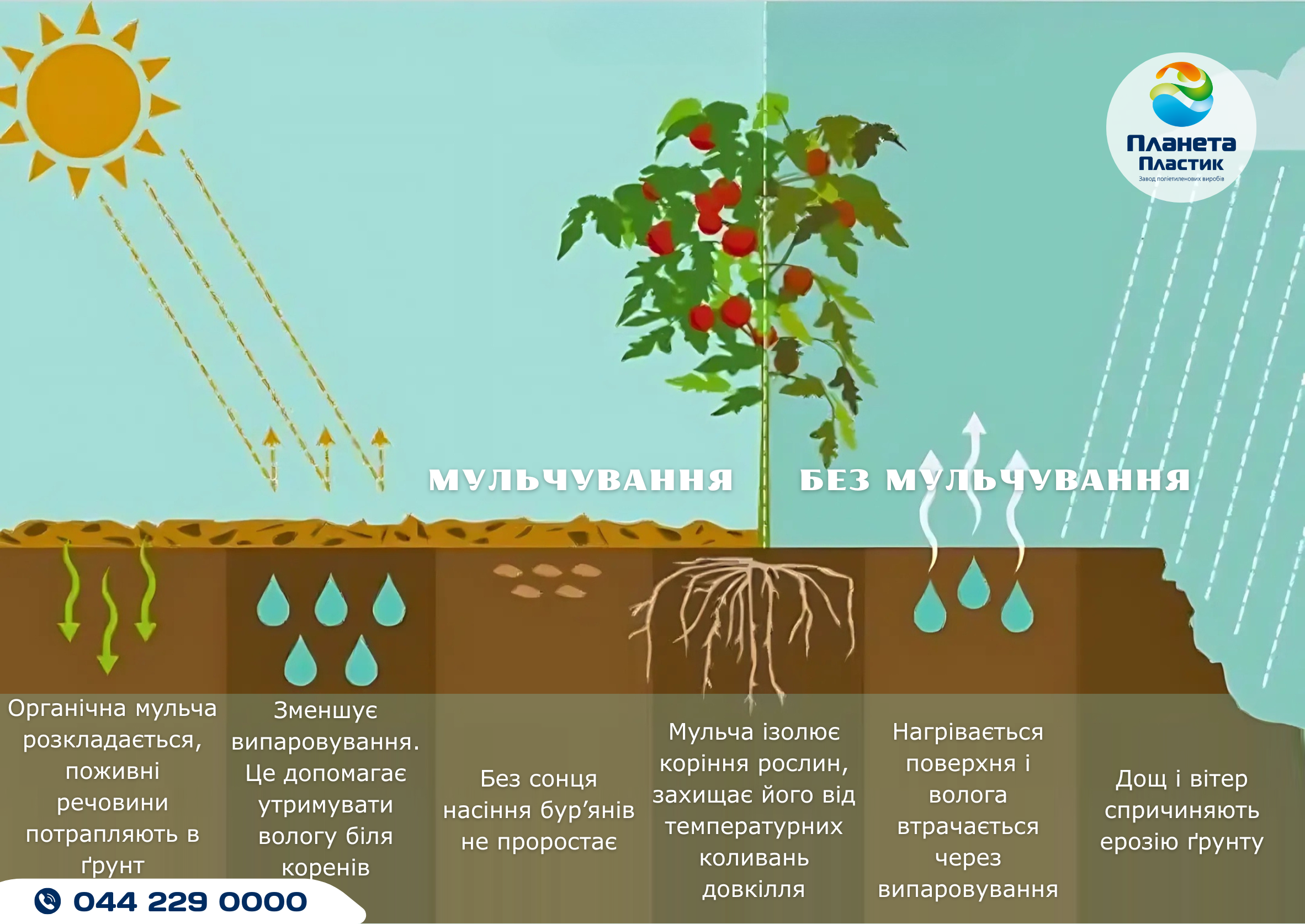
Mulching is an agricultural practice that significantly improves soil condition and reduces resource consumption. The essence is simple: the soil surface is covered with a layer of protective material (organic or artificial) that isolates it from direct external influences. Mulch retains moisture, suppresses weed growth, and protects plants and soil from overheating and erosion. It might seem like nothing special, but the effect of mulching is tangible already in the first season.
This is one of those solutions that do not require ultra-complex machinery but deliver highly practical results. It is no wonder that today mulching is actively used not only in professional berry and vegetable growing but also in home gardens, orchards, for growing seedlings, flowers, forest crops, grapes, and more.
Main Advantages of Mulching:
- 1. Moisture preservation — fewer waterings.
Significantly reduces water evaporation. This is especially relevant in regions with an arid climate. According to farmers’ calculations, using polyethylene film for mulch allows reducing watering frequency by up to 50%. - 2. Weed control — reduced herbicide use.
Blocks light from reaching the soil. This prevents weed seeds from germinating—saving you time and money on weeding or herbicide treatments. - 3. Optimal temperature regime.
Helps warm the soil in spring and retains heat at night. This accelerates root system development and overall crop growth. In summer, the mulch protects against overheating and reduces plant stress. - 4. Clean harvest — higher quality.
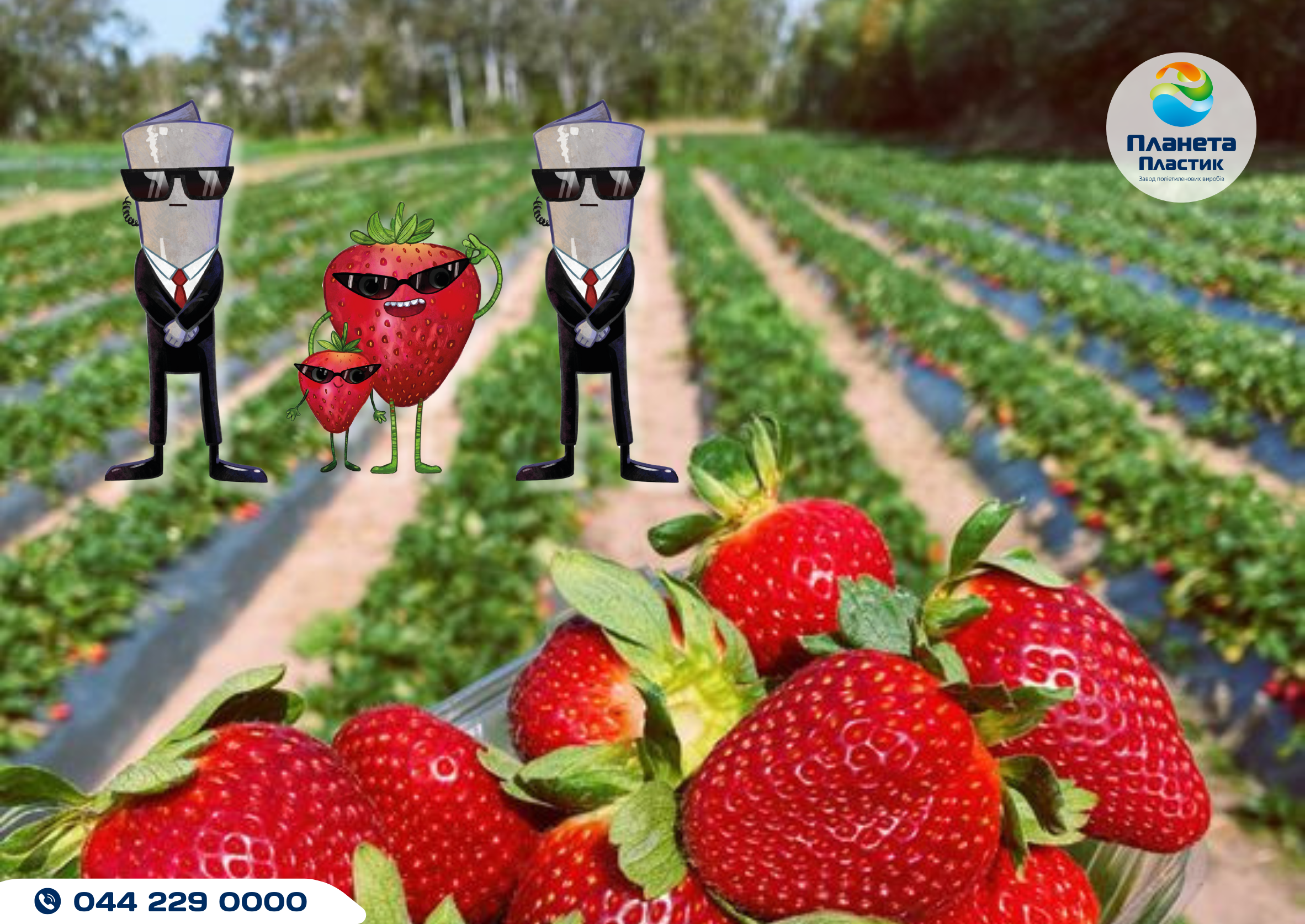
Fruits do not contact the soil, keeping them clean and free from rot. This is particularly important when growing strawberries, cucumbers, zucchini, and tomatoes. The result is a better market appearance and a higher price. - 5. Reduction of diseases.
Mulch prevents soil-borne pathogens from getting onto leaves and fruits. This lowers the risk of fungal infections and contamination from splashing rain droplets. - 6. Increased yield.
Plants receive more resources: moisture, light, heat, and nutrients. As a consequence—less stress, better growth, and a higher yield.
What is Used to Mulch Soil?
All mulching materials are conventionally divided into organic and inorganic. The choice depends on the crop, climate, soil type, and farm goals. Here are the most common types:
- Organic mulch: straw, sawdust, mown grass, leaves, compost.
- Mineral mulch: gravel, expanded clay, crushed stone, sand.
- Artificial mulch: polyethylene film, agrofibre, geotextile.
Let’s consider the advantages and disadvantages of the most widespread soil mulching options:
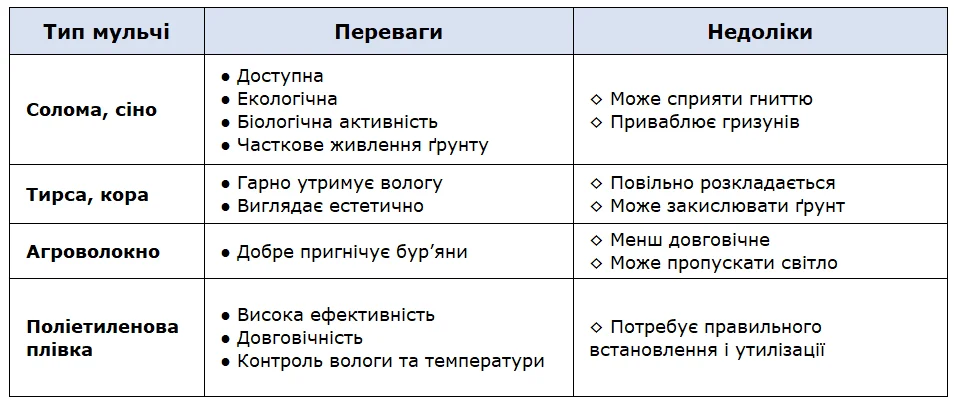
Despite the prevalence of organic mulch, more and more farms are switching to polyethylene mulching films, as this allows automating the process, avoiding unnecessary expenses, and achieving stable results with minimal effort.
Mulching Film: A Modern Approach to Mulching. Why Choose It?
The popularity of polyethylene film for mulching comes down to very simple reasons:
- ◈ Effective weed suppression — up to 95% less germination.
- ◈ Moisture savings — up to 30% less watering.
- ◈ Accelerated crop ripening — up to 10 days earlier, depending on the crop.
- ◈ Yield increase — by 10% to 40%, depending on the crop.
- ◈ No expenses on herbicides and manual weeding.
For farmers growing strawberries, raspberries, tomatoes, watermelons, or other heat-loving crops, film mulching is no longer an experiment, but the norm. Modern film manufactured by the “Planet Plastic” plant features high strength, UV stabilization, and a stable color (black or transparent) that directly influences soil temperature.
Planeta Plastik Products:
Mulch for Every Crop
We understand that different crops require different solutions. That is why we have developed specialized types of mulching films:
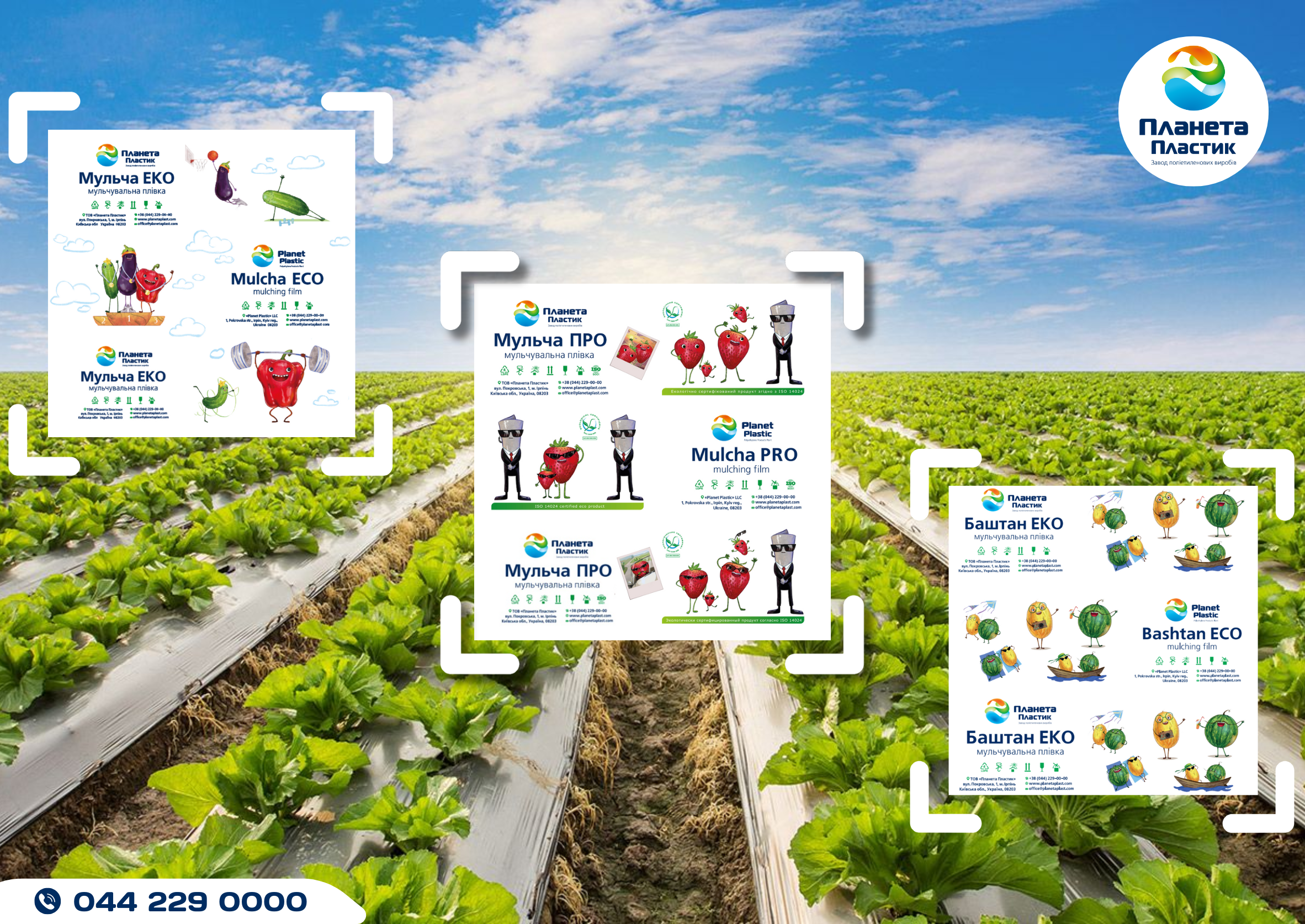
Mulch PRO — ideal for perennial crops (strawberries, blueberries, currants), as well as for long-term multi-season installation in one place. It withstands the loads of several seasons, which is crucial for berry fields and farms with multi-cycle cultivation.
Mulch ECO — optimal for annual crops (tomatoes, cabbage, salads, beets, onions, etc.). It features standard thickness and is designed for seasonal use. This is an affordable option for vegetable growers who change their crop rotation structure every year and need a flexible solution.
Gourd ECO (Bashtan ECO) — specially developed for watermelons, melons, pumpkins, and other gourd crops. It combines excellent density with resistance to mechanical damage, which is essential in conditions of sprawling vine growth, frequent contact with fruits, and the need for protection against drying out. The film also helps accelerate ripening, allowing for an earlier market entry.
Tips for Application
- ◈ Lay the film on prepared, moist soil, free of large clods and debris.
- ◈ Do not overstretch it: the film should fit tightly but should not be over-tensioned.
- ◈ Fix the edges securely with soil ridges.
- ◈ Make planting holes using a cross-shaped knife or a specialized burner.
FAQ — Frequently Asked Questions
1. Does the mulching film let water through?
No, the film is waterproof. This is exactly why a drip irrigation system is installed underneath the film. It allows for precise water dosing directly to the root system.
2. Can it be installed manually?
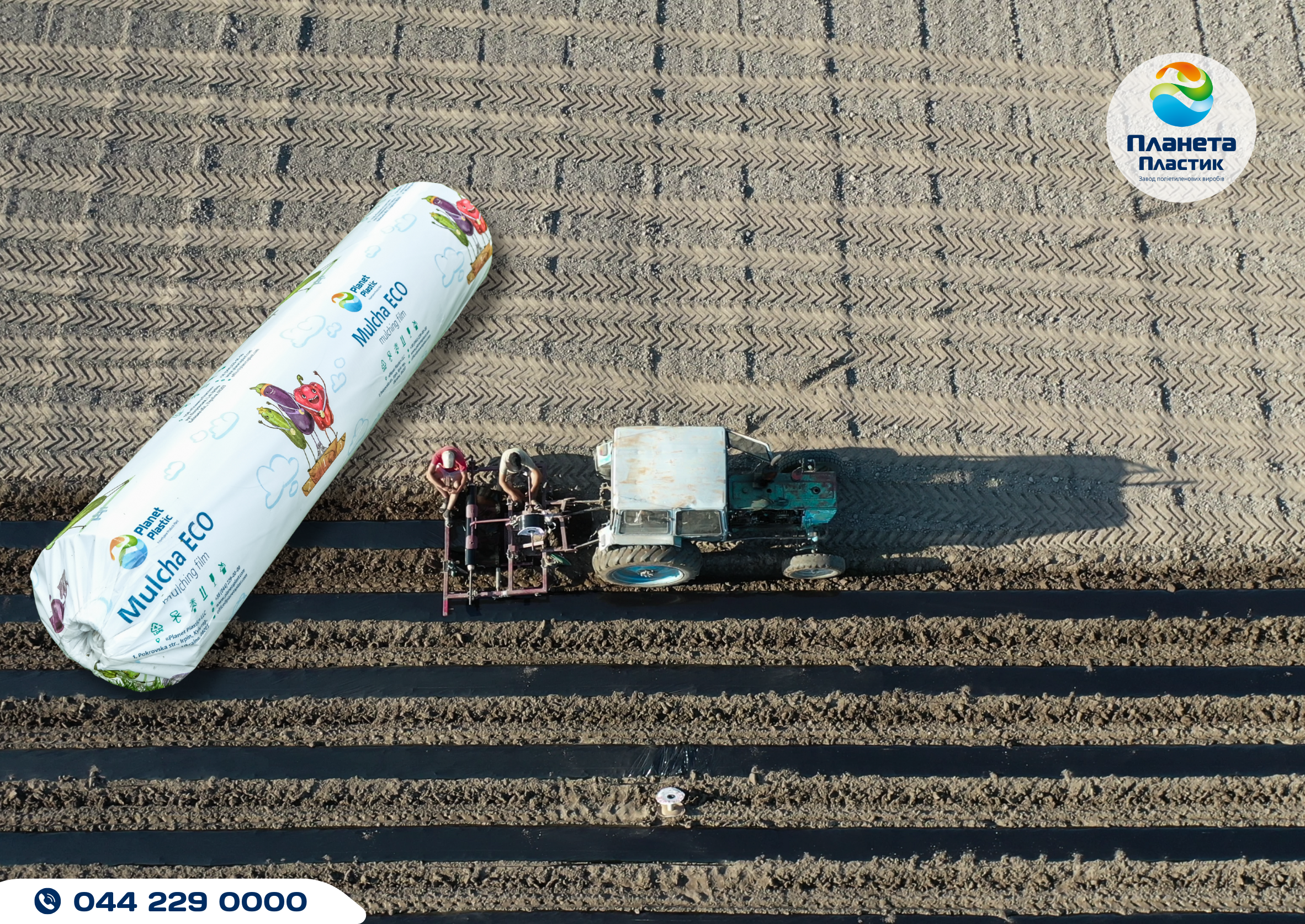
Yes. The roll sizes allow for manual laying. There is also the option for mechanical installation using film layers.
3. Is polymer film harmful to the soil?
No, it does not release harmful substances. It is just essential to properly collect it after use and dispose of it correctly.
4. How long is the service life of the film?
For “Mulch PRO” — up to 36 months. For “Mulch ECO” and “Gourd ECO” — one season.
5. How does mulch affect soil temperature?
Dark film increases soil temperature. This accelerates the growth and ripening of plants.
6. Can mulching film be combined with agrofibre?
Yes. You can use film mulch together with floating row covers (agrofibre), for example, in spring or in high-risk farming zones.
7. Do I need a herbicide under the film?
Usually no — the mulch effectively blocks weeds. If necessary, you can treat the area before laying the film.
8. What is the price of the mulching film?
The price depends on the thickness, width, and length of the film in the roll. You can find out the current prices and assortment from our managers.
Is It Worth Using Film Instead of Organic Mulch?
This is a valid question. The choice depends on your farm’s goals and scale.
- ◈ For small-scale organic gardening, straw or sawdust may be quite sufficient.
- ◈ But if you aim for a stable commercial yield, complete weed control, and resource savings, using film is much more efficient.
Modern polyethylene mulch is not just “for looks”—it is a functional agricultural tool. It allows you to work with the soil more precisely, lowers risks, and provides predictable results.
Conclusion
Mulching is not a “trendy fad,” but a management strategy that minimizes losses, improves soil health, and ensures a stable, high-quality harvest. Regardless of the scale—whether you grow strawberries on a small plot or tomatoes for processing across dozens of hectares—mulching film can become the key factor of your efficiency.
The “Planet Plastic” plant manufactures mulching film taking into account the precise needs of various crops and farming conditions. We understand how important it is for the film to perform reliably, resist tearing, and never let you down. That is why we guarantee stable quality and continuous availability.
Still have questions? Write or call us—our managers will help you choose the right film for your specific crop, installation method, and region.
Choose the film trusted by Ukrainian and European farmers!