Polyethylene film for greenhouses: the secrets to successful flower growing
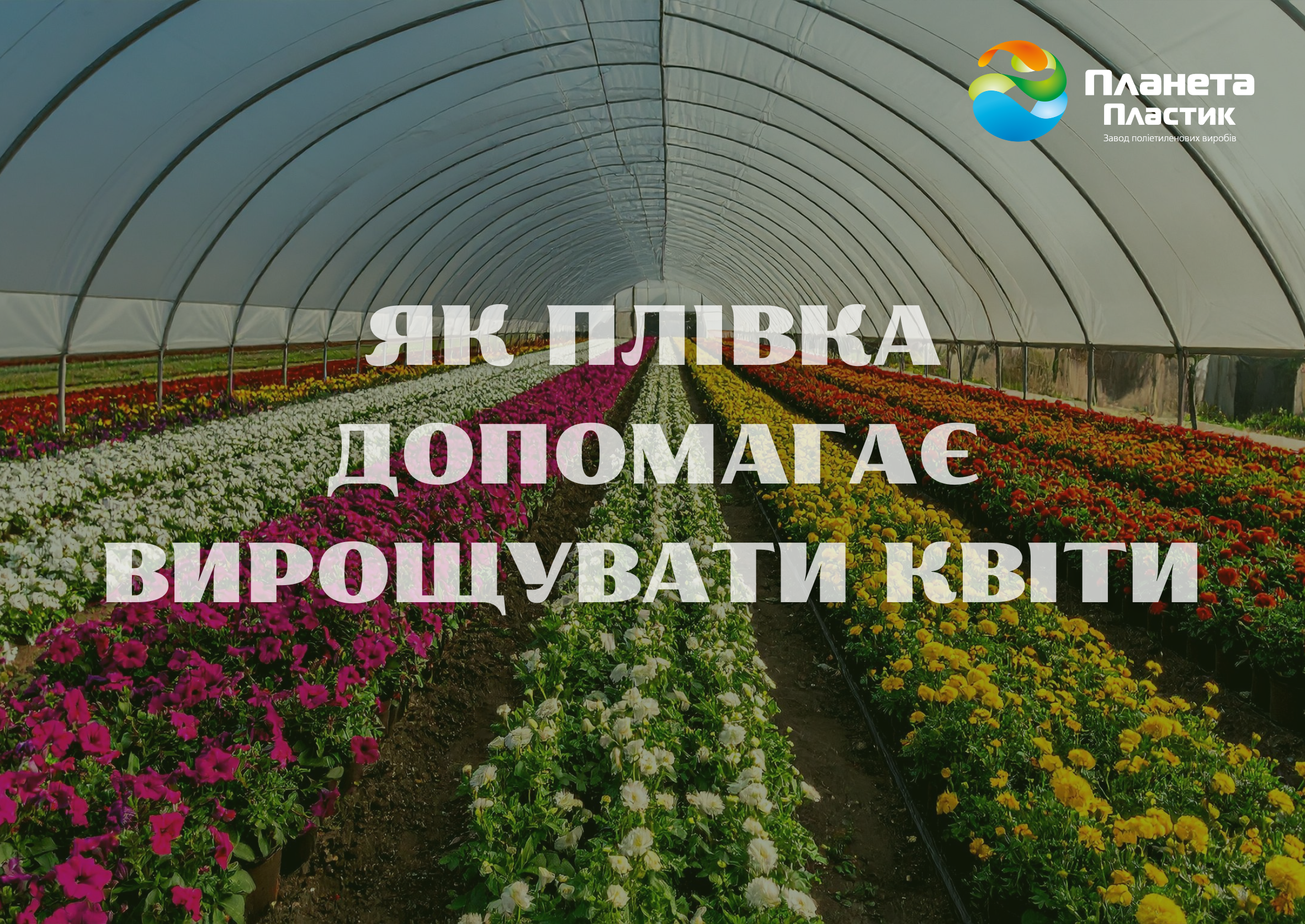
Microclimate That Generates Profit
For every flower grower, a greenhouse is no longer just a structure, but a controlled climate zone where yield and quality directly depend on the precision of the environment created. How do you grow flowers in a greenhouse? Modern polyethylene (PE) film has long ceased to be just a simple “covering.” Today, it is a high-tech, multilayered material that directly affects both the cost of production and the market appearance of the flower.
Below, we will reveal the secrets of selecting and operating greenhouse film, allowing you to transform your greenhouse into a stable and predictable flower cultivation system. We will focus on practical solutions that eliminate the primary challenges of commercial floriculture.
How to Choose the Ideal Polyethylene Film for Flowers
Choosing the wrong greenhouse film results in hidden losses in heating, plant protection products, and ultimately, crop yields. For flowers, four functional characteristics embedded in greenhouse films are absolutely critical:
1. Light: Diffusion vs. Burns
The Problem: Direct, concentrated sunlight causes burns on delicate flower petals and leads to uneven plant growth.
The Solution: Greenhouse film with modifying additives that create the correct light diffusion (scattering).
- How it works: The film contains specialized additives that scatter solar rays, transforming “harsh” direct light into soft, uniform illumination.
- Practical benefit: Light penetrates into the lower tiers of the plants, ensuring photosynthesis throughout the entire bush. This guarantees:
- Uniformity: All buds develop at an even pace.
- Strength: It prevents the stretching of plant stems.
- Protection: The risk of flower burns is reduced by up to 90% (critical for roses and gerberas).
2. Temperature: Protection from Shock (IR Effect)
The Problem: Sudden drops in night temperature (thermal shock) force the plant to expend energy on “survival” rather than flowering.
The Solution: Thermal-saving (IR/Thermal) film.
- How it works: The manufacturer utilizes a multilayer technology where IR blockers are integrated into the inner layers of the film. This allows it to effectively trap long-wave thermal radiation emitted by the soil at night and reflect it back inside the greenhouse.
- The Result: Nighttime temperatures stabilize, remaining 4–6°C higher than under standard film. This saves up to 25% on heating costs and accelerates the onset of flowering.
3. Humidity: Disease Neutralizer (Anti-Drip)
The Problem: Condensation (droplets) on the inside of the film creates an ideal environment for the propagation of gray mold (Botrytis) and powdery mildew spores.
The Solution: Anti-condensation (Anti-Drip) film.
- How it works: The inner surface is treated with a hydrophilic additive. Instead of forming spherical droplets, moisture spreads into a thin layer and flows uniformly down the walls of the structure.
- Practical impact: You prevent:
- uncontrolled wetting of leaves (the key driver of disease development);
- the formation of water lenses that cause leaf and petal burns;
- as a result — fungicide application is significantly reduced, and crop quality improves.
4. Longevity: UV Stabilization
To ensure cost efficiency and the continuity of your production cycle, always choose a film that contains a UV stabilizer. High-quality films manufactured by Planeta Plastik guarantee a service life of up to 10 seasons, eliminating the annual expenditure of money and time on dismantling and reinstalling the covering.
Commercial floriculture under polyethylene film requires a calculated approach. Investing in a high-quality functional film with IR, Anti-Drip additives and correct light diffusion is not an extra expense, but crop insurance and a guarantee of a lower per-flower production cost.
By choosing products from the trusted manufacturer Planeta Plastik, you receive a greenhouse film with predictable characteristics that performs reliably under real growing conditions and helps maintain a controlled microclimate throughout its entire service life.