Growing strawberries. How to get the maximum yield with minimum effort
Mulching is the practice of covering the soil surface around plants with various materials to protect and improve soil properties. Mulching reduces moisture evaporation, minimizes daily soil temperature fluctuations, prevents soil crusting, suppresses weed growth, and stimulates the activity of microorganisms and earthworms.
Mulching – A Magic Wand for Hobby Gardeners and Professional Farmers.
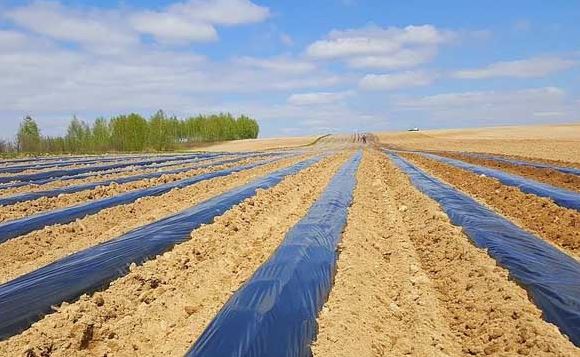
As an agrotechnical practice, mulching has become widespread in many Western European countries, the USA, and Canada. It is known that in Eastern Europe, mulching with buckwheat straw was practiced as early as the 17th century. A wide variety of materials can serve as mulch, including natural organic matter (mowed grass, straw, sawdust, etc.) and synthetic inorganic alternatives (black polyethylene film, non-woven materials like agril, agrospan, etc.).
In commercial strawberry production, black polyethylene film is most frequently used as mulch. In Finland, for instance, it is applied to approximately 80% of the cultivation areas. According to Finnish statistics, annual strawberry production stands at 12,000–18,000 tons, with yields reaching 7–12 tons per hectare. In recent years, most Ukrainian farms have started using mulching film for strawberry cultivation. It is utilized not only by large-scale agricultural enterprises producing strawberries commercially but also by amateur gardeners.
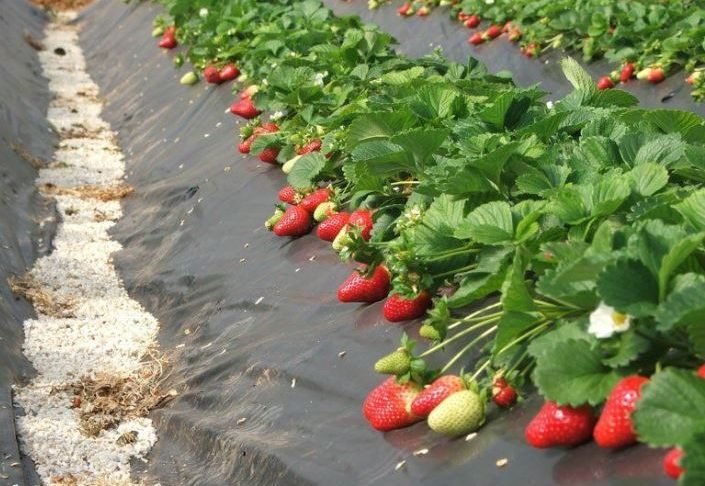
Furthermore, mulching protects the soil from overheating and drying out while suppressing weed growth. This reduces the need for weeding, watering, and soil loosening, ensuring that the strawberries remain clean even after heavy downpours. The soil under the black film warms up faster, resulting in earlier plant growth and allowing berries to be harvested 5–7 days ahead of schedule.
Mulching strawberries ensures an earlier and higher yield, protects the berries from rot and pests, and, importantly, significantly eases the grower’s workload!
The primary benefit of growing strawberries on film is robust weed protection. Mechanical weeding is required only during the first year of cultivation and is limited to clearing the planting holes. Weeds in the rows can be managed either chemically or by mowing. To some extent, black film allows carbonic acid and oxygen to pass through, but it is impermeable to water and water vapor. Oxygen uptake by the root system is not an issue when using film, as a sufficient amount enters from the spaces between the rows, provided overall conditions are favorable.
Planet Plastic LLC manufactures UV-stabilized mulching film with a service life of 36 months. Stabilized film means that special substances—UV stabilizers—are incorporated during production. These allow the film to withstand ultraviolet radiation and resist UV degradation, which effectively extends its service life.
Mulching film from Planet Plastic LLC will last you for 36 months, precisely the duration needed until strawberries require transplanting. The reality is that strawberries degenerate after 3 years, leading to a drop in yield and berry quality. Consequently, experienced growers completely renew and transplant them every 3 years.

However, despite the numerous advantages of film cultivation, there are specific challenges involved. These can be avoided if you are aware of them and take them into consideration.
Advantages of Mulching Strawberries with Black Polyethylene Film:
- Improves plant nutrition: nitrate nitrogen accumulates in the upper soil layers, and the leaching of highly soluble nutrients by rain is reduced;
- Drastically increases and maintains microbial activity throughout the summer in both the topsoil and deeper layers;
- Soil moisture levels remain almost constant throughout the summer season;
- Prevents weed growth;
- Accelerates plant development and berry ripening;
- Berries do not get soiled by earth, preserving their marketable appearance;
- Eases runner control, as they cannot take root on the film surface.
Points to Consider When Mulching Strawberries with Black Polyethylene Film:
- It is advisable to install a drip irrigation system under the film, as rain and overhead irrigation water will run off, which is particularly critical during dry summers;
- In summer, the soil under the black film can overheat significantly, so adding an extra top layer of straw or mowed grass mulch is recommended. Alternatively, black-and-white mulching film can be used (with the white side facing up). Planeta Plastik LLC offers this option in its product range;
- Ants and slugs readily settle under the film. However, in fairness, it should be noted that they colonize any type of mulch, whether it is sawdust, straw, or film.
Overall, adhering to these simple agrotechnical methods ensures a consistently high yield with minimal effort.
Mulching is one of the most simple and effective ways to maintain plant health and boost yields. You can find our mulching films in the product section.
Wishing everyone a rich harvest!