Silage storage without losses: what is important to know and how to cover the silo pit with film

After growing silage corn, clover, grass, or other forage, the work does not slow down. It is vital not only to harvest the green mass but also to preserve its nutritional value down to the very last kilogram of feeding. The ensiling stage itself often determines whether a farmer will gain the maximum benefit from their harvest.
Before packing the forage, it is necessary to properly calculate the size of the pit. For optimal results, 10–15 cm of forage should be removed daily from the open face of the pit or bunker during cold weather, and 20–25 cm during warm weather. This reduces air exposure and prevents spoiling of the top layer.
To preserve feed quality, it is important to use reliable materials at every stage. For instance, for sealing the walls and the top layer, specialized polyethylene films manufactured by “Planeta Plastik” have proven to be the best. They are dense, durable, highly puncture-resistant, and completely oxygen-impermeable. This ensures that the forage can be stored for as long as possible without losing its nutritional value.
Covering — Not Just a Step, But a Crucial Stage
The proper covering technology includes several key actions:
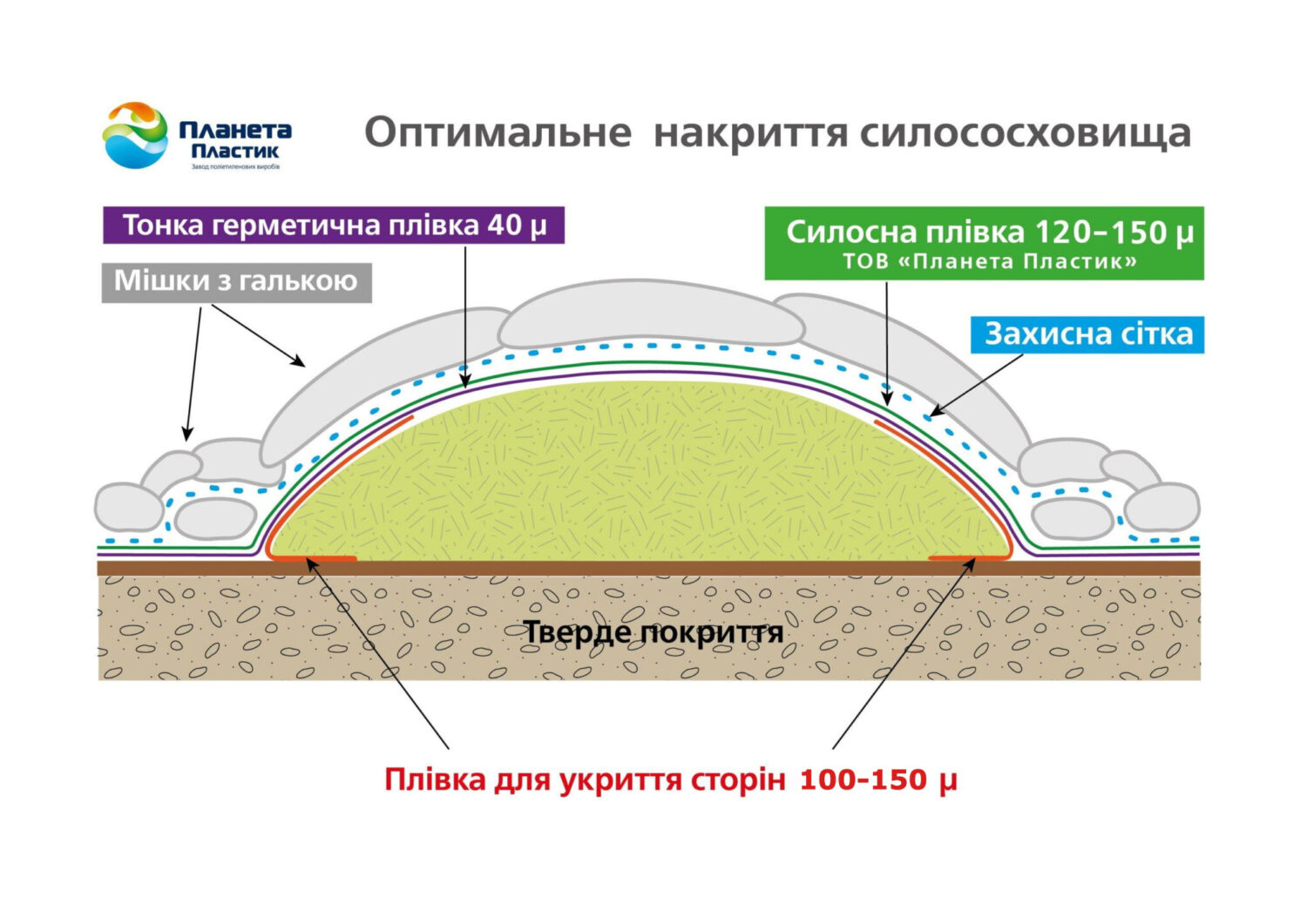
- 1. Line the pit walls with polyethylene film — this is the first barrier against air and moisture. For this purpose, it is best to choose wide sheets that are easy to lay out without welding—such films are manufactured at the “Planeta Plastik” plant.
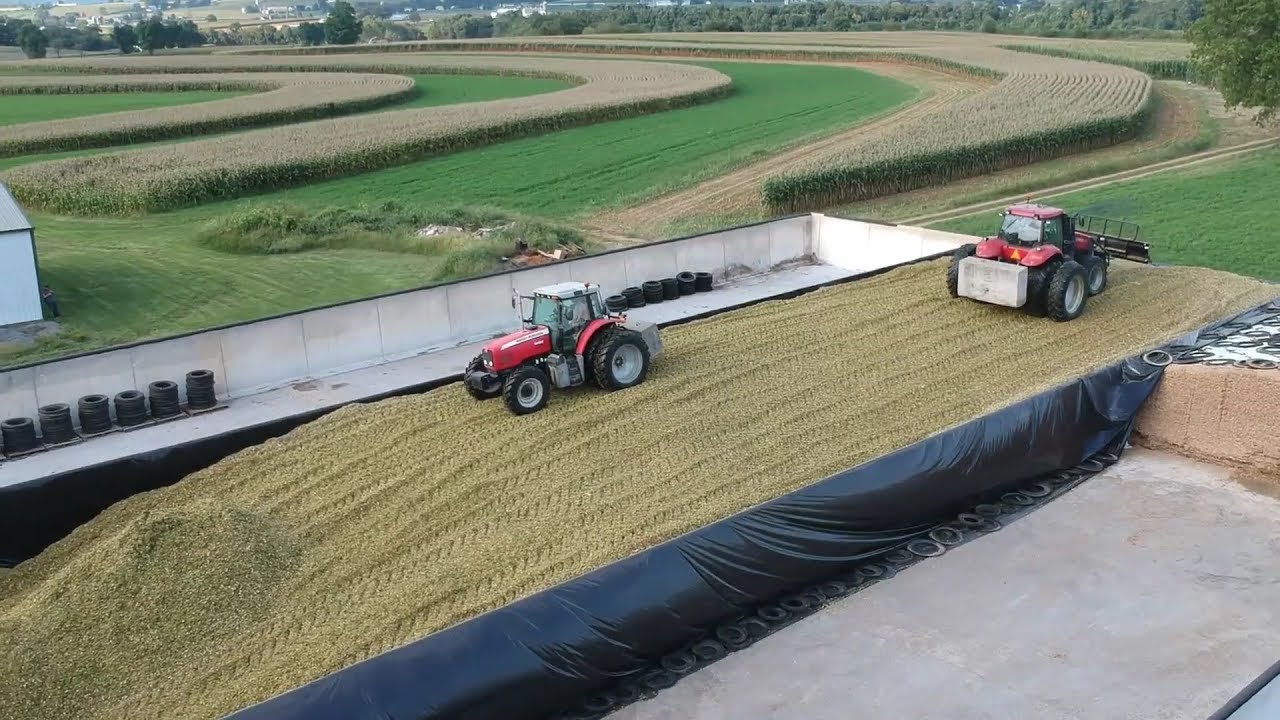
- 2. Layer-by-layer compaction. The forage is laid out in thin layers of 10–20 cm, after which each layer is packed and compacted. It is not enough to simply “drive a tractor over it” — the weight of the compaction equipment must meet a ratio of 400 kg per ton of dry matter per hour.
- 3. Rhythmic operation without downtime. The ideal approach is to fill two silage pits simultaneously so that the mass arrives continuously and does not have time to dry out.
After packing the final batch of forage, compact the top layer and cover the pit or bunker with a barrier, or so-called “vacuum” polyethylene film with a thickness of 40 µm. A black-and-white film with a thickness of 120 or 150 microns is then laid over it. Thanks to the wide selection of thicknesses and formats of films manufactured by “Planeta Plastik,” you can choose the exact option that perfectly fits the dimensions of your silo—without unnecessary seams and, consequently, without air pockets under the film.
Give the Silage Time
After sealing the silage pit, the mass must undergo fermentation. The minimum period is 3 weeks. However, if possible, it is better to wait a full 60 days—during this time, the feed stabilizes, the starch becomes more digestible, and you get high-quality forage for maximum feeding efficiency.
How to Maintain Quality After Opening
The rules are simple:
- ◈ Open only the section of the pit from which the forage will be fed out within 1–2 days.
- ◈ After each forage extraction, compact the open face and cover it back up with the film.
- ◈ Do not leave silage out in the open air or right next to the pit—this leads directly to losses.
“Planeta Plastik” films are easy to roll back, do not crack at the folds, and withstand mechanical stress—all of this makes them not just a covering, but an integral part of efficient forage storage technology.
Film is Not Just Protection.
It is an Investment in an Efficient Farm
It might seem like a simple film. Yet, its quality determines whether the animals receive wholesome feed and whether the farmer sees a profitable result. Reliable sealing provides:
- ◈ up to 30% reduction in mass losses;
- ◈ stable silage quality without overheating;
- ◈ preserved aroma and feed structure;
- ◈ absence of molds and secondary fermentation.
“Planet Plastic™” films are more than just a material; they are a vital component of the agricultural process. They are designed to meet the real needs of farmers and Ukrainian conditions: durable, easy to work with, and manufactured with no compromises on quality.
Silage is a strategic forage. Take care of it properly—together with a trusted Ukrainian manufacturer of polyethylene silage films and Harwell™ polymer forage storage sleeves manufactured by LLC Planet Plastic.